Archive for the ‘Automobile Manufacturers’ Category


Just the name of Ferrari’s in-house creator of specialty order projects sounds tantalizingly vague. Maybe MI6 enlists Ferrari Special Projects to whip up something bespoke for Mr. Bond while he’s on a secret mission in Italy or perhaps Tony Stark decides to ditch his Lamborghini and get a bad-ass Ferrari for his next mission as Iron Man. Your imagination bursts with possibilities.

The difference between Ferrari Special Projects (FSP) and other in-house creators of one-off vehicles or concept cars is that customers, not corporate overlords, create the cars along with in-house engineers and designers, including outside design houses like Pininfarina, Fioravanti and Bertone. It’s even more intriguing because allegedly you can’t just sign a blank check to get a bespoke Ferrari delivered to your palace in Dubai.

Ferrari has to invite you to this private party or you don’t get past the hermetically-sealed secret doors at Ferrari’s Maranello HQ offices. The invitation list is so short that maybe only eleven or twelve lucky humans have been invited to work with FSP on their own creations and only four of the cars have been publicly revealed.

Ferrari has some basic rules for Special Projects. All the “hard points” are maintained to avoid the expensive and time-consuming process of re-homologation – the certification of a product or specification to indicate that it meets regulatory standards – and safety testing. The bodywork and interior coachwork can be as personalized. And the owner gets to keep the tooling to ensure that it remains a unique creation.

The first car, the SP1, was delivered in November of 2008, to businessman and past president of the Ferrari Club in Japan, Junichiro Hiramatsu. Mechanically it’s identical to the Ferrari F430 with a 4.3L 90-degree 32-valve V8 that powers the 3,000 pound SP1 with 490 hp.

The Ferrari F430 is the donor car for the SP1.

The Ferrari SP1 in 2008 with its owners.

The Ferrari SP1 at its gala debut party. Everyone was interested in this car.
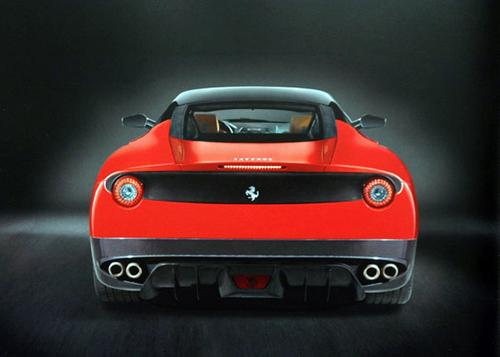
The rear of the Ferrari SP1 based on the F430.

The bodywork of the SP1 was designed by Leonardo Fioravanti, the penman for many other Ferrari models. It has customized front and rear fascia, a carbon fiber front splitter, sills and a rear diffuser. The glass-look top “visually lightens” the car and provides contrast to the stunning Ferrari Red paint. It was first shown in the United States at the 2010 Pebble Beach Concours d’Elegance.

The North American unveiling of the Ferrari SP1 at Pebble Beach in 2010:

In 2009, the Ferrari P450 Superfast Aptera was delivered to super-tycoon Edward Walson, heir to a cable television fortune. The Superfast Aptera, based on the Ferrari 599, is powered by Ferrari’s Tipo F140c 5.99L V12 with 620 hp and 448 lb-ft of torque. The Tipo F140c is mated to Ferrari’s 6-speed F1 transmission.
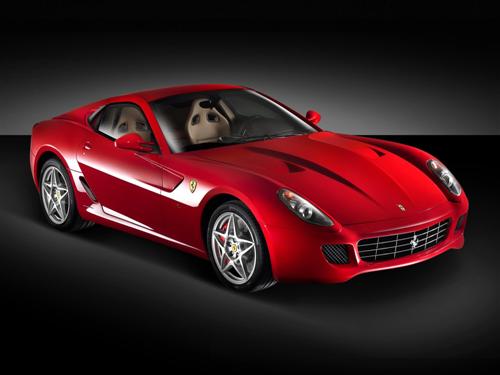
The Ferrari 599. This particular example is the 599 GBT Fiorano. It’s the basis for the P450 Superfast Aptera.

Ferraro P450 Superfast Aptera front quarter

The P450 was the first open-top 599. To open the Targa-style roof and retain structural rigidity, Ferrari had to reinforce the chassis with carbon fiber. Pininfarina penned the gorgeous design. Ferrari lifted much of the P450’s roof design to create the production open-top SA Aptera the following year.

This rear shot of the P450 Superfast Aptera shows the Targa-style top removed.

This video is really just still shots stitched together, but you get the idea (turn down the volume as the soundtrack is annoying).

In 2011, New York Ferrari collector and real estate mogul Peter Kalikow took delivery of his Pininfarina-designed Superamerica 45 to celebrate the 45thanniversary of his first Ferrari purchase. They say money can’t buy happiness, but I’m sure Mr. Kalikow was pretty happy with his “anniversary” present.
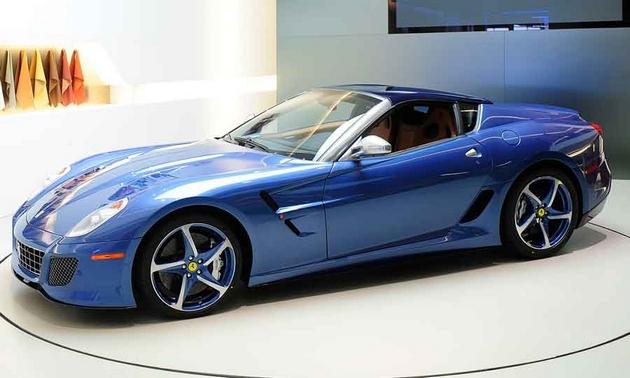
The Ferrari Superamerica 45. Happy Anniversary!

The Superamerica 45 is based on the SA Aptera and is inspired by the 575M Superamerica. Mr. Kalikow’s car, like the P450 Superfast Aptera (above), is based on the Ferrari 599 mechanicals and body. No details were announced about the engine; however, it’s likely to have the same 5.99L V12 with the same power ratings as the Superfast Aptera.

This is the production Ferrari SA Aptera – an open-top 599. Slick stuff!

Instead of the fabric roof of the “stock” SA Aptera, the Superamerica 45 is endowed with a one-piece rotating carbon fiber roof that gently rests, upside down, on a carbon fiber trunk lid. It has a bespoke chrome grille and aluminum A-pillars. The interior sports a “carefully selected combination of Cuoio leather trim and Blu Scuro carbon fibre details and a latest-generation touch-screen infotainment system.”

The Ferrari Superamerica 45 from the rear.

Mr. Kalikow got super-matchy for his Superamerica 45’s color. The striking Blu Antille paint exactly matches his 1960 Ferrari 400 Superamerica Cabriolet – his first Ferrari. I’m sure both cars look stunning sitting in a gigantic secure garage in some secret, undisclosed location.

Watch the Superamerica 45’s carbon fiber top rotate down:

Watch and listen to the Superamerica 45 start and drive away. It looks like a swanky party in the Hamptons, right?

The most recent project (that we know about), SP12, is for music legend and Slowhand Guitar God, Eric Clapton. Based on the Ferrari F450 Italia, the SP12 EC (not a very original name) takes its inspiration from a vintage Ferrari 512 BB, a mid-engine flat-12 supercar from the 1970s/early 1980s. Mr. Clapton must have an affinity with these cars as he’s owned three.

A Ferrari 512 BB, the inspiration for Eric Clapton’s SP12 EC.

The Ferrari F458 Italia is the base car for Mr. Clapton’s SP12.

According to the Official Ferrari Magazine, Mr. Clapton had wanted a V12 engine; however, he was “persuaded” that the Italia’s 4.5L V8 (naturally-aspirated, direct-inject making 562 hp and 398 lb-ft of torque mated to a Getrag dual-clutch 7-speed gearbox) was more “practical.” As with some other SP-invitees, Mr. Clapton worked with Pininfarina to style the car. A fun detail is that the headlights were lifted from the Enzo and certainly change the look of the car.

Eric Clapton with his bespoke Ferrari F12 EC.
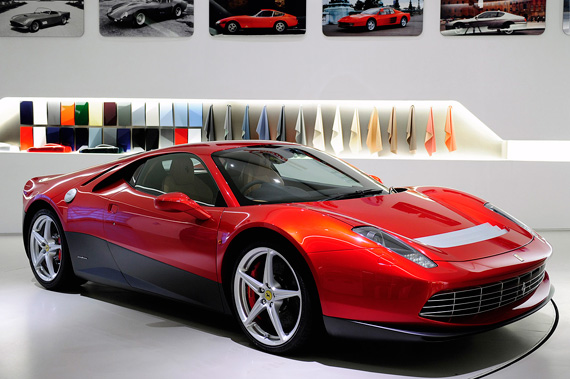
The front of the Ferrari SP12 EC. Check out the headlights from the Ferrari Enzo supercar.

The side and rear view of the Ferrari SP12 EC.

This video of Mr. Clapton’s Ferrari SP 12 EC is shaky, but you get the aural delight and a shot of those vanity plates. It drives from the Ferrari show room directly into a trailer for transport.

Mr. Clapton took delivery of his right-hand drive Ferrari SP12 EC at the beginning of 2012 but waited until March to register it so he could have the vanity registration plate “SP12 EPC” (Patrick is Mr. Clapton’s middle name). We should all have such problems.

I can’t wait to see future Special Projects. It’s always nice to dream about what I’d like to do for my own bespoke Ferrari.
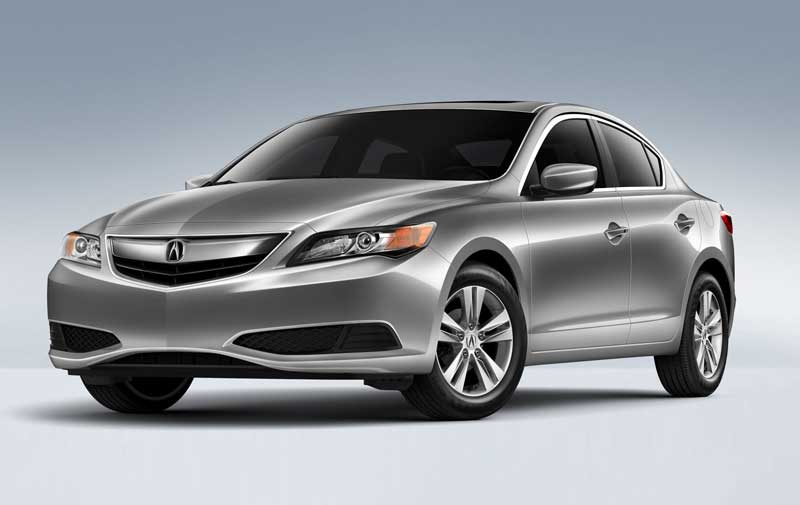

When you visit your Acura dealer (if you can find one) to test the new Acura ILX, just don’t say any word that starts with an I and ends with an A. They are very sensitive about past history.

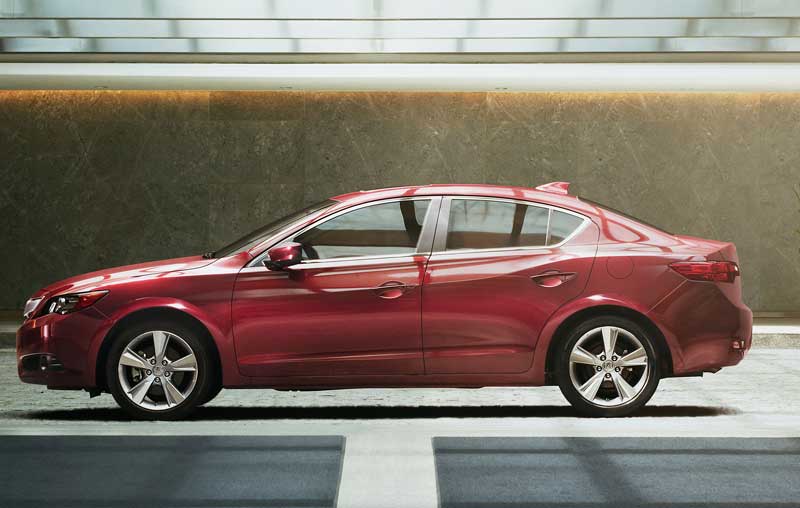
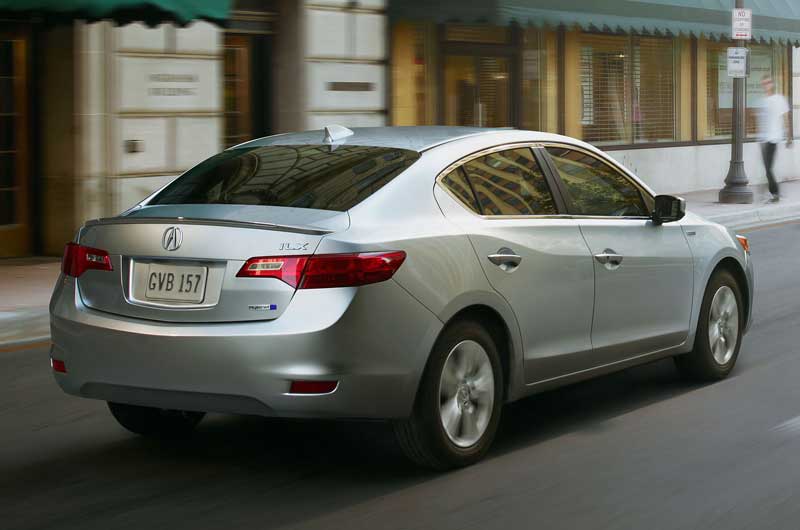
2013 Acura ILX 5-speed Automatic in Silver Moon

An example of the most-stolen 1994 Acura Integra. Love the headlights!

It’s been six long years since Acura offered an entry level vehicle based on the Honda Civic. The Acura Integra (damn, there’s that I-word) and its successor, the RSX, achieved almost mythical status as an entry level sports luxury coupe (and sedan) with exemplary front-drive handling characteristics. In fact, in the latest Insurance Industry statistics, the 1994 Acura Integra holds the esteemed number eight position on the most stolen list. It was that popular!

Enthusiasts are still wounded over the unceremonious demise of the Integra/RSX’s. The Acura brand found itself in crisis after a widely-panned styling gamble and mixed messages about its place in the crowded luxury car field.  Customers stayed away in droves and Acura fell off many shopping lists.

After the devastating 2011 Tōhoku earthquake and tsunami and the equally crushing criticism of the ninth generation Civic, Honda was a company in crisis, battered into a corner, bruised and bleeding. The 2012 Civic, introduced shortly after the earthquake, is an all-important model for Honda. It was widely-panned for its lack of inspirational design and warmed-over technology.

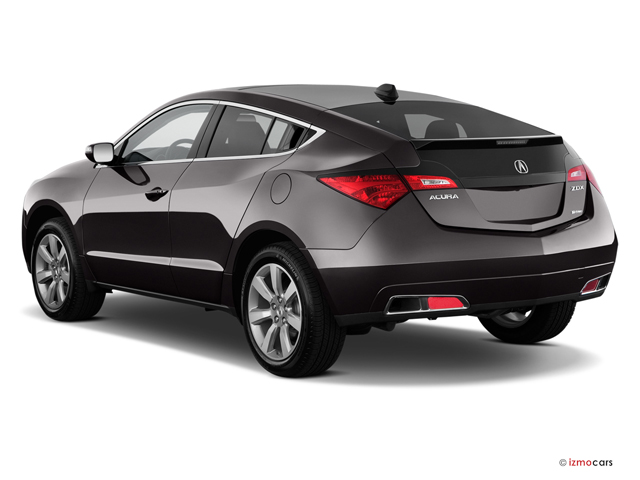
The styling of the Acura ZDX never caught on and its price (base $47,015, loaded with the Technology and Advanced Package, $57,565) scared off many buyers.

The NSX was Acura’s halo car for 15 years. This beautiful 2005 model still looked fresh; but Acura simply dropped the ball on its successor. We won’t see a new NSX for another two or three years.

Acura, Honda’s luxury division, was also in trouble. Its flagship RL sedan, introduced in 2005 with a mild refresh in 2009, flopped from day one. The odd BMW X6-like and expensive ZDX SUV remains unknown to most consumers. The beloved and the sublime NSX sports car wore Acura’s halo for its 15 year run; but Acura never planned for its replacement and it disappeared from showrooms in 2005. In short, Acura, the first Japanese luxury brand introduced in the United States, has been adrift in brand wilderness for a while now.

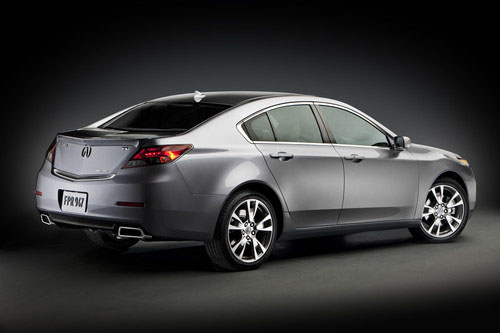
The 2012 Acura TL is a very nice Honda Accord

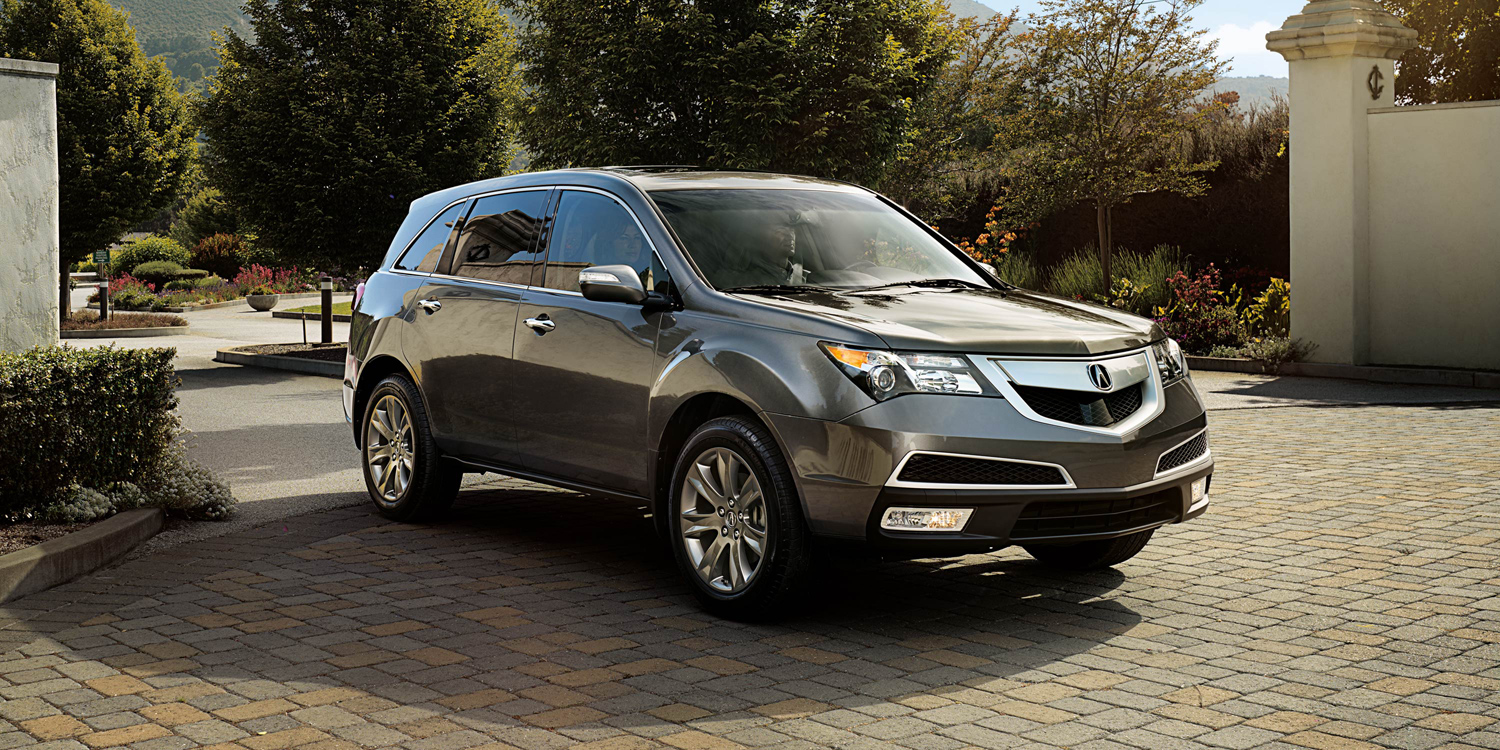
The 2012 Acura MDX is very popular. It’s based on the Honda Pilot

Before the new ILX, Acura relied on two models to keep the ship afloat. The TL is a dressed-up Honda Accord stuffed with extra luxury touches and the option of a trick “super-handling” all-wheel drive system. The MDX, a traditional luxury SUV also bristling with technology and luxury features, is based on the Honda Pilot and has been a solid seller since its introduction.

Starting at just $25,900, the ILX, the smallest Acura, is an excellent upgrade to its Honda Civic cousin. The base ILX 5-Speed Automatic is outfitted with Honda’s 2.0L i-VTEC four making 150 hp and 140 lb-ft of torque – an upgrade over the Civic’s 1.8L mill. Honda’s ubiquitous 5-speed automatic transmission with Sequential SportsShift is the only transmission. I doubt it will set the performance world on fire; but it will likely be the volume leader. It was also the only model that wasn’t available to drive at the Acura ILX All Access Ride & Drive Event I attended in a parking lot across from the Staples Center.

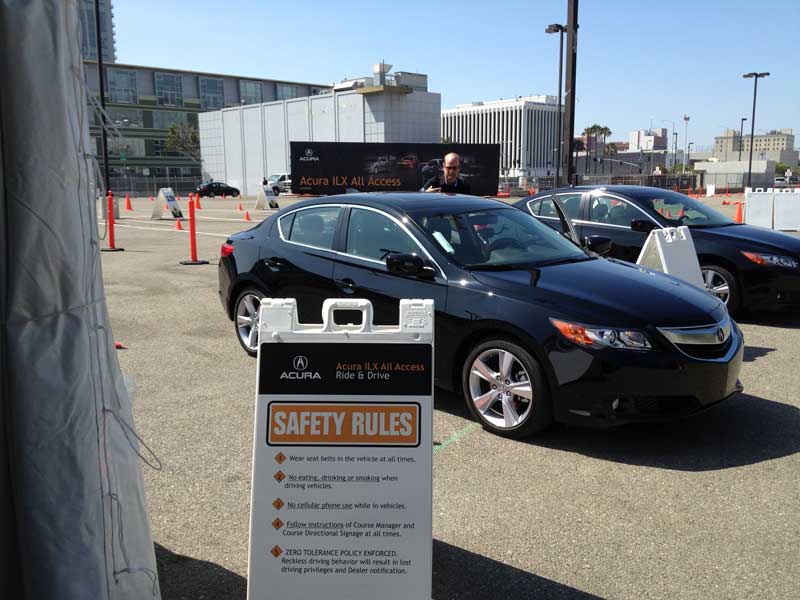
The Acura ILX All Access Ride & Drive Event was held in a parking lot across from Staples Center. In this picture, both Hybrid and 6MT models await drivers for the cross-town drive portion of the event.

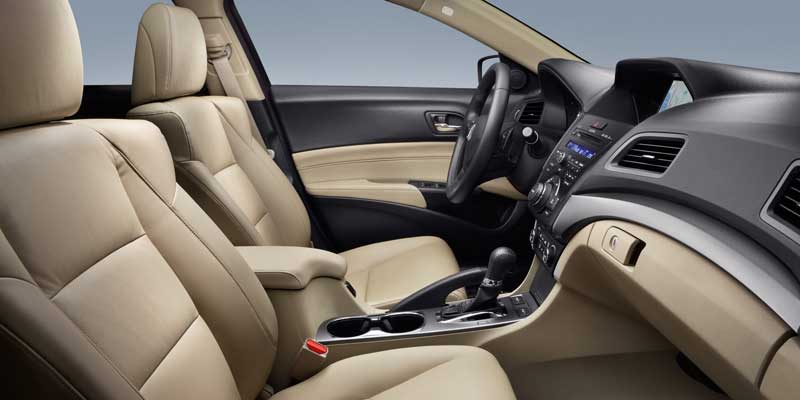
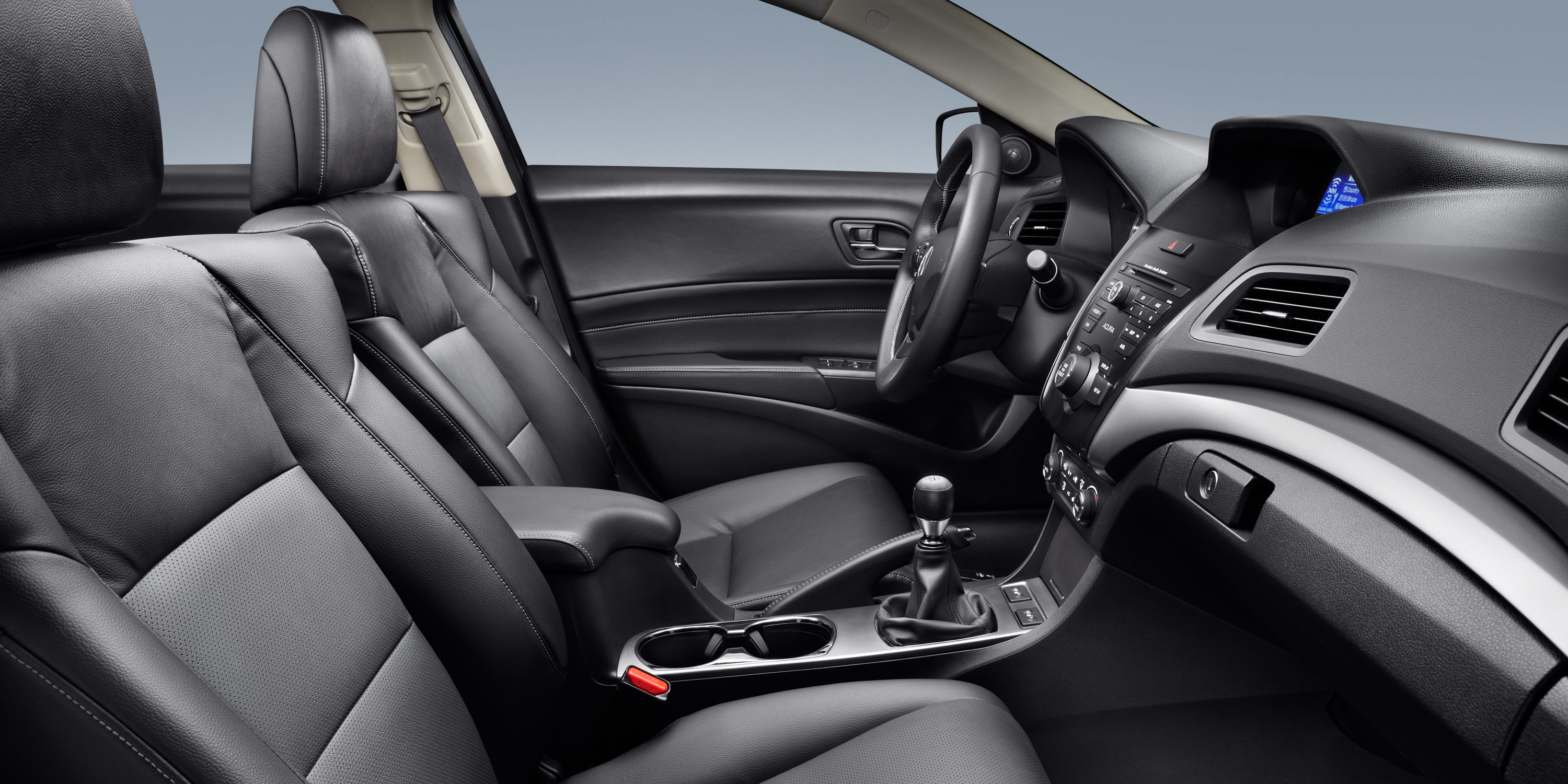
The Acura magic wand also means that the cheap, nasty, hard plastic interior panels and surfaces that offended drivers of the Civic have been banished in favor of upgraded softer and textured materials that feel and look upscale. In addition, a heavy dollop of soundproofing isolates the cabin from outside road noise.

The interior of the 2013 Acura ILX is a much more inviting place than its Honda Civic cousin. Hard plastic surfaces have been banished in favor of soft-touch and textured materials.

The 2012 Audi A3 Sportsback doesn’t come to mind when I think about the 2013 Acura ILX. Sorry, Acura.

Acura would like us to believe that the sole competitor to the new ILX is the Audi A3 Sportsback.  Really? The A3 is more expensive and its excellent German engineering coupled with superb, class-leading interior craftsmanship don’t spring to my mind when I look at the ILX – not to mention that the A3 is a wagon and the ILX is only available as a sedan.

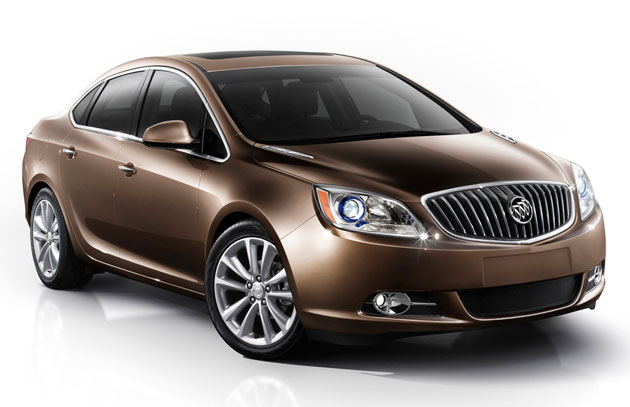
The 2012 Buick Verano is a nice small, upscale near-luxury sedan – exactly what I equate with the 2013 Acura ILX.

To me, the closest competition in price and luxury features would be the new Buick Verano. But Acura doesn’t want its customers to associate Buick with Acura.  Buick is an “old man’s” car, right? Well, yes, sort of, but Buick is desperately trying to change that image and Acura is desperately avoiding any suggestion that it’s anything other than a sporty youth-oriented brand.

My first drive was the ILX 6MT featuring the entertaining drivetrain lifted directly out of the Civic Si. It features a 2.4L naturally-aspirated four-cylinder engine making 201 hp and 170 lb-ft of torque married to Honda’s exemplary close-ratio 6-speed manual transmission.

The 2013 Acura ILX MT6. It uses the excellent powertrain from the 2012 Honda Civic Si. The sweet 2.4L four cylinder engine is only offered with the 6-speed manual transmission. This will severely limit sales as most people want an automatic. It will, however, satisfy some enthusiasts.

We had our safety rules for the closed course portion of the Acura ILX All Access Event. This was the starting point, from inside a tent.

Honda estimates that the 6MT model with standard Premium Package ($29,200) will account for only 5% of ILX sales. If Acura dropped the 5-speed Sequential SportsShift automatic from the TSX (which uses the same 2.4L engine) into the sporty ILX it may get more sales from drivers wanting a bit more than 150 ponies under the hood. I’m not holding my breath.

I had forgotten just how excellent the Civic Si was and I was happily reminded with the ILX 6MT. Honda’s close-ratio row-it-yourself 6-speed gearbox is polished perfection. Our ten minute on-road course took us on the surface streets around Staples Center. The clutch was so creamy, linear and easy that you could drive it on a daily basis in LA with little distress to your clutch foot. The car never bucked on gear uptakes and I didn’t stall it once.

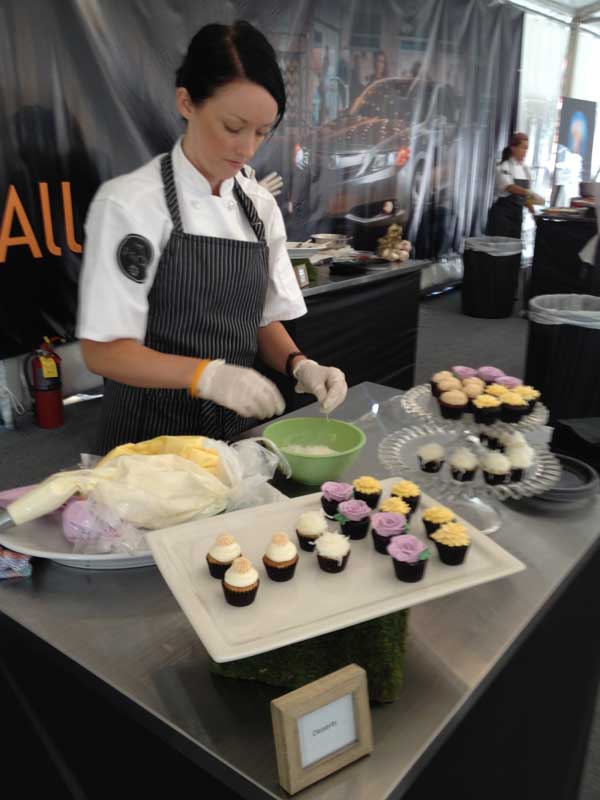
The food in the lounge/food tent was pretty good. Overall it was a nice setup.

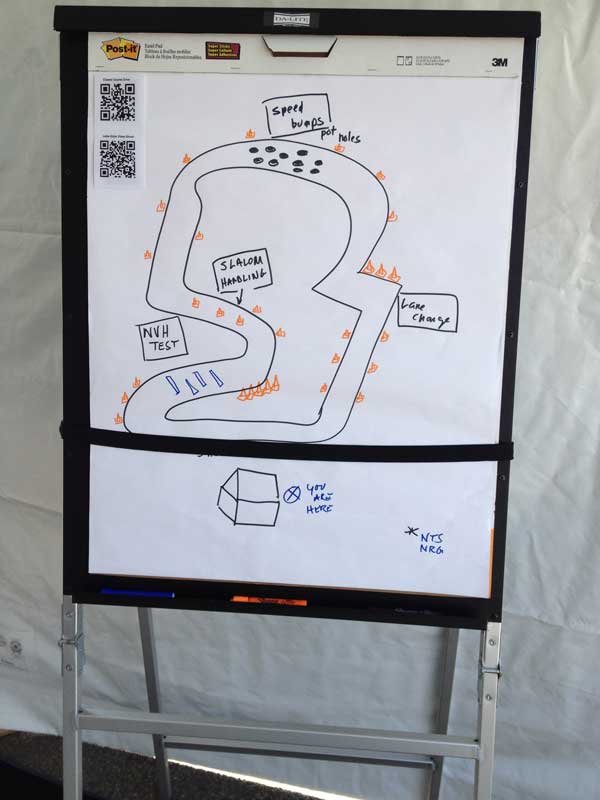
The slalom course included lane change, an NVH (noise, vibration and harshness) test and potholes.

The little steering wheel felt just right in my hands and the electrically-assisted rack-and-pinion power steering provided sufficient feedback and on-center accuracy. It cuts a tight turning circle too. The happy revs, variable-ratio EPS and well-sprung and dampened 4-wheel independent suspension chassis meshed effortlessly for lighthearted entertainment if not blistering speed. It even performed well in our off-street mini-slalom/NVH course.

My second drive was the ILX Hybrid that comes standard with the Premium Package. If you believe the EPA estimates, the Hybrid should get around 38 mpg, no matter where you drive. Assuming normal driving, you’re likely to get closer to 35 mpg. The extra weight on the ILX accounts for the reduction in fuel economy from the Civic Hybrid which is rated at 44 mpg.

The Hybrid’s drivetrain is identical to the drivetrain in the Civic Hybrid: A 1.5L four-cylinder 110 hp gas engine coupled with Honda’s Eco Assist system which includes a 23 hp permanent magnet electric motor sandwiched between the engine and the continuously-variable transmission. The new-generation Civic/ILX Hybrids use a 20 Kw lithium-ion battery pack.

As long as the green ball in the middle of the dash display stays green and grows, the car is happy. Any sudden moves on the accelerator are greeted with disapproval from both the shrinking, yellowing ball display and the whining CVT. It’s not going to win any races, but the people who buy this car don’t care.

2013 Acura ILX Hybrid in Silver Moon

The ILX Hybrid with the Technology Package and shipping is a whopping $35,295. The Civic Hybrid with all the goodies is about $6,500 cheaper. I’m not sure Hybrid buyers will drop the extra dough for the Acura upgrade and extra features.

The ILX Premium Package is a must-have and it’s standard on all but the base ILX. It includes perforated, heated, 8-way power leather-trimmed sports seats, a multi-view rear camera and dual-zone automatic climate control – goodies you’ll never find on Honda Civic. At 6’1”, I was able to find a comfortable seating position in the ILX – something that never happened with the Civic.

The ILX 6MT interior, with the Premium Package, shows the nice sports, power perforated leather seats. Cup holders are large and should suit American tastes.

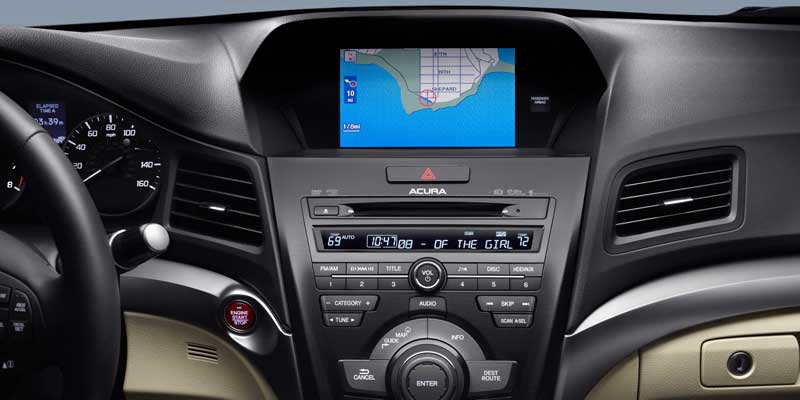
The Technology Package is the top trim level for all ILX and encompasses all the tech-geek features we have come to expect from Acura: Acura’s excellent satellite-linked navigation with Real-Time Traffic and Weather; An Acura/ELS sound system with more speakers (10 not 7), more watts (415 not 360) and a 15 GB media storage hard drive good for storing up to 3,500 songs. Acura’s voice recognition system is better than others.

Acura steps things up in the Tech Package with a Pandora internet radio interface, USB audio cord and Bluetooth 2.0 streaming audio as well as hands-free mobile phone functions. The big new feature is the SMS text message function which reads incoming texts aloud and lets you verbally respond from a list of pre-programmed responses: “I’m running late, the 405 is a parking lot” or “Call me you idiot, I’m driving.”

The Technology Package trim level adds a terrific sound system, navigation, text-to-voice and many other goodies. Notice the red pushbutton start in the lower left corner. It’s standard on every ILX.

All this great technology and yet HomeLink, the decades-old nifty feature that allows you to control gates and garage doors with a built-in interface, is nowhere to be found. Not even as a dealer accessory. I just shake my head.

A keyless entry and pushbutton ignition system is standard across the ILX range. The key fob is small and slim – something I wish every manufacturer would adopt. If you have a keyless system, why does the fob have to be big? A big fob may work well when lost inside a woman’s purse, but doesn’t do wonders in pants pockets.

The brushed chrome “beak” of the new ILX gives it a nice edge and I think the new sheet metal is handsome. If only the Honda Civic looked this good!

The ILX carries the latest softened version of Acura’s bold front beak/blade look. I rather like the handsome, if conservative looks and think it’s a good entry-level product for Acura. If you yearned for a Honda Civic with better styling, respectable interior plastics, a longer warranty and a host of luxury features, look no further than the ILX.  If you were looking for another Integra, check out the ILX 6MT. It’s not the “I-word” and it’s not a coupe, but it’s sure an impressive upgrade to the Civic Si sedan.