Archive for the ‘Automobile Manufacturers’ Category


I’m old enough to remember the original Dodge Dart that “graced” the American roads from 1960 to 1976. Aside from the first generation 1960 – 1961 model years, the Dodge Dart was a platform twin with the decidedly un-sexy Plymouth Valiant.

The original Dart sold well, but the vast majority were soporific, entry-level “compact” (by contemporary standards) family cars. Some performance variants came and went. Remember the Swinger or the Demon? And after some Christian groups complained about the name “Demon” and the use of a devil with a pitchfork in ads, it was renamed the Sport. Gosh, that was original.

The Dart soldiered on until is was quietly laid to rest at the end of the 1976 model year. Of course, there was the obligatory “Spirit of ’76” edition — I think all the Detroit automakers introduced some tedious bicentennial models, some complete with red, white and blue theme, stickers and badges.

After decades in the dustbin of history, the rejuvenated Chrysler Group, now controlled by Italy’s Fiat (Fabbrica Italiana Automobili Torino) Automobiles S.p.A., dusted off the venerable nameplate for what is arguably its most important post-bankruptcy product.

The 2013 Dodge Dart

Based on the well-received European market Alfa Romeo (also a Fiat company) Giulietta, the 2013 Dodge Dart put on some weight and size for the bigger North American market. In fact, Dodge boasts that the Dart has interior capacities more in line with mid-size sedans than its compact class.

Styling is a mostly successful pinched version of the much bigger Dodge Charger. It’s a fresh design, replete with Dodge styling cues, that once and for all drives the final nails in the coffins of past Dodge compact disappointments; namely the Neon and the Caliber.

The rear of the 2013 Dodge Dart. In this case, it’s the Limited model with the 1.4L turbo engine with Fiat’s MultiAir technology.

I had the opportunity to briefly test the base Dart SE with the 2.0L 160 hp 148 lb-ft of torque “Tigershark” 4-cylinder engine mated to a new 6-speed automatic. In addition, I drove the 6-speed manual Dart SXT fitted with Fiat’s 1.4L turbo 4-cylinder engine making 160 hp 184 lb-ft of torque with valve induction and timing managed by the company’s MultiAir ™ technology This is the same engine and transmission combo found in the Fiat 500 Abarth.

The base Dart SE starts at $16,790 including destination; but needs at least $2,390 of options to give it a minimum level of kit, some of which should be standard, like Bluetooth and air conditioning. The 6-speed automatic is a $1,100 option that will be fitted to the vast majority of Darts sold in the U.S. I can’t imagine a Dart SE sold in California without the $995 “Value Group” which includes air conditioning, keyless entry and speed-sensitive power locking doors.
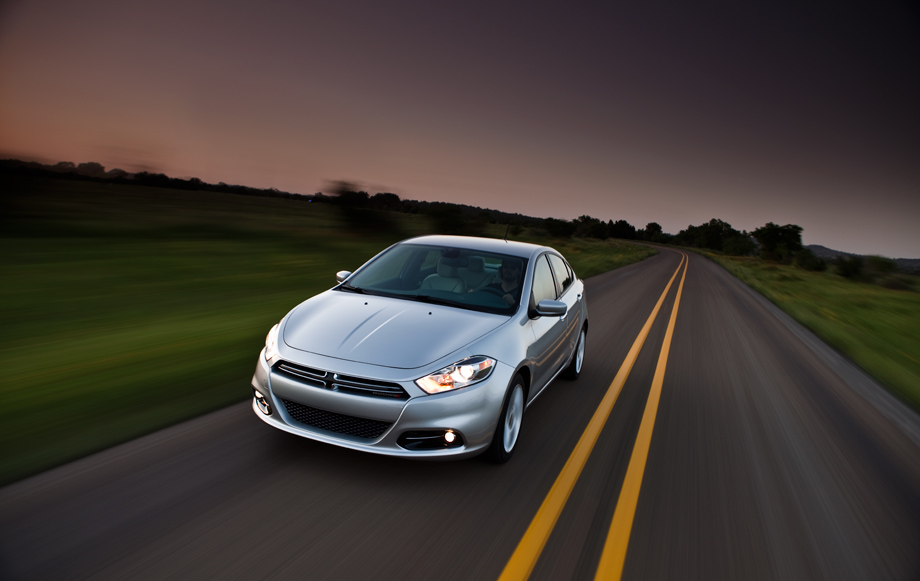
A nice vanity shot of the new 2013 Dodge Dart, courtesy of Dodge.

The Dart’s class-leading 106.4 inch wheelbase and front struts combined with an independent rear multi-link suspension did an admirable job of soaking up bumps and rough roads. The electric power steering was light and precise, although I think the Focus has a more driver-focused feeling.

The 2.0 L Tigershark (stupid name for a new family of engines, considering this one doesn’t have much of a bite) engine with variable valve timing bolted to the 6-speed automatic will be the volume drivetrain. People like me would like some more bite to our Tigershark and that will be available later this year in the R/T model with a 2.4L Tigershark 4-cylinder engine sporting “enhanced” MultiAir II ™ technology making 184 hp and 171 lb-ft of torque. The R/T will be available with either a 6-speed manual or 6-speed automatic.

There are lots of transmission choices for the Dart. All models have a close-ratio 6-speed manual transmission as standard. A 6-speed automatic is also available on all models and a 6-speed dual dry clutch transmission is available on the 1.4L MultiAir turbo engine that won the Best New Engine of 2010 award.

Dodge is certainly not willing to admit it, but it blew the introduction of the Dart in July because it didn’t have the 6-speed automatic transmission available. Since 90+ percent of the Darts sold will be equipped with the automatic, dealers couldn’t convince many customers to buy the manual version. That’s bad planning.

Since I keep throwing around the term MultiAir, it might be a good idea to define it. It’s an electro-hydraulic variable valve actuation system that delivers “optimum combustion at any speed under all driving conditions by allowing direct and dynamic control of air intake and combustion.” Basically, it helps the the engine breathe better resulting in increased fuel economy.

My Dart SE was the basic model that you’ll find in the rental fleets. The cabin was sort of a dreary cave, all covered in black plastic and cloth; however, the plastics were as good or better than the competition (Chevy Cruze, Ford Focus, VW Jetta, Honda Civic, Hyundai Elantra, etc.). Hard plastics were reserved for lower panels, not the ones in your direct line of site or touch.

This is the interior of the basic Dart SE. If you do opt for an SE, get a lighter interior as the all black looks a bit somber. The two-tone tan interior looks much richer, even if it isn’t.

I think most Dart retail buyers will step up to the better-equipped and competitively-priced SXT models with more standard kit and a slew of high-tech optional equipment found in more costly Chrysler Group products. In fact, the Dart is another prime example of the democratization of technology.

The basic radio unit in the Dodge Dart.

How did it drive?

Well, it was definitely solid and fuss-free. It won’t win any speed contests, but the 6-speed automatic did a great job of downshifting when needed and kept the engine in the sweet spot to optimize fuel economy. The brakes felt capable and linear, not spongy. All four wheels get disc brakes as standard equipment. I was also impressed that I didn’t detect any torque steer in normal city driving.

The radio and climate controls were simple and well-placed. The AC strained to overcome the extreme triple-digit desert heat, but managed to cool the cabin by the end of the drive. The manual tilt-telescope steering wheel helped me find a good seating position so that my 6 foot 1 inch frame didn’t feel cramped at all.

The passenger in-seat storage system in the 2013 Dart.

The front passenger seat has a clever in-seat storage system. The cushion pulls forward to reveal a hidden compartment for small items like a wallet or digital camera. I’m not sure how comfortable it would be for the passenger as the seat cushion is thinner. The extra-large glove box can fit a laptop computer or tablet.

The SXT with the 1.4L turbo MultiAir engine had a completely different character. I loved the exhaust note when it was started and revved. I didn’t love the way it drove in traffic. It’s like the engine is dead between 2nd and 3rd gear. What happened to the turbo?

The only way to have fun with the turbo was to get it on open stretches with your right foot mashing the happy pedal. The 6-speed manual was good, but not compared to the amazingly silky unit in the Honda Civic Si. I can’t imagine driving this thing on a daily basis in LA — it would make me scream like a maniac in traffic. If you want the turbo, opt for the 6-speed automatic or the dual clutch unit.
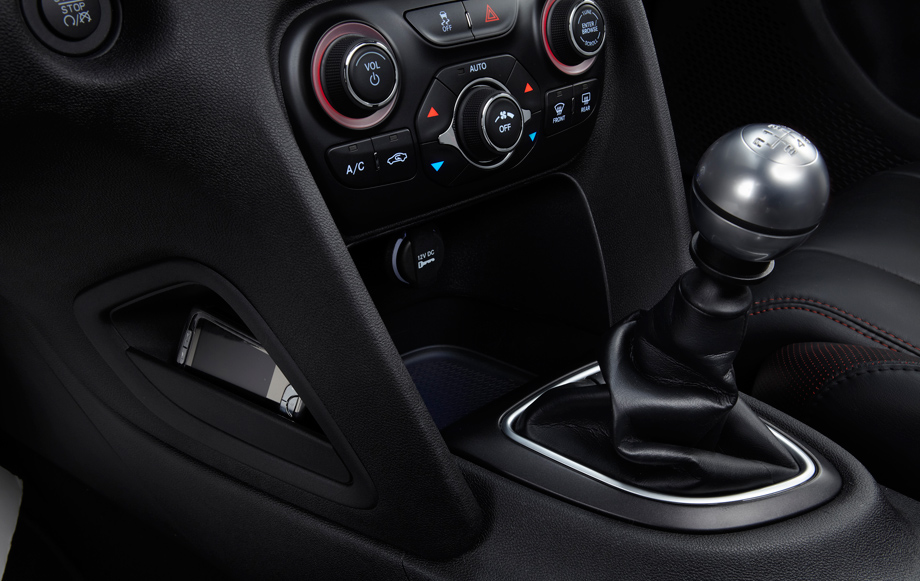
The 6-speed manual transmission available on the 2013 Dodge Dart

Fuel economy is an important selling point for the new Dart. One of the benchmarks set by the U.S. Government was for Chrysler to make a high-volume, 40 mpg car at a factory in the U.S. The Dart, built in Toledo, Ohio at Chrysler’s Belvidere Assembly Plant, fulfills that metric and Fiat’s bonus was an additional 5% ownership stake in Chrysler.

The base Dart SE I drove was rated at 24/27/34 mpg. The Dart SXT, with the 1.4L MultiAir turbo and 6-speed stick was rated at 27/32/39. The base SE is slightly behind its class, but the little turbo equals or slightly beats its competitors.

Wait, wait – there’s more!

In a couple months, you will be able to buy the Dart Aero, a more aerodynamic variant of the 1.4L MultiAir turbo Dart that will get up to 41 mpg with the stick or 40 mpg with automatic. For no real reason, 40 mpg is the new “magic” number in the compact segment and now Dodge has similar bragging rights.

But that’s not all…!
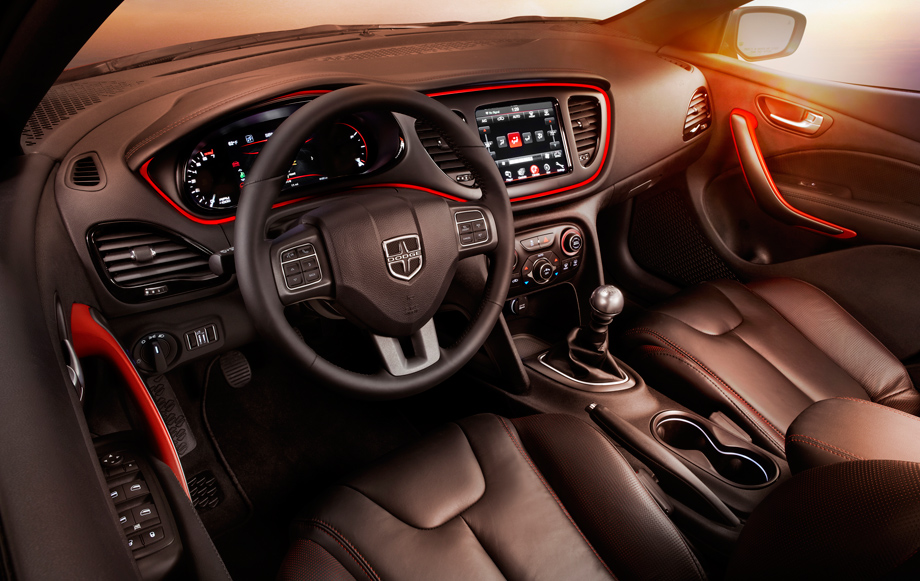
This upgraded interior of the Dart Limited sports red accents, Nappa Leather seats and contrasting red French stitching.

For the enthusiast, you will have to wait a little bit longer to get your hands on the sporty R/T model with the new 16-valve 2.4L Tigershark MultiAir II 4-cylinder engine. It promises to be the really fun Dart. Yeah, it’s right on target (no review is complete without this cliché).

I love all the grown up features that Dodge is offering on the new Dart. In addition to the over 100,000 ways to color customize the Dart, Dodge offers features including automatic headlights, rain-sensing wipers, Xenon lamps with Smartbeam ™ headlamp control, heated seats and even a heated steering wheel. You can opt for high quality Nappa leather seats with contrasting French stitching.

The reconfigurable TFT instrument display is unique to the Dart in the compact class.

A class-exclusive feature is the optional, full-color TFT (thin film transistor) cluster display replacing the analog dash gauges. It’s totally customizable with countless variations as to how and what is displayed for the individual driver. The optional U-Connect navigation system has Dodge’s intuitive, dazzling 8.4 inch touch screen, nearly identical to the one in the top shelf Chrysler 300. The system incorporates Bluetooth, Satellite Radio, SiriusXM TravelLink, real-time traffic, climate control, and digital media functions.

Other democratized options include dual-zone automatic climate control, rear parking sensors, a rear-view back-up camera, blind spot monitors, keyless entry and start, remote start, HomeLink and voice command.

The optional 8.4 inch full-color touch screen controls many infotainment functions and navigation.

In short, the Dodge Dart may be the new kid on the block, but it’s ready for prime time and ready to grab its share of the multimillion unit, highly-competitive compact car segment.

First, let’s review Moore’s Law: It is the observation that over the history of computing hardware, the number of transistors on integrated circuits doubles approximately every two years.  It also describes a driving force of technological and social change in the late 20th and early 21st centuries.

In this context, “democratization” can be defined as the spread or diffusion of technology throughout the things we use in our everyday lives from a refrigerator to an automobile.

So how does Moore’ Law and the democratization of technology apply to the modern automobile?

Technology has been in trickling down from expensive to entry level automobiles since they were  first invented. Headlights, electronic starters, windshield wipers and automatic transmissions were all once considered high tech that became democratized.

Early Examples

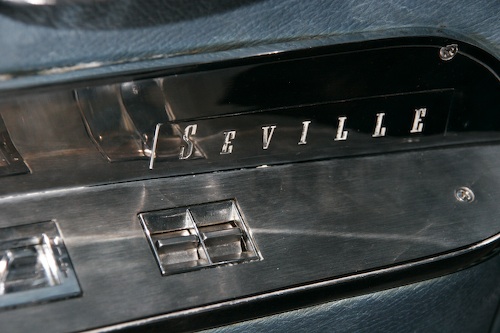
Remember when power windows, like these on a vintage Cadillac Seville, were really special and cool? Now, it’s so common, you don’t even think about it.

Just a few decades ago, commonplace conveniences like power windows, power door locks or a day-night rear view mirror were luxuries.  As a kid in the 1960s and 1970s, I used to marvel at power windows. They were just so damn awesome and fun!  Given a chance, I could play with the window switches until the battery died. Okay, it happened and the adults were none too thrilled about it; however, today, it’s taken for granted that all but the very cheapest cars have these features as standard equipment.

Air conditioning used to be a big deal too. We used to fight to be in the front seat near the AC vents as the rest of the station wagon didn’t cool very well. Now almost every vehicle has it as standard equipment and it doesn’t overheat the car.

Digital Media and Communications Technology Merging with Automobiles

iTunes, Apple’s digital music store, opened in April 2003 and seemingly overnight, the entire music business model was upended and it is still trying to cope with the fallout. Almost all record store chains have vanished and sales of physical CDs have been in freefall ever since. No one carries a CD or cassette player. If you see anyone – of any age – listening to music outside their home or car, it’s almost always with a digital music player and earphones. Boomboxes? Those are so 1990s.

Various generations of Apple’s iPod

Various generations of Apple’s iPod Nano

It was only five short years ago that Apple’s iPhone revolutionized the smartphone market. From nearly zero market share in 2007, smartphones now account for than 50% of all mobile phones in the U.S market.

Apple’s co-founder Steve Jobs holding the original iPhone in 2007

And today, almost every single in-car infotainment system, even a very basic one, has a way to integrate a smartphone or digital music player (like an iPod), even if it’s only an auxiliary line-in jack. Manufacturers are tripping over each other finding ways to integrate smartphones, apps and touch-screen technology into in-dash infotainment systems. The way smartphone technology is integrated into your car’s interface has become a major selling point for any car sold today.

Cadillac’s new CUE (Cadillac User Experience) infotainment system looks very much like an iPhone or iPad with its beautiful color touch-screen interface and various functions that look like apps.

Recent Examples of the Speed of Democratization

In 2006, for the 2007 model year, Lexus introduced a new generation of its flagship LS sedan. One of it’s “dazzle me” features was its Automated Parallel Parking system that used sensors to to steer the car into a preselected parking space. It was the first time this feature was offered on any vehicle in the U.S.

A 2007 Lexus LS460, introduced in 2006.

Lexus’s original automated system, part of a $4,315 option package, needed a large berth to perform its magical moves in what seemed like slow motion. On the mean streets of LA, if you actually found a streetside parking space big enough for the land yacht, you risked a road rage incident because of how long you’d be blocking an entire lane of traffic.

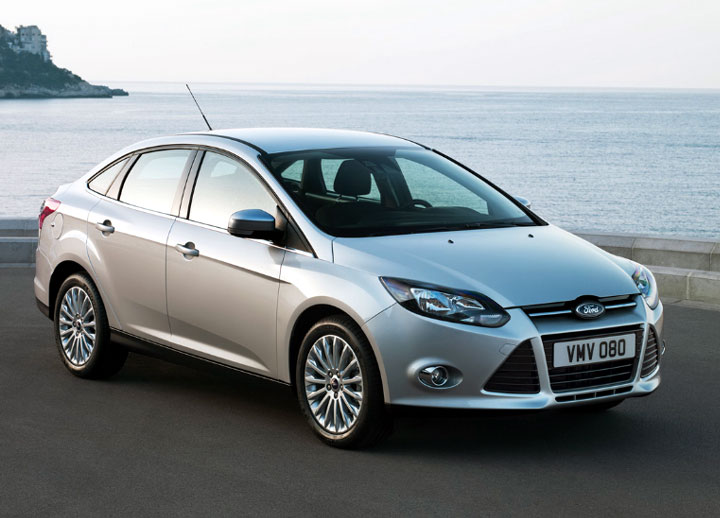
Today that same feature, Active Park Assist, is available on a 2013 Ford Focus for $395 (it was first made available in 2011 on the 2012 Focus). And for that price, you get a rear view camera, front parking sensors, and ultrasonic sensors. Ford claims the car will park itself, with very little driver input, in as little as 24 seconds.

2013 Ford Focus Sedan Titanium

That same year, the 2007 Lexus LS was fitted with the first production 8-speed automatic transmission. Today, every BMW (except for the M-cars) has an 8-speed automatic transmission either as standard or optional kit. The same ZF 8-speed automatic (BMW doesn’t make its own transmissions) is available in most Audis as well as Chrysler Group products with rear- or all-wheel drive.

Do you remember, decades ago, when Cadillac offered a “Twilight Sentinel” that essentially automated the headlights? That feature used to be a big deal only available on top-line luxury cars. Today, you can get that feature on Kia Forte.

Not so long ago, Dual-Zone Digital Automatic Climate control was a feature only offered on some big, expensive luxo-cruisers.  In less just a few years, every Honda Accord, Toyota Camry and Nissan Altima offered the same digital dual-zone automatic climate control systems. The technology to do this has become very inexpensive.

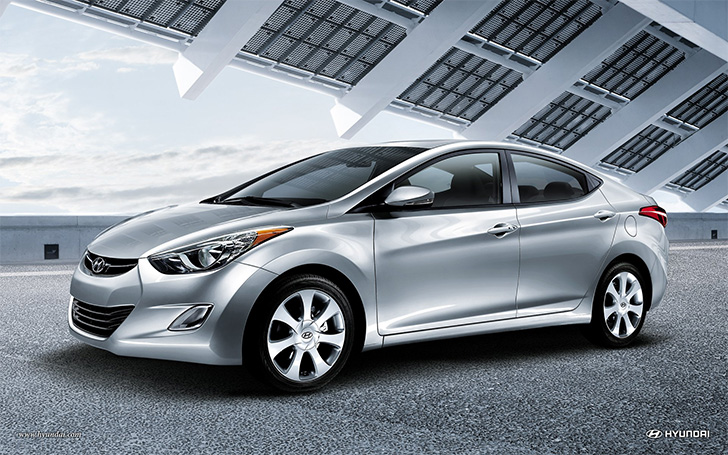
Let’s compare some pricing. The 2013 Hyundai Elantra Limited is very well equipped, including freight, at $21,720. The only option package is the Technology package that costs $2,350 — and you get a lot for your money: A GPS Navigation system with a 7” full color screen, a rear view camera, a 360 watt premium audio system, dual zone automatic climate control, automatic headlights and keyless entry and with a push button start.

2013 Hyundai Elantra Limited Sedan

Now let’s compare this to the all-new 2012 BMW 328i, with a base price, including freight, of $37,395. Automatic headlights are standard on all BMWs as is dual-zone automatic climate control. First, let’s add the Premium Package for $3,100: Leather seating surfaces, lumbar adjustment, a moonroof, satellite radio with a 1-year subscription and keyless entry and ignition.   Leather seating surfaces, a moonroof and satellite radio are standard on the compact Elantra Limited.

To match the lowly Elantra’s kit, the 328i needs to add navigation – $2,150; heated seats – $500; rear view camera – $400; and an upgraded Harmon Kardon Surround System, $875.

2012 BMW 328i Sedan

In total, you’d have to add $7,025 in options to the base BMW (a whopping $44,420) just to match the technology on the $24,070 Hyundai.

This is what has happened and is continuing to happen with all sorts of features that used to be reserved for expensive luxury cars that are now affordable and available on humble mass-market cars – from subcompact hatchbacks to full-size sedans and SUVs.

I’ll be the first to tell you that the tech in the BMW is probably better and more advanced than that in that in the Hyundai or that BMW’s leather seats are far superior to the much cheaper ones inside the Elantra.  But the point is that the technology and materials like leather, soft-touch plastics and LED lighting has democratized its way to entry-level cars and consumers can feel like they aren’t missing too much by not paying so much more for a more prestigious brand.

Consumers are the winners in the democratization of technology on cars. With the technology trump cards being taken away from the likes of Mercedes, BMW, Audi and Infiniti, the luxury car makers must find new, more novel high-tech ways to distinguish their cars from the more mundane, entry level, mass-market offerings of companies like Hyundai/Kia, Toyota, Chrysler, Chevrolet or Ford.

Of course stellar drivetrains, high performance models, LED lighting, sophisticated chassis and suspension systems, high quality materials, design and build quality are still distinguishing factors in such legendary brands as Porsche, Mercedes and BMW.  But even those advantages are constantly under assault as technological advances in manufacturing allow all carmakers to make higher-quality, safer vehicles with better fit and finish, upgraded plastics and beautiful paint jobs.

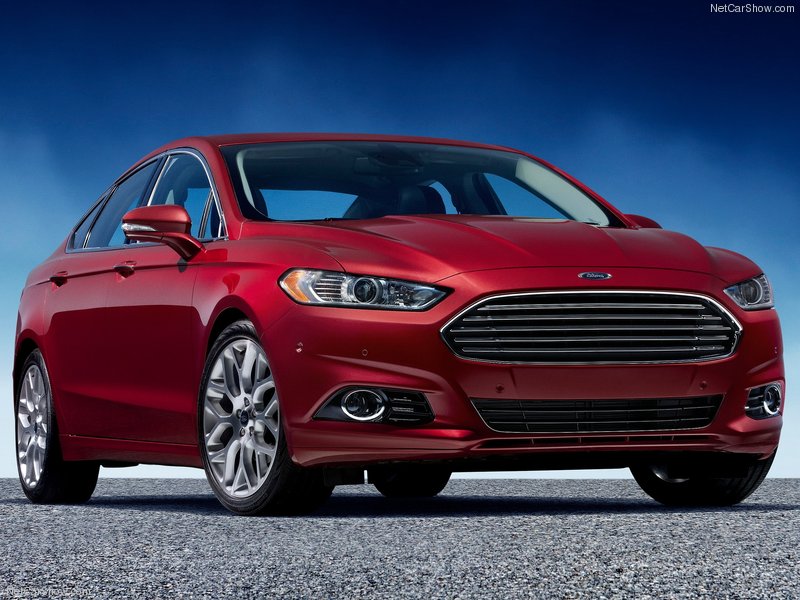
The New Poster Child for Tech Democratization: The 2013 Ford Fusion

Ford is upping the ante again this fall as the 2013 Fusion comes to market. Ford marketing says the new Fusion is “America’s Smartest Midsize Sedan” and that it can “see what the driver can’t.”  It can be equipped with front and rear cameras, front and side radar, and front, rear and side ultrasonic sensors to accomplish the task.

2013 Ford Fusion

The 2013 Ford Fusion is available with a dizzying array of cameras, radar and ultrasound sensors.

The web of cameras and sensors are all networked together with high-speed processing chips and millions of lines of software code. Ford’s Driver-Assist Technology for the 2013 Fusion includes a rearview camera to assist the driver when backing up, a Blind-Spot Indicator System that warns the driver of cars in lanes on either side and a Cross-Traffic Alert assist in locating traffic to the rear and sides when backing out of a parking space or driveway.

Driver-Assist Technologies available on the 2013 Ford Fusion

Pull-Drift Compensation and a Lane-Keeping System nudge you back into the lane with a bit of torque applied to the electric power steering if the car senses it is going outside the lane without driver input. Active Park Assist parallel parks the car for the driver – like the system introduced in 2011 on the 2012 Focus. Driver Alert System provides a visual (flashing lights) and audio (beeping) alert if it senses you falling asleep.

The radar-based Adaptive Cruise Control adjusts the speed to follow the car in front of you if that car is going slower than your set speed. The system will also brake the car to a complete stop if traffic grinds to a stand still. Using the same radar, Forward Collision Warning loudly alerts you to a pending frontal crash.

So what does all this set you back? The 2013 Fusion Titanium (top trim level) starts at $30,995. The total cost of all the Driver Assist gizmos I described above is $2,790 for a fully-loaded MSRP of $33,785. That’s $3,610 less than the stripped-down entry level BMW 328i sedan. Active Cruise Control alone is a $2,400 option on the Beemer.

The interior of the 2013 Ford Fusion looks like a very nice place to spend time. I think it will be a very popular midsize sedan and proves that American can compete with the Japanese and Koreans. The era when import brands have an advantage over the domestic manufacturers is officially over.

In short, the 2013 Ford Fusion takes the democratization of automotive technology to a whole new level and makes the Fusion stand out from the crowded pack that includes: the all-new 2013 Honda Accord, the all-new 2013 Nissan Altima, the one year old Toyota Camry and the two-year old Hyundai Sonata and Kia Optima. Even the all-new 2013 Chevy Malibu is at least in the running here. The Fusion, however, sets the bar higher.

To the driving enthusiast like me, assuming price wasn’t an obstacle, I’d go for the rear-drive Ultimate Driving Machine any day over the front-drive cushy family hauler from Ford.

But the vast majority of buyers look at the value of a “common” brand like Ford and see that they can drive a sharp-looking, high-tech near-luxury car with a different badge for just a fraction of the price of a similarly-equipped luxury brand car. In other words, Ford gives you much more value for your money.

Conclusion

In keeping with Moore’s Law, we can only expect to see more advanced technology features to appear on less-expensive cars as costs continue to fall, processing speeds increase and technology advances. Everyone will benefit from this democratization of technology.