Posts Tagged ‘Mercedes-Benz’


Mazda: Mazda has struggled to compete against much larger rivals both in Japan, its home market, and in the US, it’s largest market. First, long-time partner and partial owner, Ford, divested its ownership interest in Mazda, ending some platform and engineering sharing agreements. Then the Great Recession hit, draining Mazda of precious resources needed for future product development.

Deep inside Mazda’s R&D facilities in Hiroshima, engineers worked non-stop to develop a new line of engines, transmissions and technologies that would lead the company into a much more cleaner and fuel efficient future.  Although Mazda lacks the hybrid technology of its larger competitors, it came up with a family of new engines and transmissions marketed under the unfortunate banner of “SkyActiv” technology.  The new drivetrains combine direct injection, variable valve timing, turbocharging, reduced friction, and smarter 6-speed transmissions to bring marquee fuel efficiency to its new models.

First up last year was the CX-5 small crossover that competes in one of the hottest market segments dominated by the likes of the Honda CR-V, Ford Escape and Toyota RAV4.  This year, Mazda is introducing the completely redesigned 2014 Mazda6 mid-size family sedan, that finally seems poised to capture consumers’ attention from perennial favorites like the Camry, Accord, Altima, Fusion, Optima and Sonata.  The sexy styling reminds me of Ford’s new Fusion – something that may not be as coincidental since the last-generation Ford Fusion and Mazda6 shared the same platform.

The standard engine for the 2014 Mazda6 will be Mazda’s SkyActiv-G 2.5L 16-valve turbocharged 4-cylinder gasoline engine good for 184 hp and 185 lb-ft of torque. Most will be sold with a six-speed automatic, although a six-speed manual will be available on lower trims. EPA figures haven’t been released  yet, but Mazda expects highway fuel economy to beat 35 mpg.

However, the most important  introduction will be the SkyActiv-D engine, a modern 2.2L 4-cylinder turbo-diesel engine that burns clean enough to need no additional NOx aftertreatments.  This promises the fuel economy of a hybrid without all the expensive batteries and dual electric-gas drivetrains.  Expect to see highway fuel economy better than 40 mpg and a substantial increase in city economy over the gasoline counterpart.

The 2014 Mazda6 with SkyActiv-D technology.  It should be available by mid-2013.

The 2014 Mazda6 with SkyActiv-D technology. It should be available by mid-2013.

The front of the 2014 Mazda6 sedan.
The front of the 2014 Mazda6 sedan.

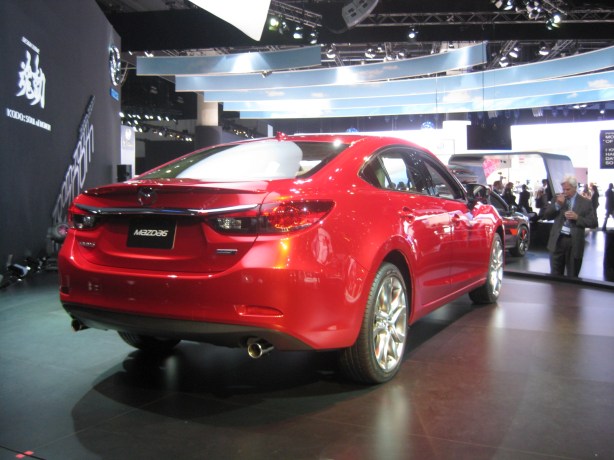
The rear of the 2014 Mazda6 diesel sedan.

The rear of the 2014 Mazda6 diesel sedan. Mazda calls its new styling language “KODO” – Soul of Motion.
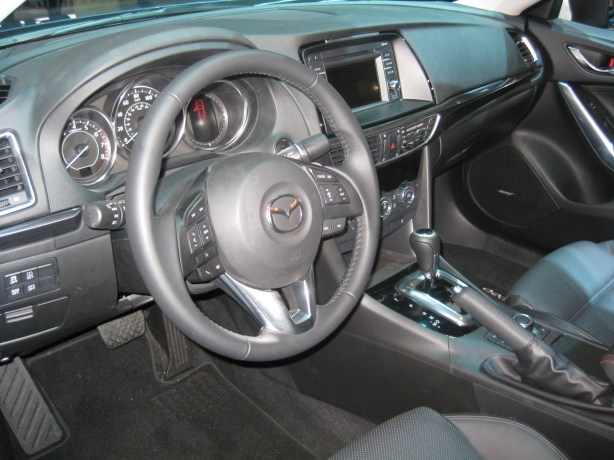
The interior of the 2014 Mazda6.

The interior of the 2014 Mazda6. The plastics look and feel class-leading and the switchgear feels precise and well-made.


Mercedes-Benz: The largest single market for Mercedes-Benz worldwide is Southern California (thank you Fletcher-Jones in Newport Beach), so you’d think Mercedes might introduce some important products here. You’d be wrong.  While I very much like the 2014 SLS AMG Black Series, it’s not like this is a volume car. It gets a few upgrades to the “standard” SLS AMG package, but the engine is the same 6.2L hand-built AMG V8 good for 622 hp and 468 lb-ft of torque.  The  AMG Speedshift dual clutch 7-speed sports transmission, is the same but slightly upgraded. For the extra $100,000+, the Black Series gets ceramic-composite brakes, adaptive performance suspension, lighter alloy wheels, special performance tires that wear out even faster than the standard tires. As you’d expect, it’s also the fastest SLS, leaping from a standstill to 60 mph in 3.5 seconds – performance you are sure to need while crawling on the 405 at 8:30 am.

Sure we will see a few of them in LA, but they will be owned by collectors with a dozen other exotic cars in their home garage or by misbehaving  scions of Saudi royalty.  The US price hasn’t been announced, however, in Germany it will be 249,900 euros, or around $322,846 at current exchange rates. Get in line now.
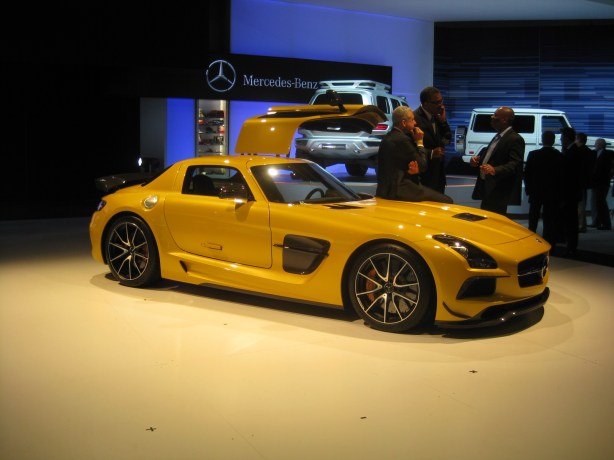
2014 Mercedes-Benz SLS AMG Black Series

2014 Mercedes-Benz SLS AMG Black Series

That rear wing is a sure giveaway that this 2014 SLS AMG is the Black Series, not the run-of-the-mill SLS Gullwing.

That rear wing is a sure giveaway that this 2014 SLS AMG is the Black Series, not the run-of-the-mill SLS Gullwing.

Mercedes showed one concept truck, the Ener-G-Force Concept Fuel Cell Vehicle. It’s said to foreshadow the styling on an upcoming “baby” G-class SUV, perhaps built on the new A-Class front drive architecture. But this is no baby. It’s quite big – bigger than the tank-like G-wagon (short for Geländewagen or cross-country vehicle) that Mercedes has been producing in substantially the same form since 1979.

The styling is quite flamboyant while fluidly-sculptural. I even like the designer LED headlights in the outline of a “G.”  Overhangs are practically non-existent and this thing looks like it could climb over a Range Rover or through the hills and craters of the moon. The built-in front winch is very slick.  Of course, a fuel-cell drivetrain is unlikely for any production car, at least in the near future, but it does hint at possibilities in the next couple of decades when the costs of fuel cells comes down and you can buy a hydrogen refill at every “gas” station. I have more pictures of this that I will include in another LA Auto Show post.

The Ener-G-Force Concept SUV from Mercedes-Benz.

The Ener-G-Force Concept SUV from Mercedes-Benz.

MINI: BMW’s British unit didn’t have any real news for Los Angeles.  It was the first show for the 2013 Paceman, a 2-door version of the widely-popular Countryman SUV that has been the backbone of MINI in the U.S. since its introduction.

2013 MINI Cooper S Paceman.

2013 MINI Cooper S Paceman.

For some reason, the marketeers at MINI thought they needed some “news” for Los Angeles and cooked up the a variant of the Clubman 3-door wagon called the Clubvan. Essentially it’s a Clubman without the rear seats that can be used as a mini panel van. This is from the Answer to the Question That No One Asked department.

2013 Mini Cooper S Clubvan.

2013 Mini Cooper S Clubvan.

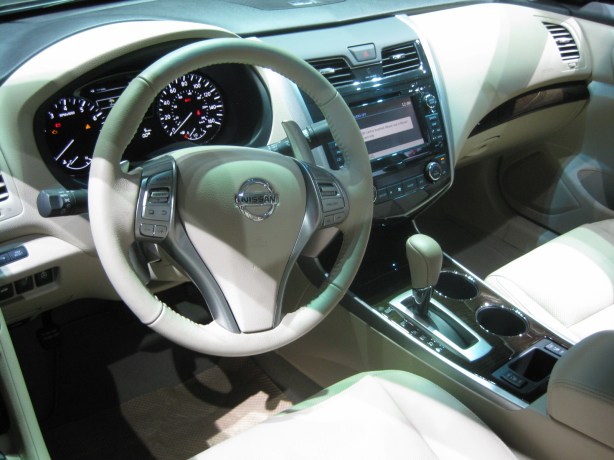
Nissan: Not much new from our friends at Nissan. The 2013 Altima was introduced and went on sale months ago.  I’m not a fan of the evolution of the exterior; however, I was impressed with the look, feel, materials and quality of the interior. Now I just need to be motivated to test drive one.  Nissan insists on using continuously-variable transmissions (CVTs) and I’d much prefer a 6-speed automatic in this kind of car.  I think Altima’s interior is excellent – better than the new Accord, but the Honda name will sell more units.

2013 Nissan Altima
2013 Nissan Altima

2013 Nissan Altima interior.

2013 Nissan Altima interior.

Nissan completely redesigned the 2013 Pathfinder too. No longer is it a bulky truck, made for off-road duties but civilized enough for the more likely on-road family-hauling. The all-new Pathfinder – which shares almost everything with its more expensive cousin, the Infiniti JX – is a 7-passenger crossover with car-based rather than truck-based credentials.  This is the Pathfinder’s first major auto show, but, like the Altima, it was introduced a couple of months ago and is already on-sale at your local dealer.
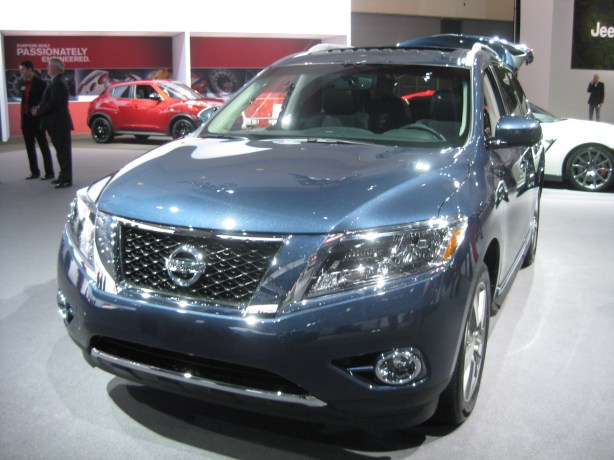
2013 Nissan Pathfinder - front

2013 Nissan Pathfinder – front

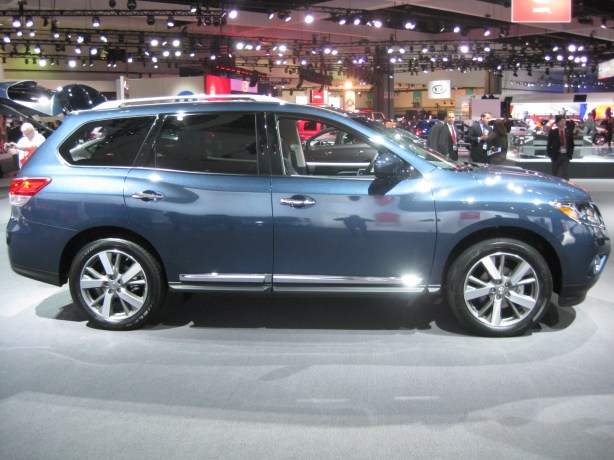
2013 Nissan Pathfinder - Side. She's a big girl. Good thing you can get a "Bird's-Eye" camera system that shows you the outside from all angles.

2013 Nissan Pathfinder – Side. She’s a big girl. Good thing you can get a “Bird’s-Eye” camera system that shows you the outside from all angles.  It reminds me of the Chevy Traverse, which has been in the market for almost 5 years now.

The 2013 Nissan Pathfinder shares much in common with other Nissan products. There are lots of buttons here, but all seem logical and easy to grab.

The 2013 Nissan Pathfinder shares much in common with other Nissan products. There are lots of buttons here, but all seem logical and easy to grab. I’m never a fan of plastic-looking wood.

Nissan’s big reveal was an updated GT-R sports car. You’d be hard pressed to tell the difference between this 2014 model and the 2013 model.

2014 Nissan GT-R rear.

2014 Nissan GT-R rear. It’s still Godzilla in a suit. And still over $100,000.

2014 Nissan GT-R interior. Still nice. Still six digits.

2014 Nissan GT-R interior. The carbon fiber (yes, it’s real) is a nice touch for the GT-R.

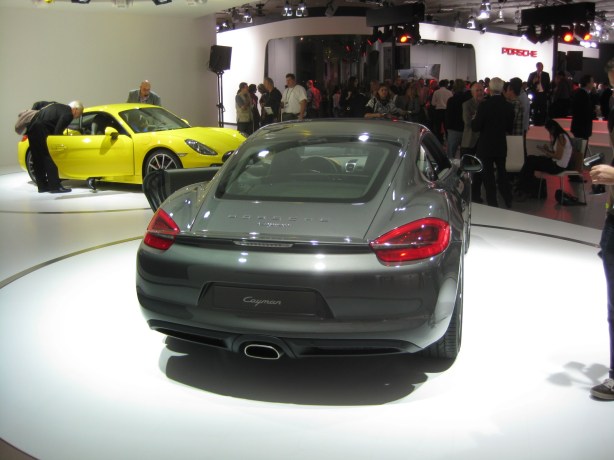
Porsche: Although pictures had been leaked ahead of the LA Auto Show, the big news was the 2013 Porsche Cayman. The Cayman, the hardtop version of the Boxster, always appears several months after the introduction of a new Boxster, so it wasn’t as much of a surprise as it was just a treat to see in person. The Cayman starts at $52,600. The Cayman S starts at $63,800. Unfortunately, like every Porsche, you have to add at least $20,000 of options to make it the car you’d like it to be. Porsche can teach a doctorate level class in nickle and diming.

2013 Porsche Cayman
2013 Porsche Cayman

2013 Porsche Cayman.

2013 Porsche Cayman. Like the Boxster, the rear spoiler is integrated with the taillights and center stop light. The lines flow beautifully.
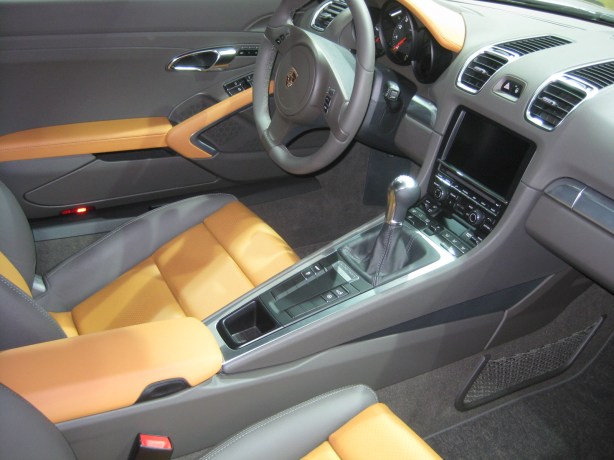
The interior of the 2013 Cayman is nearly identical to the Boxster - which is a good thing.

The interior of the 2013 Cayman is nearly identical to the Boxster – which is a good thing. This Cayman had the 6-speed manual shifter but the upgraded 2-tone leather interior and Porsche’s excellent navigation system.
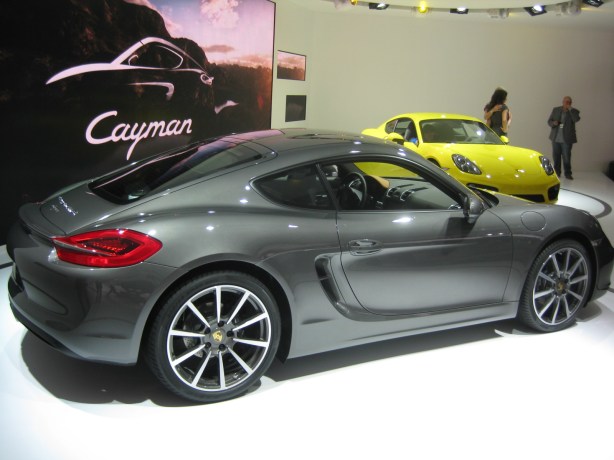
The side scoops that are accentuated with the deep creases in Cayman's door sheet metal, is how the engine breathes.

The side scoops that are accentuated with the deep creases in Cayman’s door sheet metal, is how the engine breathes.
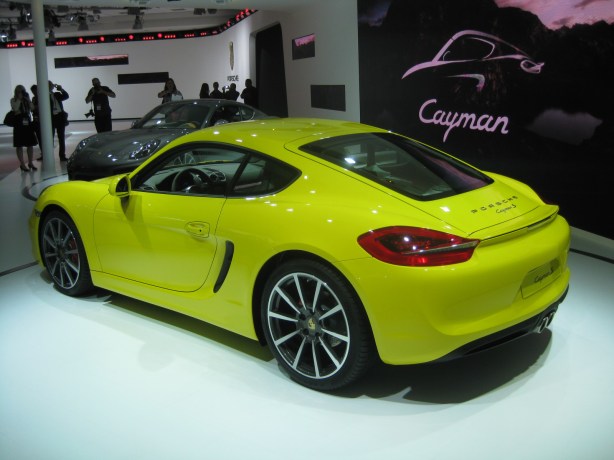
This screaming yellow Porsche is the Cayman S. It also took center stage with the “base” Cayman above. The engines and transmissions are identical to those found in the Boxster and Boxster S.
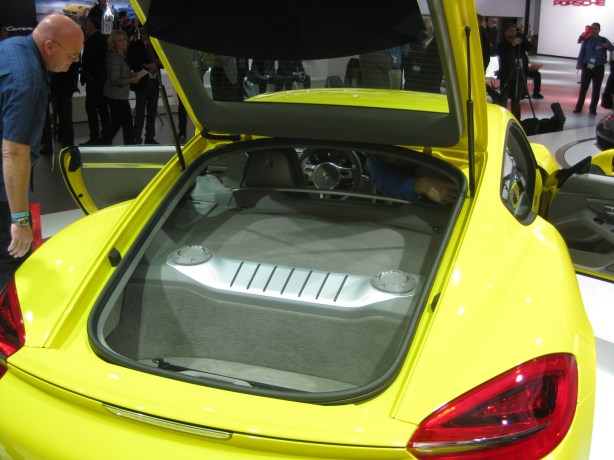
That big lump in the back of the 2013 Cayman S is the engine cover. Like the Boxster, the Cayman has a mid-mount engine which makes it the best handling Porsche. Just don't say that to the Germans at the show as they will always tell you that the 911 is the best. All the car magazines say otherwise.

That big lump in the back of the 2013 Cayman S is the engine cover. Like the Boxster, the Cayman has a mid-mount engine which makes it the best handling Porsche. Just don’t say that to the Germans at the show as they will always tell you that the 911 is the best. All the car magazines say otherwise.

You could call it the Convertible Cayman or just the Boxster.  I love this 2013 Boxster S this special silver color.

You could call it the Convertible Cayman or just the Boxster. I love this 2013 Boxster S in this special GT Silver Metallic color.

There was no sticker on this 2013 Boxster S; however with the PDK transmission, navigation, power seats, full leather, etc., there is probably another $25,000 in options added to the base $60,900.

There was no sticker on this 2013 Boxster S; however with the PDK transmission, navigation, power seats, full leather, etc., there is probably another $25,000 in options added to the base $60,900.

Another previously announced Porsche is the Cayenne Diesel, which starts at $55,750 (a relative bargain in the Porsche Universe). Power comes from a Porsche-tuned version of the VW Group’s 3.0-liter V6 turbo-diesel engine with a common-rail injection system. Its turbocharger features Variable Turbine Geometry (VTG). The EPA has rated the Cayenne Diesel at 20 mpg city, 29 mpg highway. That sure beats the Cayenne S with a V8 rated at 16 city, 22 highway.
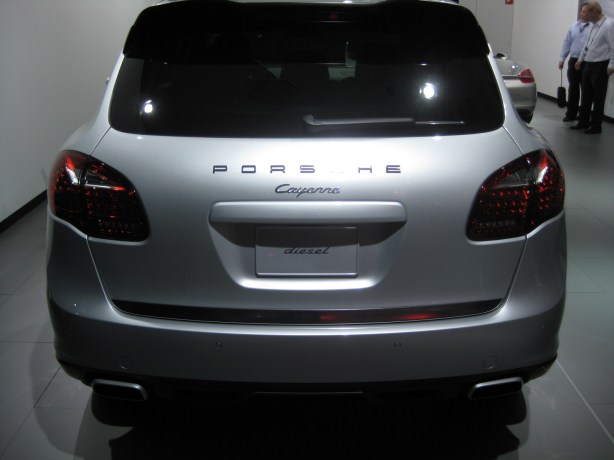
Except for the diesel badge, the 2013 Cayenne Diesel looks almost exactly like the Cayenne V6.

Except for the small diesel badges on the front side fenders, the 2013 Cayenne Diesel looks almost exactly like the Cayenne V6.
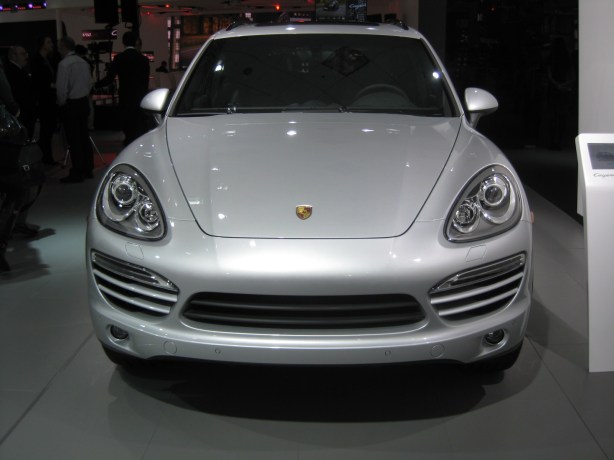
2013 Cayenne Diesel

2013 Cayenne Diesel

Also making its North American debut is the 911 Carrera4, 4s and Cabriolet variants.
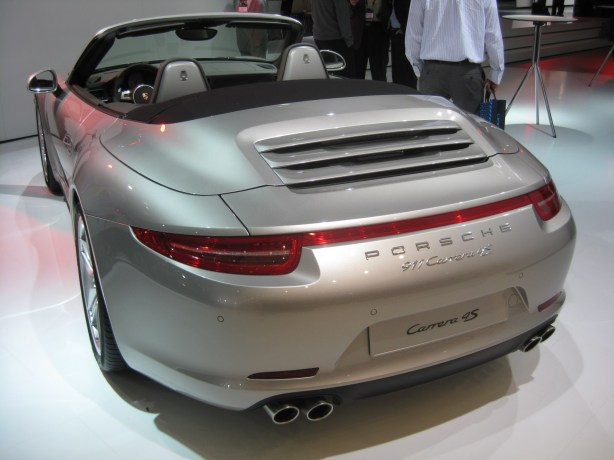
2013 Porsche 911 Carrera 4S Cabriolet
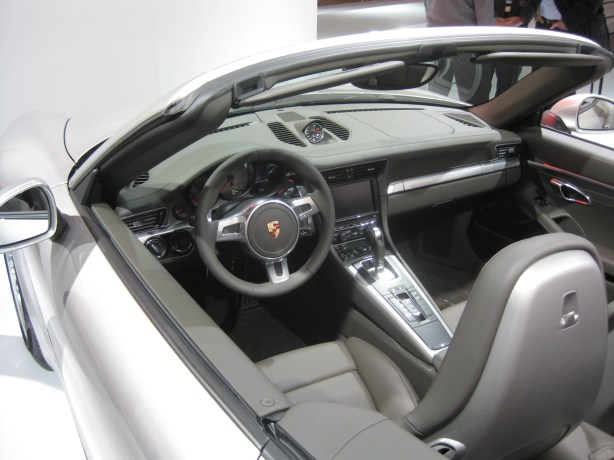
2013 Porsche 911 Carrera 4S Cabriolet

Except for a special torque split gauge, in the instrument panel, the interior of the 911 Carrera 4S is the same as the "regular" 911 Carrera.

Except for a special torque split gauge, in the instrument panel, the interior of the 911 Carrera 4S is the same as the “regular” 911 Carrera.

Range Rover:  Now that Land Rover has made Range Rover its own sub-brand,  the name Land Rover was almost non-existent at Press Preview. All emphasis was on the 2013 Range Rover which is trickling into dealerships as the LA Auto Show opens.

2013 Range Rover HSE

2013 Range Rover HSE

The split clam-shell that makes for a good picnic table hasn't changed for the new Rangy.  This black one is the top-of-the-line Range Rover Supercharged Autobiography.

The split clam-shell that makes for a good picnic table hasn’t changed for the new Rangy. This black one is the top-of-the-line Range Rover Supercharged Autobiography.
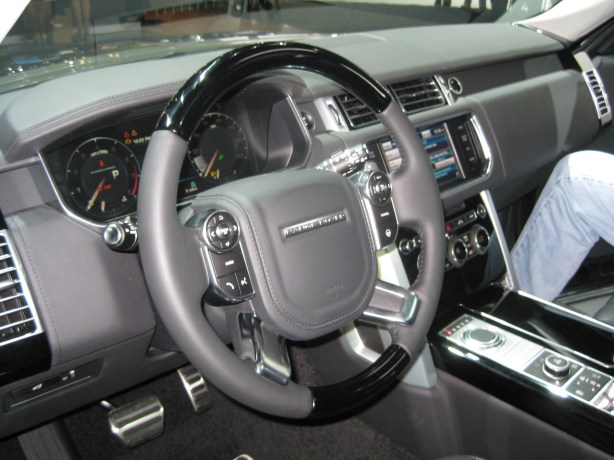
The instrument panel and dash of the 2013 Range Rover Supercharged Autobiography

The instrument panel and dash of the 2013 Range Rover Supercharged Autobiography. I don’t like the “magic” cylinder that rises out of the console to shift between Drive, Reverse and Park. It’s clumsy in practice and more gimmicky than useful.
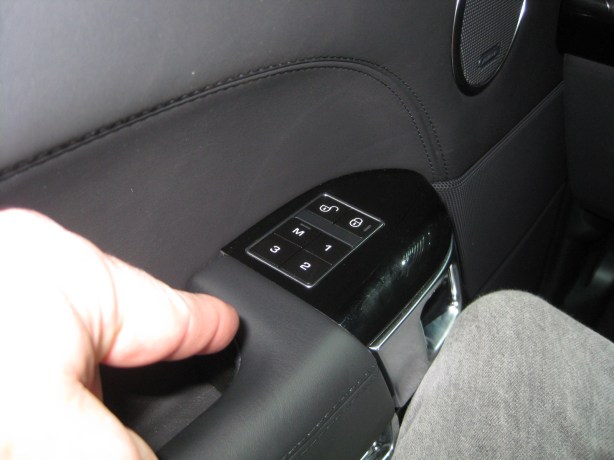
The oddities of the last Range Rover have carried over to the new one. The memory seat buttons are on the arm rest where the window switches should be.

The oddities of the last Range Rover have carried over to the new one. The memory seat buttons are on the arm rest where the window switches should be.

The Range Rover's window switches are on top of the window sill, in a very awkward position. I know it's "tradition" but this one needs to be thrown out.

The Range Rover’s window switches are on top of the window sill, in a very awkward position. I know it’s “tradition” but this one needs to be thrown out.

Smart: The diminutive smart fortwo hasn’t been updated much since its introduction 3 years ago. Colors and options change and Mercedes says it’s updated the horrible automated manual transmission, but it still jerks around with little finesse.

The big news for the LA Auto Show was the 2013 fortwo ED (electric drive). Apparently there were so many bad reviews of the 2012 (and first) version of the car that the whole electric drive system has been revised and the battery range has been extended to around 68 miles. The coupe version starts at $25,750 (before the $7,500 federal tax credit) Smart also offers a 240 volt home charger for $1,300.
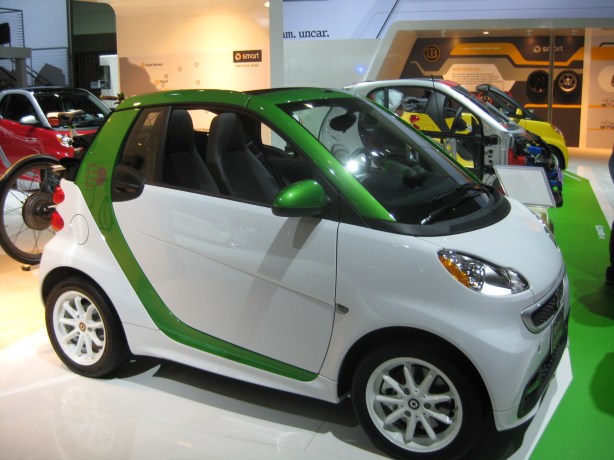
2013 smart fortwo ED (electric drive) coupe. Base price $25,750.

2013 smart fortwo ED (electric drive) cabriolet. Base price $28,750 (before federal tax credit).

The smart ED bicycle is a fantastic design. The reps told me that it will be sold in the U.S., but there is no specific launch date. It will be expensive, probably in the $3,500 range.

The smart ED bicycle is a fantastic design. The reps told me that it will be sold in the U.S., but there is no specific launch date. It will be expensive, probably in the $3,500 range.

Just for fun, smart showed a Jeremy Scott designed Special Edition of the fortwo. You won’t miss this one coming at you.
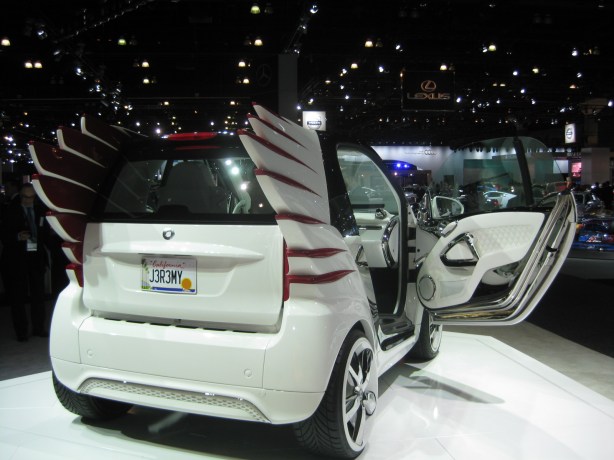
smart fortwo Jeremy Scott Concept

smart fortwo Jeremy Scott Special Edition. I think this thing is actually a driver that is used to promote both the smart brand and the Los Angeles-based designer.
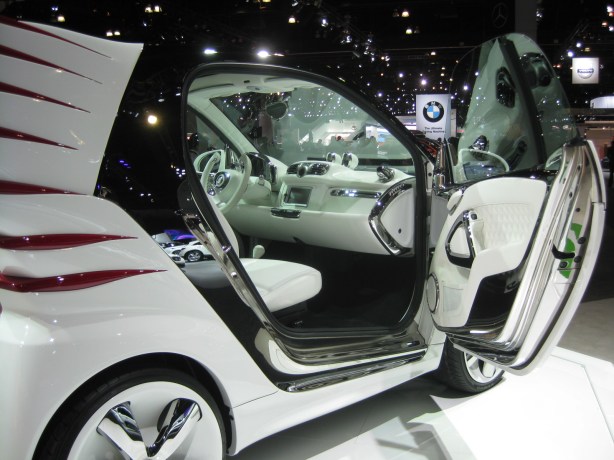
Check out this interior of the smart fortwo Jeremy Scott Special Edition. No expense was spared here.

Check out this interior of the smart fortwo Jeremy Scott Special Edition. No expense was spared here.

Subaru:  I keep hoping that Subaru will find its way in the design and styling department, but each time a new model rolls out, I’m disappointed.  The media dutifully attended Subaru’s introduction of the 2014 Forester, but there wasn’t much buzz or hurried Tweets of the homely model that was unveiled this week.  The Forester is basically a tall Impreza wagon

2014 Subaru Forester - Front. Is it that different from the current model?

2014 Subaru Forester – Front. Is it that different from the current model?

Here's the 2014 Subaru Forester from the rear. Again, no new ground broken here.  I think that Subaru likes the formula for the Forester and is going to stick with it as long as customers keep buying it.

Here’s the 2014 Subaru Forester from the rear. Again, no new ground broken here. I think that Subaru likes the formula for the Forester and is going to stick with it as long as customers keep buying it.

The interior of the 2014 Subaru Forester is mostly lifted from the Impreza. The infotainment system is easy to use, but lags behind the competition.

The interior of the 2014 Subaru Forester is mostly lifted from the Impreza. The infotainment system is easy to use, but lags behind the competition.

Toyota:  When Toyota introduced the RAV4 in 1996, it was the first small SUV based on a car (the Corolla) platform. The small crossover segment is red hot. The Honda Civic, Ford Escape and RAV4 each sell more than 200,000 units a year. A few generations later and well over a million units sold, Toyota rolled out the 2013 RAV4 for its world premiere at the LA Auto Show.  The simple fact of the matter is that Toyota had to keep up with the competition. Ford has a new Escape that is selling very well. Honda redesigned its CR-V a year ago and it too is burning up the sales charts. As of September 2012, Honda had sold 100,000 more CR-Vs than the RAV4. The new little SUV aims to reverse that trend.

2013 Toyota RAV4 SUV. The looks are fresh, if not exciting.

2013 Toyota RAV4 SUV. The looks are fresh, if not exciting.

2013 Toyota RAV4 side-rear. Note that the spare tire has moved from the rear door to under the cargo floor. The rear tailgate is now hinged at the top like the competition.

2013 Toyota RAV4 side-rear. Note that the spare tire has moved from the rear door to under the cargo floor. The rear tailgate is now hinged at the top like the competition.

The 2013 RAV4's interior looks and feels upgraded. While there is still lots of cheap plastic, soft-touch and textured panels populate the areas you see/touch the most.
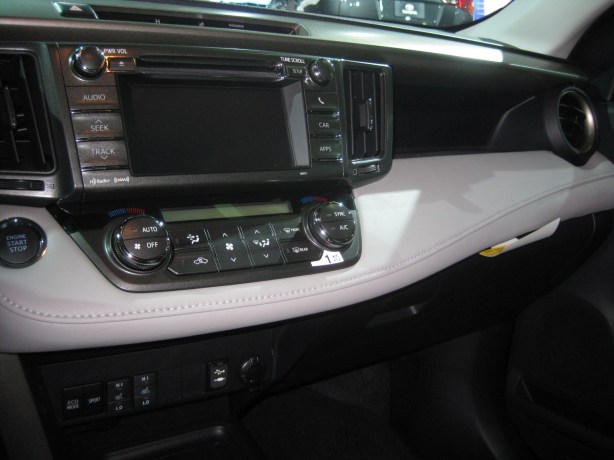
The 2013 RAV4’s interior looks and feels upgraded. While there is still lots of cheap plastic, soft-touch and textured panels populate the areas you see/touch the most.

The RAV4's dash has many horizontal layers that I think work. The center controls are easy to reach and mix both hard knobs and buttons with some functions on the touch screen.

The RAV4’s dash has many horizontal layers that I think work. The center controls are easy to reach and mix both hard knobs and buttons with some functions on the touch screen.

Volkswagen: VW finally introduced the convertible version of the Beetle. It will be on sale just in time for convertible season in sunny states like California. All the engine options are the same as on the Beetle – 2.5L 5-cylinder, 2.0L Turbo and 2.0L TDI. The top faithfully recreates almost the exact silhouette of the hardtop Beetle and it lays nearly flat; however you still have to cover it yourself with a piece of snap-in vinyl. Prices start at $24,495.
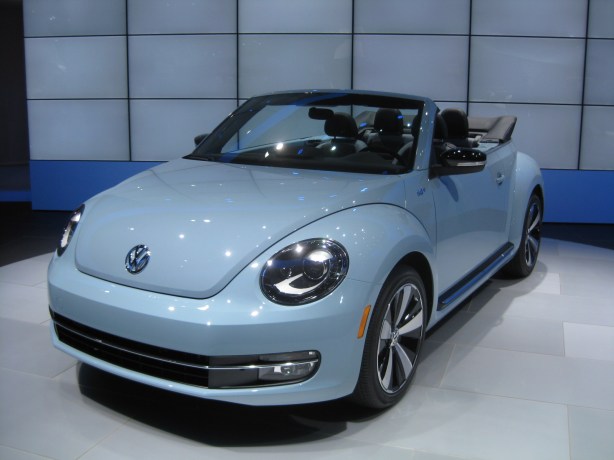
2013 VW Beetle Convertible. This one has the 2.0L turbo gasoline engine.

2013 VW Beetle Convertible. This one has the 2.0L turbo gasoline engine.

The 2013 VW Beetle Convertible has better rear visibility than the last version. However, the top still doesn't lay perfectly flat.

The 2013 VW Beetle Convertible has better rear visibility than the last version. However, the top still doesn’t lay perfectly flat.
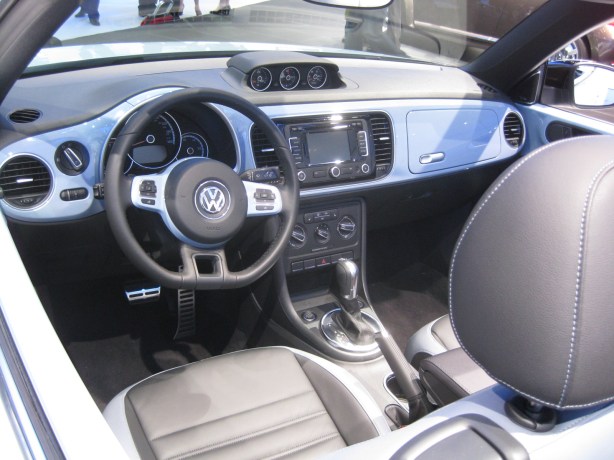
The interior of the 2013 VW Beetle Convertible is pretty much the same a the hardtop version. The color-matching interior parts is a nice touch.

The interior of the 2013 VW Beetle Convertible is pretty much the same a the hardtop version. The color-matching interior parts is a nice touch.

VW also showed its first gasoline-electric hybrid car, the 2013 Jetta Hybrid. It starts at $24,995.  VW mates a 1.4L turbocharged and direct-injected TSI gasoline engine to an electric motor. The combination is good for 170 hp and 184 lb-ft of torque.   A 7-speed dual clutch transmission is standard. VW says the 2013 Jetta Hybrid will drive up to 44 mph in EV mode, zero to 60 in 9 seconds flat and deliver a combined 45 mpg.  It should be arriving in VW showrooms now.

2013 Jetta Hybrid

2013 Jetta Hybrid SEL Premium

The interior of the 2014 Jetta Hybrid looks like a nicely upgraded Jetta - much closer to the Jetta GLI. I hope it gets better fuel economy that the company's TDI models.

The interior of the 2013 Jetta Hybrid SEL Premium looks very nice. It should for around $32,000. At least you can get automatic climate control in this Jetta!

Volvo: Poor Volvo. Ever since Ford dumped Volvo to the Chinese, Volvo North America has been starved for new product. The best the company could muster at the show was a custom-built Concept S60 with Polestar performance upgrades. It has a 2.0L inline 6 cylinder turbo engine making an astounding 508 hp with a close-ratio 6-speed manual transmission. Power is routed to all wheels through a 4th generation Haldex XWD system. It can race from zero to 60 in 3.7 seconds and the top speed is 186 mph. The cost is said to be around $300,000.  Volvo is testing interest in a  performance version of the S60, but it would have to be much less than $300k to get me interested.

This is the Volvo S60 Polestar Concept Car. Would you buy one?
This is the Volvo S60 Polestar Concept Car. Would you buy one?

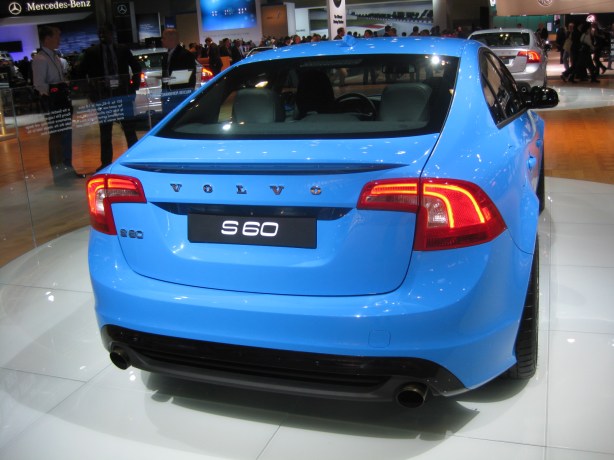
Volvo Concept S60 Polestar from the rear.
Volvo Concept S60 Polestar from the rear.


Should I get that banana-chocolate-caramel cake for dessert? What color carpet is right for this room? Original recipe or extra-crispy?

These are some daunting daily decisions I have to make and none of them are really very important. But the decisions I make behind the wheel of 4,000 pounds of German steel flying down the street matter a great deal.

Like most adult drivers, piloting a car is almost automatic. My brain has assimilated all the normal driving responses into a reflexive subroutine folder, somewhere deep inside. Making a left turn used to terrify me when I first started driving; but now I don’t give it a second thought.

Teenage drivers, as young as 15 ½, are faced with daily, split-second decisions that, without much experience or effective driver’s education, could lead to catastrophic consequences. This is dangerous not only for themselves, but for everyone around them. It’s a serious issue that we, as a society, don’t take too seriously.

The statistics on teen traffic collisions don’t paint a pretty picture and I won’t belabor the point. Traffic crashes are the number one killer of teens and 90% of those crashes are caused by human error. Only 25% are caused by drugs and alcohol, but a whopping 75% are caused by inexperience and dangerous driving decisions – including texting and mobile phone usage.

In the halcyon Brady Bunch days of the Los Angeles Unified School District, prior to Proposition 13 and long before the repeal of Glass-Steagall, our public schools offered exotic courses such Wood Shop, Drafting, Auto Shop and Driver Education. That was then. Today, you’d be hard-pressed to find any of those programs in a public school.

According to Carolyn Duchene, Director of the newly-minted Mercedes-Benz Driving Academy right here in the 90048, driver education courses have disappeared from more than 80% of our public schools. The learner’s permit and licensing requirements set by the California DMV haven’t changed in decades, but the public education of our teen drivers skidded off a cliff.

In 1998, in response to the public’s concerns over teenage driver accidents and deaths, California introduced Graduated Driver Licensing. The law places strict limits on new drivers between the ages of 16 to 17. In the past, once you turned 16 and passed the DMV tests, you were handed an unrestricted driver’s license. Now, licensing is broken down into three stages instead of two:

  1. Provisional Learner’s Permit (15 1/2 – 16 years old – this hasn’t changed)
  2. Provisional License (16 – 17 years old – this is the new “graduated” portion of the law)
  3. Adult License (18 years and older – just like it’s always been, no restrictions)

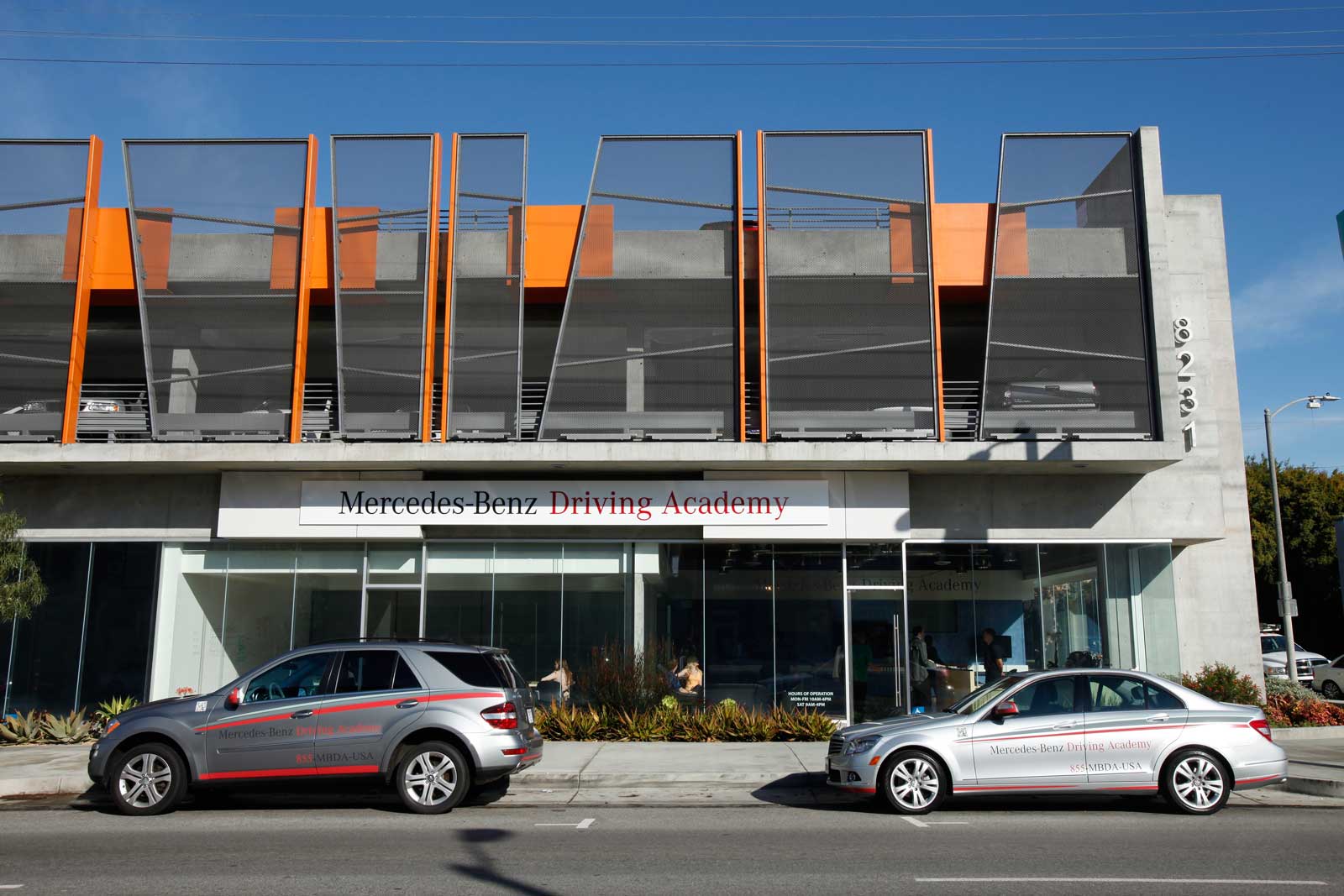
The Mercedes-Benz Driving Academy is located at 8231 W 3rd St, LA 90048. It's at the corner of Harper Ave on the north side of the street. (photo courtesy of MBDA)

The Mercedes-Benz Driving Academy (MBDA) is no ordinary driving school. Just the fact that this is part of (not just backed by) Daimler AG and Mercedes-Benz tells you the German car company is serious about its long and storied legacy of driver safety.

The Los Angeles location is only the second in the world. The first Academy opened in 2009 in the UK (at Mercedes-Benz World in Weybridge, Surrey). Obtaining a driver’s license in the UK is far harder and more comprehensive than in any State, and so far, the UK MBDA has been able to nearly double the first time passage rate from 43% to 79-82%. Impressive.

Los Angeles was an obvious choice for its second Academy, says Ms. Duchene. Our car-obsessed driving culture is legendary. We have terrific weather, public transportation is less than desirable, millions of people live here and Los Angeles has worldwide recognition. It also doesn’t hurt that the Southern California market alone is in the worldwide top ten markets for Mercedes-Benz.

The facility itself certainly lives up the the Mercedes-Benz brand image. The gleaming new glass, concrete and steel building is located squarely within the TMZ at 8231 W 3rd Street at Harper Avenue; across from the trendy restaurant Toast and minutes from the Beverly Center. The spacious building has classrooms, offices, a large reception area and a two-level parking deck (there is a paucity of parking in this neighborhood).

The Mercedes-Benz Driving Academy's building lights up beautifully at night. (photo courtesy of MBDA)

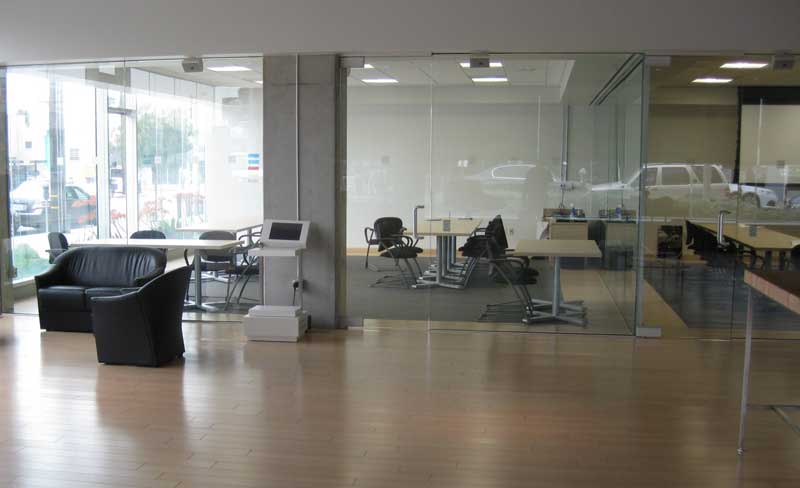
The sleek, modern reception area of the MBDA has the feel of a Mercedes-Benz showroom. (photo courtesy of MBDA)

The classrooms are intimate and filled with light and transparent. White boards cover the entire background wall.

But what makes the MBDA unique and valuable in our community is its forward thinking driver education courses using coaching and facilitation techniques developed after years of research. Most driving schools teach you how to pass the written and driving tests. MBDA coaches teenage drivers to become safe, responsible and independent drivers capable of making the right driving decisions – and pass the license tests. Big difference.

The instructors – driving coaches – are top notch, highly experienced and fully-certified. The classes are small and the driving instruction is one-on-one. Instructors pick up students at their home for the driving portions of the course. You even get to choose between a Mercedes C-Class sedan or ML-Class SUV. It sure beats the tired, worn Dodge Dart without power steering we had at Taft High School.

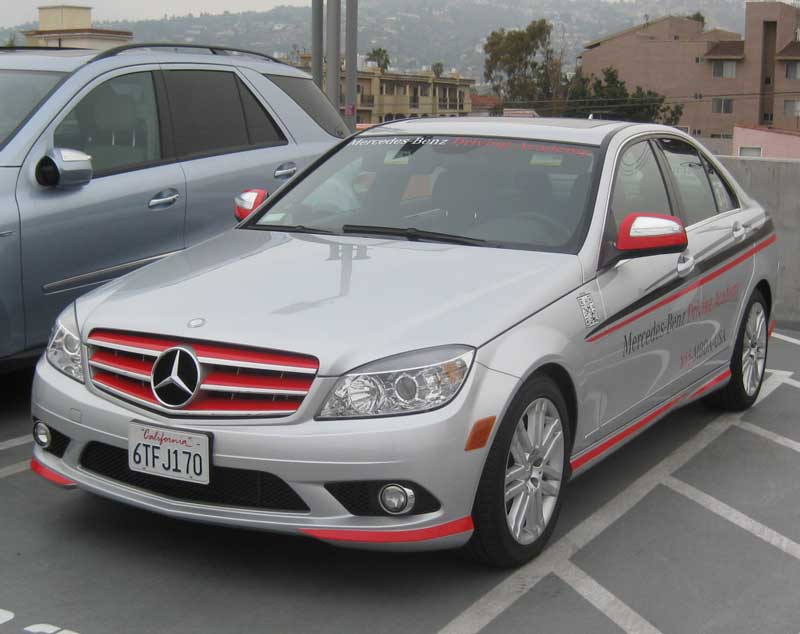
One of the new Mercedes-Benz C-Class sedans used by the Academy. If you see it in your rear view mirror, the paint job and stripes scream "student driver."

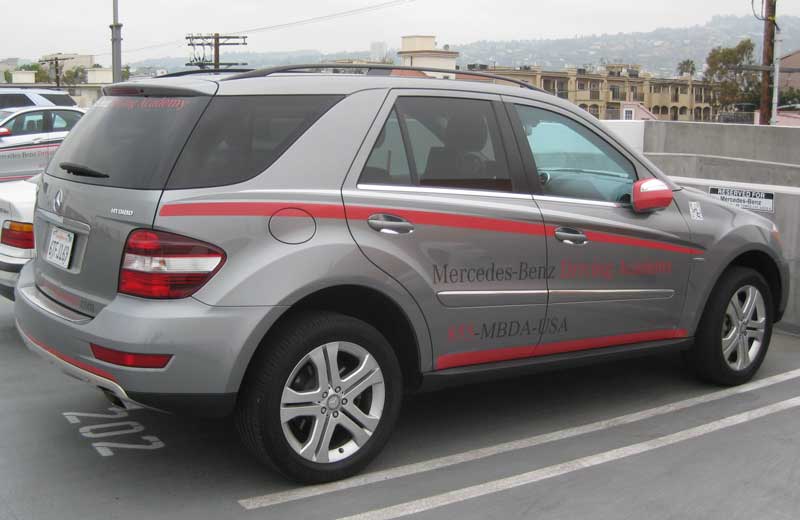
This Mercedes-Benz ML450 Hybrid is the other model used by the Academy. Nice stuff!

The program also directly involves parents or guardians in the educational process. In fact, the involvement of a parent in the program is vital to helping their teenager make safer, educated, correct driving decisions, hopefully alleviating some of the traditional terror a parent feels while riding in the passenger seat. Sure, the kids don’t love having their parents around; but the person they listen to most, besides themselves, is a parent and it’s the only way they can get a driver’s license.

Marc Hemsworth is the MBDA's Driving Coach Supervisor. He's retired LAPD, smart, patient and he doesn't bite. (photo courtesy of MBDA)

According to Driving Coach Supervisor Marc Hemsworth, the thing that most shocked him about his students is how much they already knew coming into the course. That’s right, parents, your kids have been watching YOU drive once they were old enough to stop playing video games and became interested in driving themselves. Parents set the example. Think about it.

Mr. Hemsworth is not your average driving instructor. He was with the LAPD for 30 years before retiring to take this job with Mercedes-Benz. While he was with the LAPD, he was a driving instructor, fleet vehicle test driver, collision investigator and the man behind such techniques as the PIT maneuver (precision immobilization technique). What fun would a high-speed chase be if it didn’t end with the law enforcement cruiser tapping the rear corner of the suspect’s car, spinning it out of control and ending the chase? Marc’s an engaging and dynamic teacher and reason alone to consider the program.

Kim Nguyen, Driving Coach, at work in the classroom. (photo courtesy of MBDA)

Hemsworth and his fellow coaches are laser focused on helping teens become responsible and safe drivers who make the right driving decisions automatically. The coaching method, developed in Europe, uses self-assessment (how well did I take that left turn and could I have made it better or differently?) and encourages students to ask questions. Students become their own teachers.

In California, a teenager can be as young as 15 ½ to get a learner’s permit. The state mandates 30 hours of driver’s education and 6 hours professional driver training. The MBDA is certified by the DMV to perform eye and hearing exams, and issue a Student License. You’d be hard-pressed to find another school with these kinds credentials.

The Academy’s flagship “Integrated Program” spans seven months and provides 16 hours of driving coaching – 10 more than the state minimum – and the full 30 hours of classroom time.

In the first month leading up to the learner’s permit, the course consists of 15 hours of proprietary, self-paced, online, interactive driving theory courses that, by design, don’t work well on mobile devices. Any questions are written down in the Driver Logbook and discussed with both parents and coaches. The Student License enables MBDA coaches to drive drive with the student – 8 hours – to reinforce with online material with practical application. All this prepares your teenager for the DMV’s written learner’s permit test. Once passed, and all the other DMV requirements are met, the DMV issues the Learner’s Permit and the next phase of the program begins.

The Mercedes-Benz Driving Academy Driver Logbook. It's a simple "analog" solution to keeping track of progress and involving both parents and teenager in the supervised driving and learner's permit stage of driver education.

The next 6 months of supervised driving and classroom hours must seem like an eternity to a teenager eager to drive solo – it did to me! During that period, you have to rack up at least 50 hours of driving time (10 of which have to be at night), 6 hours of behind-the-wheel professional instruction and the remaining 15 hours of classroom instruction.

A licensed adult over 25 (usually mom or dad) is responsible for the 40 hours of supervised driving not covered by the Integrated Program. However, MBDA advocates at least 120 hours of supervised driving time during this period. Research (mostly in Europe) has shown that 120 hours is the critical mass of time at which a new driver starts to react automatically to various driving situations. The extra time also boosts confidence in the new driver’s skills. [Attention parents: Do the extra time with your son or daughter. It may make the difference between life and death – sermon over.]

I was impressed that Mr. Hemsworth doesn’t subscribe to the “shock and awe” teaching method. They don’t show videos of dead bodies and mangled cars with an ominous voiceover and mind-numbing statistics. Instead, the curriculum includes a two hour crash investigation module – much more CSI than Saw II and infinitely more engaging.

There are five two-hour classroom courses including topics such as pre-trip and in-car decision-making. A three hour safety workshop presents the students with sabotaged vehicles and teams sleuth-out safety defects. They even teach how to change a tire just in case there is no cell service where you car blows a tire. The last workshop is two hours on distracted driving.

Marc Hemsworth, Driving Coach, conducts a safety workshop. (photo courtesy of MBDA)

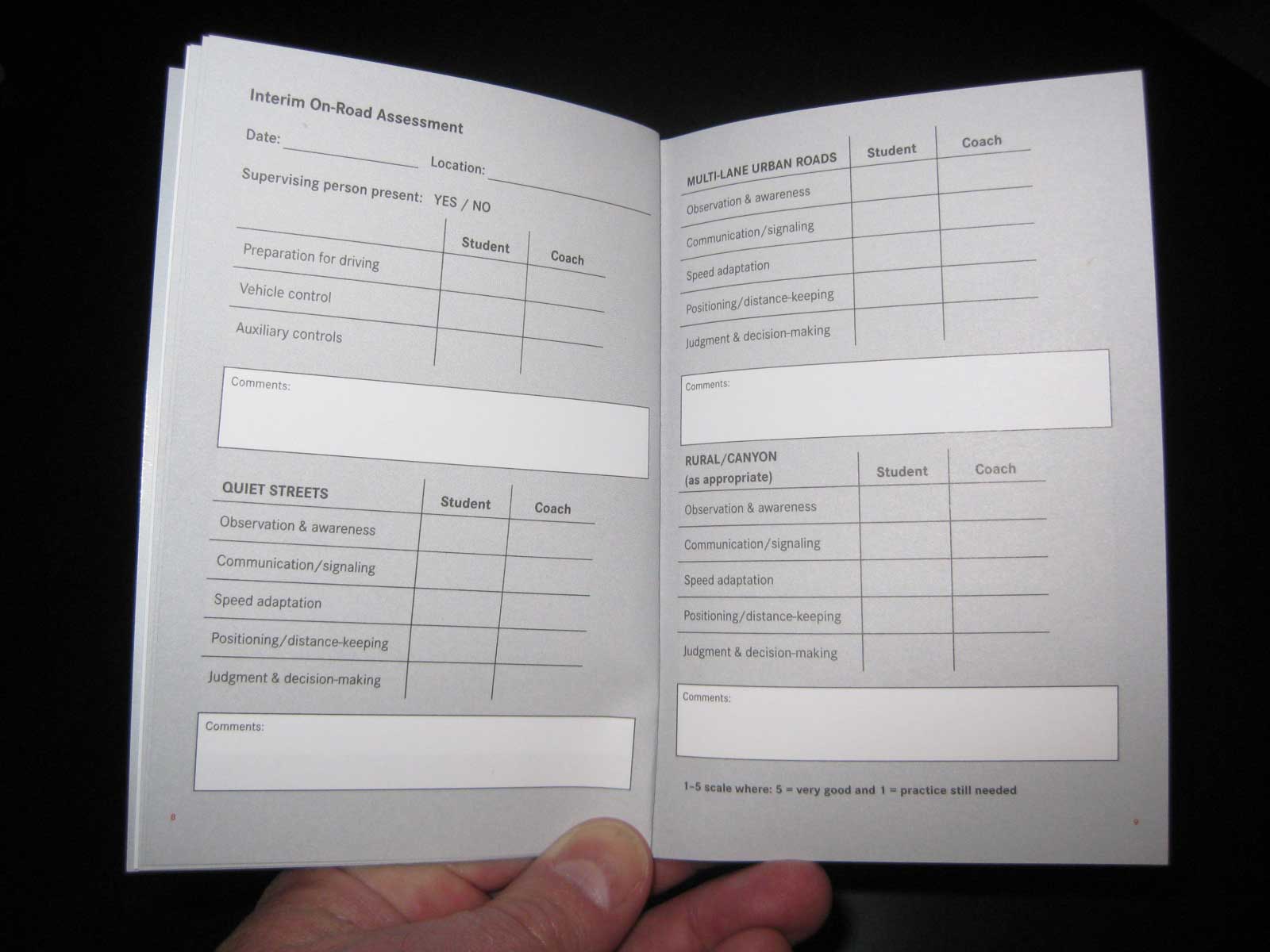
Parents are encouraged to ride along with some of the driving coaching sessions. It helps parents understand the coaching techniques and helps them be better coaches when they are in the passenger seat. The student’s Driver Logbook provides a clear and concise road map for parents, students and coaches to understand the progress over the entire seven month period. It keeps track of completed courses, level of skill and skills that need more attention. All the driving modules have both coach assessment and student self-assessment. It also tracks supervised driving time, and parents also have to sign off on driving session notes.

The Driver Logbook contains several pages to record supervised driving time, including the date, light condition (day, night, etc.), weather, driver condition and type of road. The adult driver over 25 that is supervising the teen has to sign for every supervised driving trip.

Another page from the Driver Logbook. Note that all the skill sets have a box for both student and coach assessment.

Around month five of the six month supervised driving period, there is a final on-road assessment. The coach puts the student through a full DVM driving test and it’s graded on the same point systems. Any problems are addressed in the remaining time of the course and a second final assessment is performed.

A checklist for the Final Assessment. Are you ready to take the test at the DMV? It's as close as it gets to the test the DMV will administer, right down to the grading.

The program payoff is a teenage driver much more prepared to be a safe, responsible autonomous pilot capable of making fast, automatic driving decisions – not just someone who passes the DMV’s driving tests. It’s all about the decision-making process and Hemsworth hammers it home with every lesson. Do I need to make this trip in the pouring rain or can I do it another time? This route is filled with dangerous narrow roads, is there a freeway route that is safer? Decisions, decisions, decisions.

The Integrated Program costs $1,390 – about $200 per month. Check out the Academy, talk to the instructors, take one of their free parent-teen introductory workshops (about an hour on a Saturday) and I think you’ll agree that the program is engineered like no other driver training course. Hey, this is Mercedes-Benz, right?

It’s a sound investment in your child’s safety – and your peace of mind. I know money is tight for many families, but if you can afford it, I think it’s a bargain. Choosing this program for your teenage driving-age son or daughter is never going to be a bad decision.