When I first downloaded the BMW EVolve app last week, I thought it was just a cute exercise in alleviating electric vehicle range anxiety. The app uses the phone’s built-in GPS sensors to track your driving habits and routes — how far you drive, how fast you go, etc. Think of it as pre-conditioning for the eventual electrification of the automobile and as a cheerleader for BMW’s i-Series (i3) electric MegaCity Vehicle (MCV) that won’t be here until 2013.

BMW's EVolve app for the iPhone

BMW i3 prototype caught in winter tests. Photos courtesy of AutoBlog.com.
However, in reality, the app was the drum roll before BMW’s Earth Day 2011 introduction its first EV to bear its own corporate logo: The ActiveE. The EVolve app has a countdown battery gauge that starts with 100 miles, the claimed full-charge range of the upcoming ActiveE, an electrified 1-Series Coupé, that will be available for lease sometime later this year.
The MINI E was BMW’s warm up act. Think of it as a rolling EV lab that uses humans as test drivers to better understand how batteries and electric drivetrains behave in “real world” driving conditions. It was an expensive little car ($50,700 – but I think that’s a fantasy low-ball number picked out of thin air by BMW Financial Services) that gave early adopters a chance at driving a real EV.
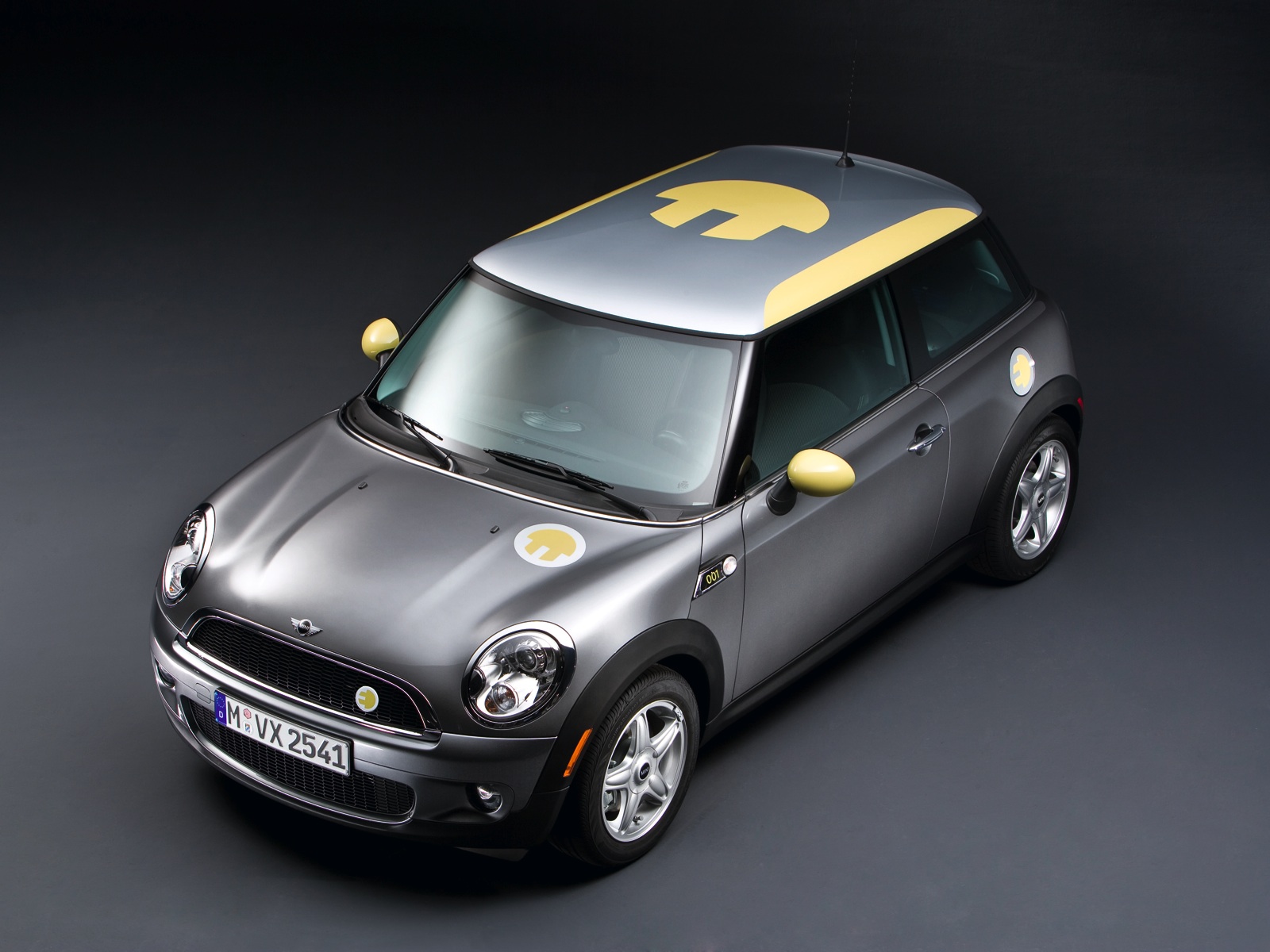
2009 MINI E
Unfortunately, the MINI E was compromised with a large, heavy battery pack that took the place of the back seat. Worse, that battery tended to under-perform in the cold and overheat in the hot So Cal summers.
MINI E drivers were asked to pay a whopping $850+ tax per month ($932.87 in 9.75% LA County) plus the cost of installing a charger. The lease included comprehensive and collision coverage; but not liability insurance. There was grumbling in the MINI universe from “average Joe” drivers asked to pay that stiff $850+ tax/month while BMW offered the same car to various municipalities and non-profits for $10 (yes, ten dollars) a month. Ouch.
The MINI E was originally leased for one year starting in 2009; however, BMW has “generously” allowed MINI E lessees a chance to extend their lease another year (2010 to 2011) and now, to keep their car until the ActiveE comes to market later this year. MINI E lease holders will get first dibs on an new ActiveE later this year. Of course, they still have to keep making those egregious lease payments.
I’m not sure who benefited most from the past two years of the MINI E experiment. MINI E lessees drank the Kool Aid and can’t say a bad thing about the car; however, I was specifically warned not to enter the trial because there were so many annoying problems with the car. I’m inclined to believe my BMW insiders on this point.
That leaves the BMW engineers as the major benefactors. The past two years must have produced mountains of valuable information and feedback that will make the new ActiveE a much more competent and useful EV.
Not since the M1 of more than 30 years ago has a BMW had a rear-mid-ship mounted power plant. The ActiveE’s, power electronics, electric motor and rear axle all form a complete unit. This is the same configuration BMW will use in the upcoming i3 MCV. The all-new liquid cooled lithium-ion battery back runs through the spine of the chassis and includes modules under the hood helping the ActiveE hit the magic 50/50 front/rear weight distribution ratio – a hallmark of the BMW brand.
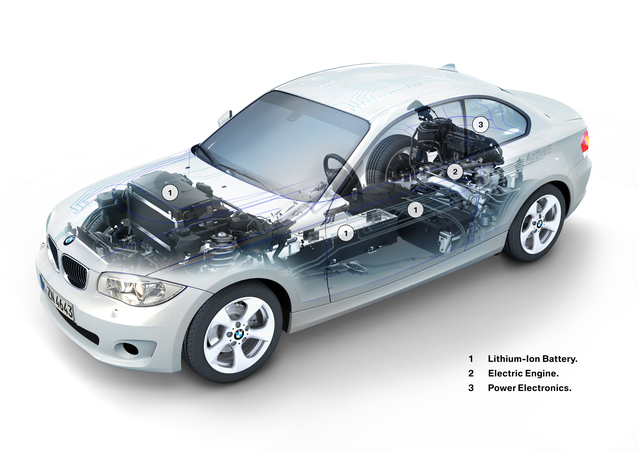
The BMW ActiveE electric guts revealed
BMW’s ActiveE drivers will be offered a much more affordable and realistic 24 month lease for $499/month with $2,250 down. With tax and amortizing the up-front payment, the monthly cost pencils out to $650.54. The insurance arrangement should be the same as the MINI E, but no one has seen the actual lease yet.
At one third less than the MINI E lease payment, you get a car fully capable of living up to BMW’s “Ultimate Driving Machine” tag-line. As a bonus, you even get a two rear seats and a small trunk!
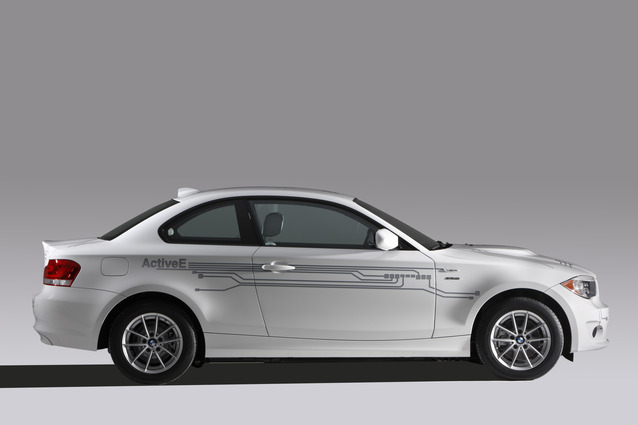
2012 BMW ActiveE - an electrified 1-Series Coupe
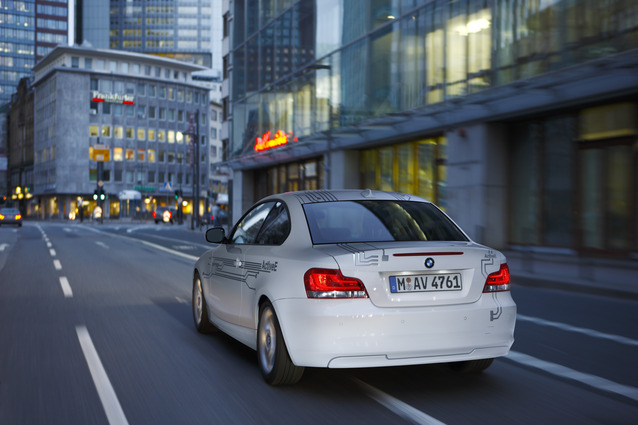
The BMW ActiveE
BMW Group engineers developed everything that constitutes the ActiveE: the energy storage module, its wiring, the permanent magnet synchronous electric motor, the power electronics and the transmission. If you want to control the quality of the product, keep it in-house.
The only the batteries were co-developed with SB LiMotive exclusively for automotive use (a knock at Telsa which uses stacks of lithium-ion batteries originally designed for laptop computers). [SB LiMotive Ltd. is a 50/50 joint venture between Bosch and Samsung.]
BMW says the ActiveE has maximum power output from the electric drive system of 170 hp with 184 lb-ft torque, available from a standstill, as is the case with all electric vehicles. BMW pegs the ActiveE’s 0-60 mph time at under 9 seconds with an electronically-limited top speed of 90 mph.

BMW ActiveE electronic umbilical cord
I’ve been testing the new BMW EVolve app on my iPhone. In general, there is almost no time that I could exhaust the 100 mile range in my normal daily struggle through our gridlocked, pot-holed streets.
However, I failed the EV test when I drove to Palm Springs over Easter weekend. Yup, to get out of LA – any destination outside a 45 mile radius from my home – I’d need a “weekend car” or an extended Range EV like the Chevy Volt (MSRP $41,000 before federal/state tax credits) or Fisker Karma ($95,900 before federal/state tax credits).

2011 Chevrolet Volt extended range EV
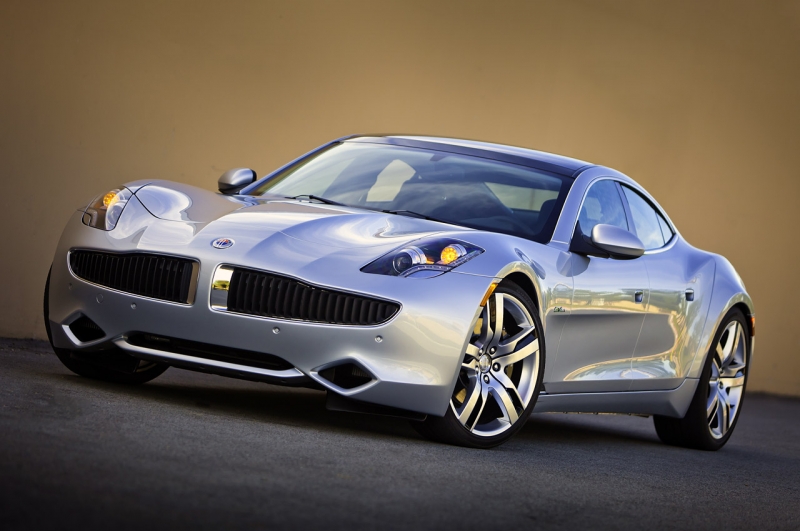
2012 Fisker Karma extended range EV
BMW is looking for customers interested in the ActiveE. To lease the ActiveE, you have to live in one of the following metro areas: Los Angeles, San Francisco, San Diego, Sacramento, New York City, Boston and all of Connecticut. You can explore more about the ActiveE and sign up to be notified when they start the field trials at BMWUSA.com.
BMW has also developed a slick Apple iPhone app for the ActiveE called ConnectedDrive, similar to those already developed for the Nissan Leaf and Chevy Volt. ConnectedDrive can romotely lock and unlcok the doors, activate the horn or headlights helping you find your car, CarFinder to locate your car within a 3,300 ft radius and Google’s Local Search function.
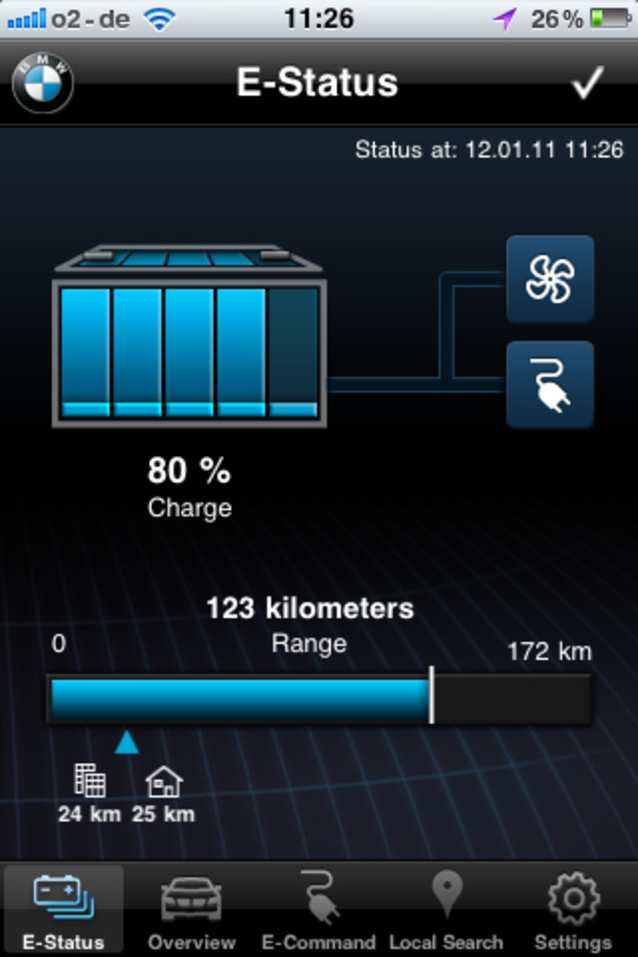
BMW ActiveE iPhone App
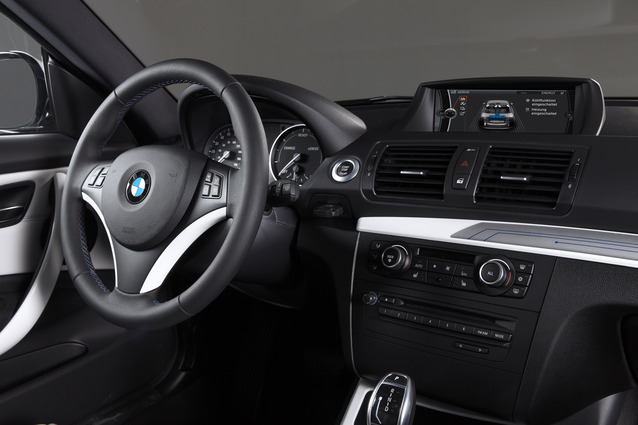
The ActiveE's information and navigation screen will mirror much of what is on the Smartphone app and is internet connected.
BMW will test a fleet of 1,000 ActiveE vehicles throughout the US, Europe and China. For the MINI E trials, 450 of the 600 cars landed in the US, so it’s reasonable to expect at least 50% of the ActiveE allocation will come to the US.
I’d love to try it, but I’m waiting for my weekend car first.
Click here for a PDF of the press release: BMW_ActiveE_Electric_Vehicle_Press_Release


