All I could think of was “Electro Glide.” No, I’m not referring to the 1973 cop movie or the Harley Davidson’s motorcycle; that would be Electra Glide. And I’m not referring to music or a record label either. Perhaps I should call it Electro Glide v. 2.0 or Electro Glide 2011.
What I’m describing is the feeling of gliding on a gas-electric hybrid carpet over the lovely, well-paved, wide, traffic-free streets of Palm Springs in the 2011 Hyundai Sonata Hybrid. It was such a serene and drama-free experience that it was hard to believe there was a complex, highly-sophisticated dance going on under the skin, fusing hardware, software, electrons, grease and internal combustion into one compelling act.

The 2011 Hyundai Sonata Hybrid sedan.
Hyundai engineers have choreographed a lovely pas de deux between a 30 kW permanent-magnet synchronous electric motor capable of 40 hp and 151 lb-feet of torque and Hyundai’s 2.4L 4-cylinder GDI DOHC Theta II engine (used in the base Sonata) capable of 166 hp and 154 lb-ft of torque, converted to an Atkinson (shorter compression) cycle for hybrid use. The former is fed by electrons from a lightweight (96 lbs), compact 270V lithium polymer battery sandwiched behind the rear seats and the latter by a 17.2 gallon gas tank placed underneath and between the rear wheels. Mash the accelerator and the married system leaps to 206 hp and 154 lb-ft of torque. Driven normally, the EPA suggests 35 city/40 highway and combined 37 mpg. Some hypermilers brag over 50 mpg. Now this is a ballet I can sit through!

This see-through diagram shows the parts of the Blue Drive hybrid system. The electric motor (in front) and lithium polymer battery (in back) are in blue.
You can sense the constant start/stop of the gas engine; but it’s more like a calm heartbeat than an unannounced seizure. I think after a day or two in the car, you’d forget it was happening. Even with that in mind, the Sonata operated and drove quietly, nearly seamlessly; without vibrations, hesitations or confused gear ratios. The dedicated NVH (noise, vibration and harshness) engineers nailed it. Again, my brain thinks Electro Glide.
The Hybrid Blue Drive system is an impressive first effort from Hyundai. It’s a full parallel hybrid system, but it’s not the same 2-mode system (electric only or gas-electric combined) found in the Toyota Camry and Ford Fusion Hybrids. Blue Drive can operate in EV mode alone, the gas engine alone or a blend of both, depending on driving conditions and demands. Hyundai says you candrive up to 62 mph in EV mode assuming the battery is fully-charged. Unfortunately, you aren’t likely to get more than 1 minute EV drive time at that speed.
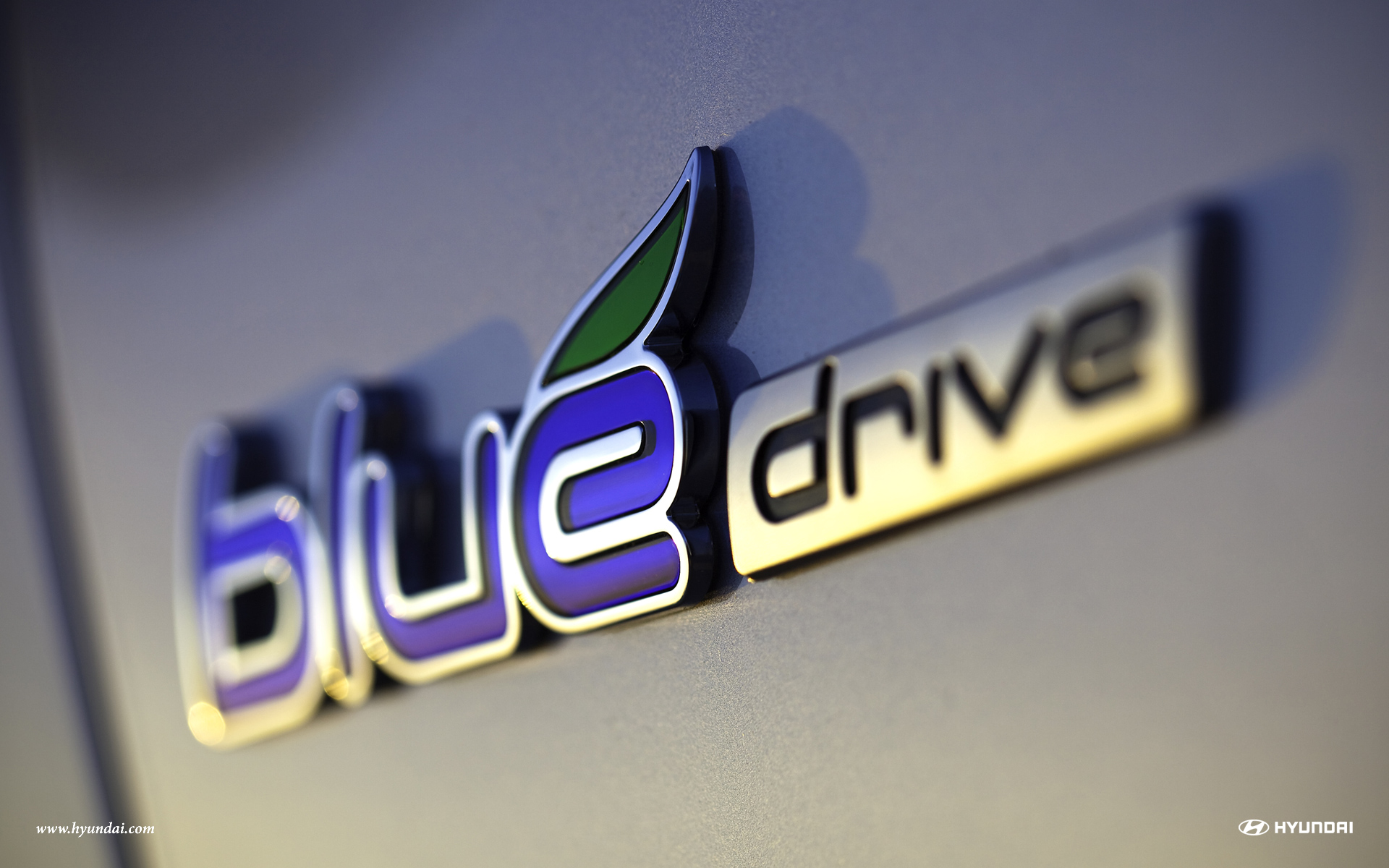
The Blue Drive badge will likely appear on future Hyundai models.
The other big difference is the choice of transmissions. Where Toyota and Ford use a CVT (continuously variable transmission), Hyundai uses its new six-speed automatic transmission with Shiftronic manual selection and an electric motor that takes the place of the torque converter. No more whining CVT rubber bands. The 6-speed auto makes the Sonata Hybrid more engaging. Slick stuff.
A sophisticated fully-independent suspension system coupled with lots of soundproofing helped produced the quiet but confident ride. (You know, Electro Glide!) I didn’t get to drive it over big potholes or rough roads (like everywhere in LA); but what imperfections and valleys I drove over were handled with aplomb.

This Sonata Hybrid has the panoramic glass sunroof that is part of the Premium Package.
The car accelerates (hybrid) quickly to 60 mph (just over 9 seconds according to the factory) and drives much like any other non-hybrid car in this class. The Sonata Hybrid doesn’t use the grabby, mushy and lifeless regenerative brakes found in some hybrids. I found that the “normal” 4-wheel anti-lock discs gripped confidently in a satisfying linear fashion.
I was surprised at the Sonata’s tight 35.8 ft turning circle. Usually these front-drive sedans need a wide berth when attempting a U turn. This is a big plus for maneuvering in tight, narrow city streets. The Honda Accord needs an embarrassing 37.7 feet to do the same maneuver.
Hyundai’s “motor driven” or electric power rack and pinion steering system (EPS) eliminates the fuel-sapping belt-driven connection to the engine. Unfortunately, EPS also tends to anesthetize road feedback – think Prius. That said, Hyundai’s engineers have done an admirable job of injecting a modicum of life into the Sonata’s EPS. (We’ll leave it to the engineering wizards in Weissach to find the electric steering G-Spot on the all-new 2012 Porsche 911 coming early next year.)

This rear/right detail shows how the side style line blends into the trunk lid spoiler and frames the rear taillights.
I give props to the all engineers in various departments who fine-tuned this car. The Sonata Hybrid operates as one melded machine – as if all electric and mechanical components were tuned to one vibration frequency. The typical mid-size hybrid sedan customer is looking for a comfy, roomy, well-equipped, worry-free, eco-friendly, fuel-sipping family hauler and daily driver. In short, they nailed it.
When Hyundai introduced the new 2010 Sonata in 2009, there was a rush on Depends at the local Target closest to Toyota’s and Honda’s US headquarters in Torrance, CA. The Korean giant was very good at producing copycat Japanese cars; but it had always been just a step or two behind the curve. No more.
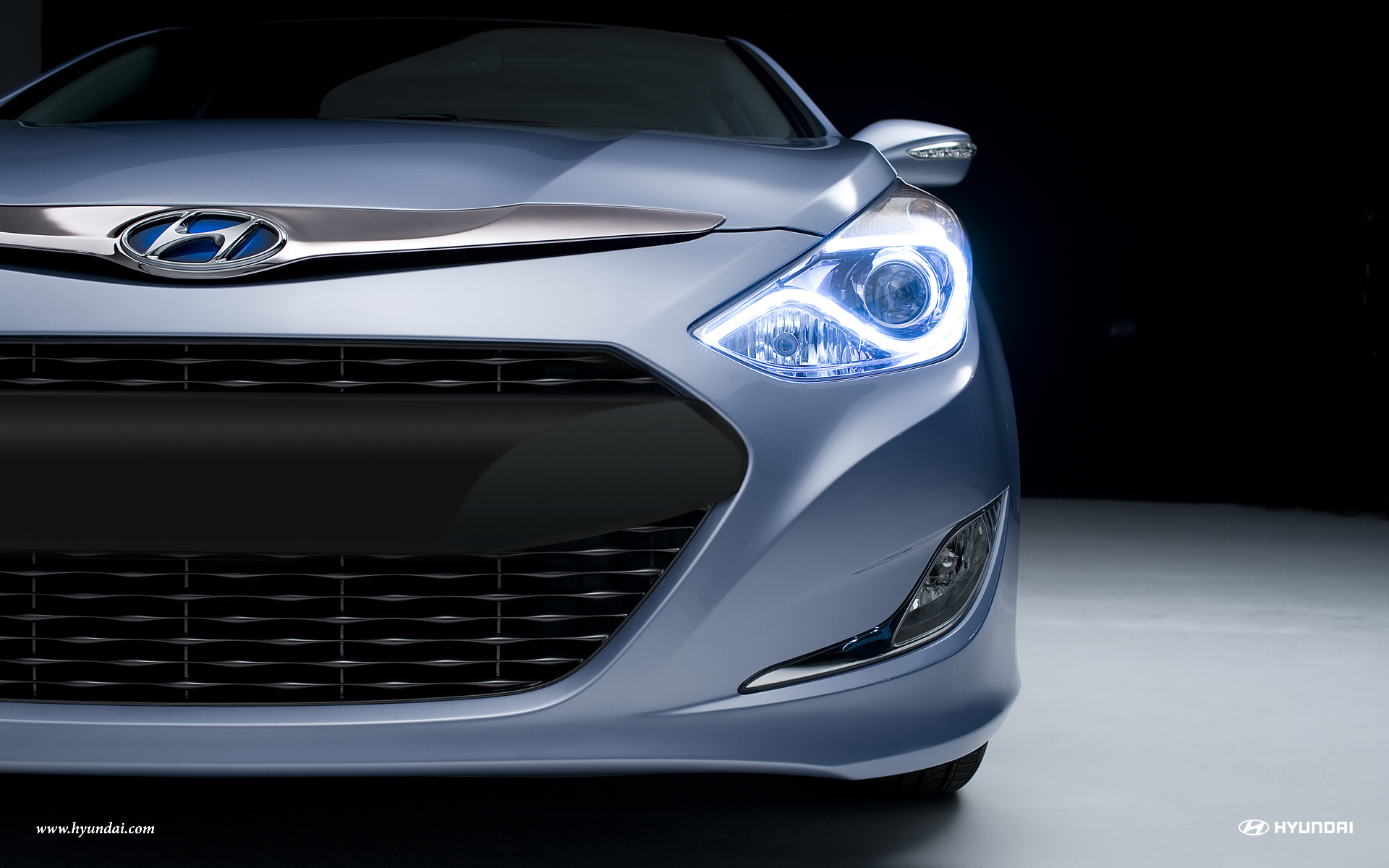
The front grille is blacked out and the LED eyeliner is a nice touch on the Hybrid that distinguishes it from the normal versoin.
The new Sonata signaled to Toyota, Honda and Nissan (as well as Ford and GM) that those days were over, and Hyundai was going to be leading the pack in design, quality, build and value. Hyundai’s safety ratings now match the competition. JD Power quality ratings are way up. Consumer Reports really liked the new Sonata and ranked it in its top 5 mid-sized sedans, one notch below the Honda Accord and two notches ahead of the (outgoing) Toyota Camry. The Sonata GLS even earned the coveted “Recommended” red check. And Hyundai’s standard warranty – 5 year/60,000 mile bumper-to-bumper, 10 year/100,000 powertrain and 5 year 24/7 roadside assistance – trumps all the competition.
Hyundai’s “Fluidic Sculpture” design language, introduced on the 2010 Sonata, continues to distinguish the brand and it has agedwell. It’s definitely not bland like the Accord, Camry and Altima. When you see a Hyundai now, you now recognize it as a Hyundai; before, you didn’t know or care.
The subtle styling differences on the Sonata Hybrid help lower its drag coefficient to from 0.28 to 0.25 (even if it still looks like a surprised catfish). The roof is slightly more raked. The side mirrors are fine tuned and now sport embedded LED turn signal repeaters. LEDs also appear in the taillights. The side “spear” character crease flows from the front fenders, through the door handles and into the subtle, integrated trunk spoiler. Of course, there are the requisite Blue Drive Hybrid badges.

The lighting helps show the side "spear" that flows from front to back on the Sonata. It helps break up what would otherwise be considered a slab-sided silhouette.
The dash looks well-balanced and flows (you know, “fluidic”) effortlessly into the center console. The smallish (by today’s standards) 4.2” vivid infotainment touch-screen sits on top flanked by vertical HVAC vents. Dedicated function short cuts on the screen’s sill are easy to read and use. The dual-zone automatic climate control has large, simple controls and the system was quick to cool the cabin despite the 110 degree desert oven outside. I love the fact that the Sonata Hybrid had four heated seats, but in So Cal, you’d better be damn sure the AC works well before you buy any car.
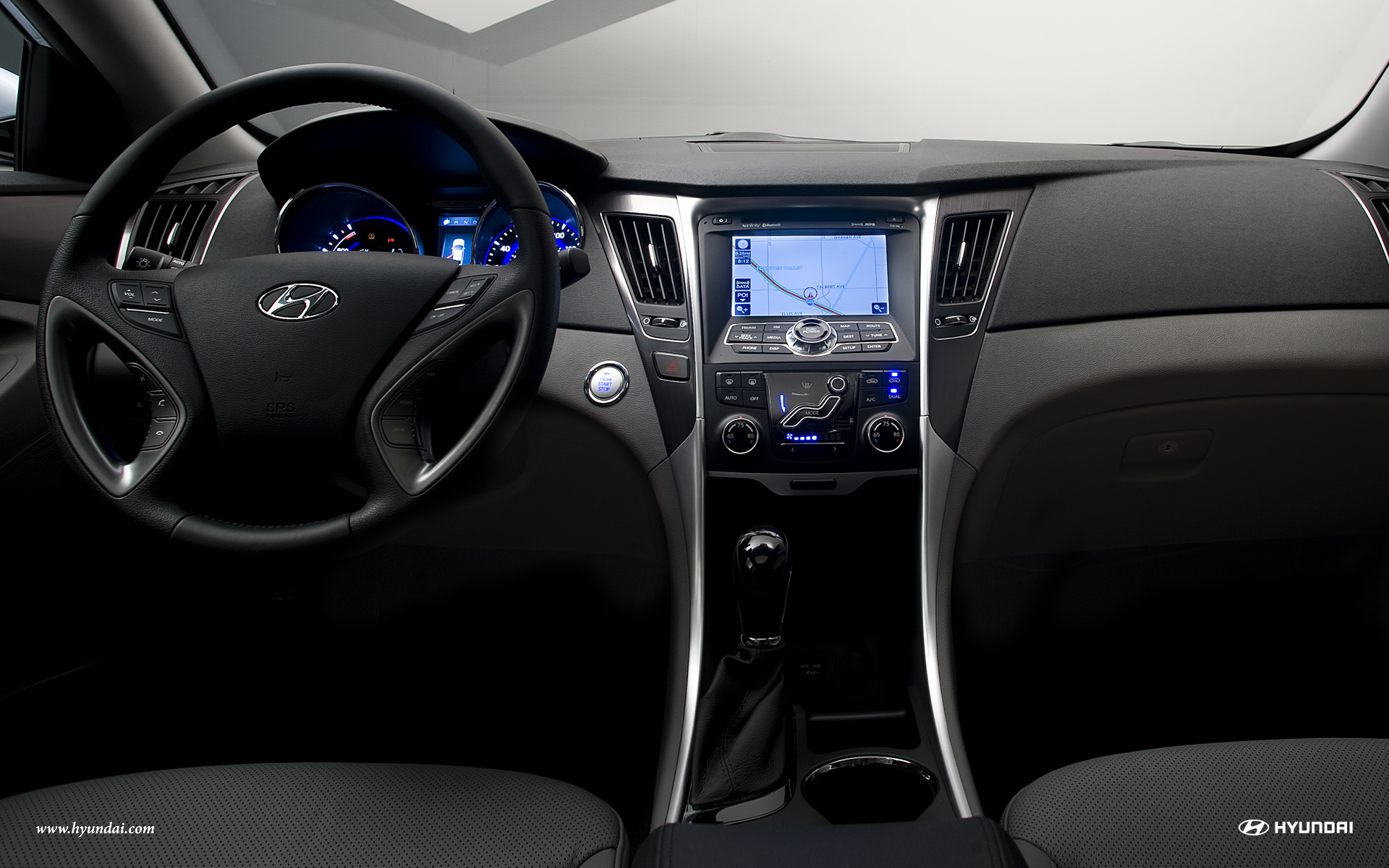
The interior plastic tones are pleasing to the eye and it's all very balanced. Controls are easy to read and reach.
Whether you get the Camel or Gray interior, the various surfaces and plastic plastic panels are mostly high grade, soft to the touch and textured. Only a couple panels failed my tap and scratch test. The 8-way power driver’s seat had plenty of room for my 6’1” frame and I could actually sit behind myself without collapsing my legs. The shallow back seat bench doesn’t have much thigh support, but neither does anything else in this size/class.
A Bluetooth hands-free phone system is standard. The $5,000 Premium Package is the only option available on the Hybrid. It includes a panoramic power sunroof, 17” eco-spoke alloy wheels, navigation with a back up camera, a thundering Infinity Premium 400 watt sound system with HD and XM Satellite Radio, leather seating surfaces, and a rear view mirror with an embedded digital compass and HomeLink.

The Sonata Hybrid's panoramic sunroof makes the cabin feel light and airy.
The Hybrid sacrifices the folding rear seats to the slim, rectangular lithium polymer battery pack. A separate starter battery (like in a regular car) nestles in the trunk’s right rear recessed corner. All told, you don’t give up much cargo space to the hybrid package.

You're looking straight at the lithium polymer battery pack of the Sonata Hybrid. It doesn't suck up too much trunk room. It's sandwiched in behind the rear seats.
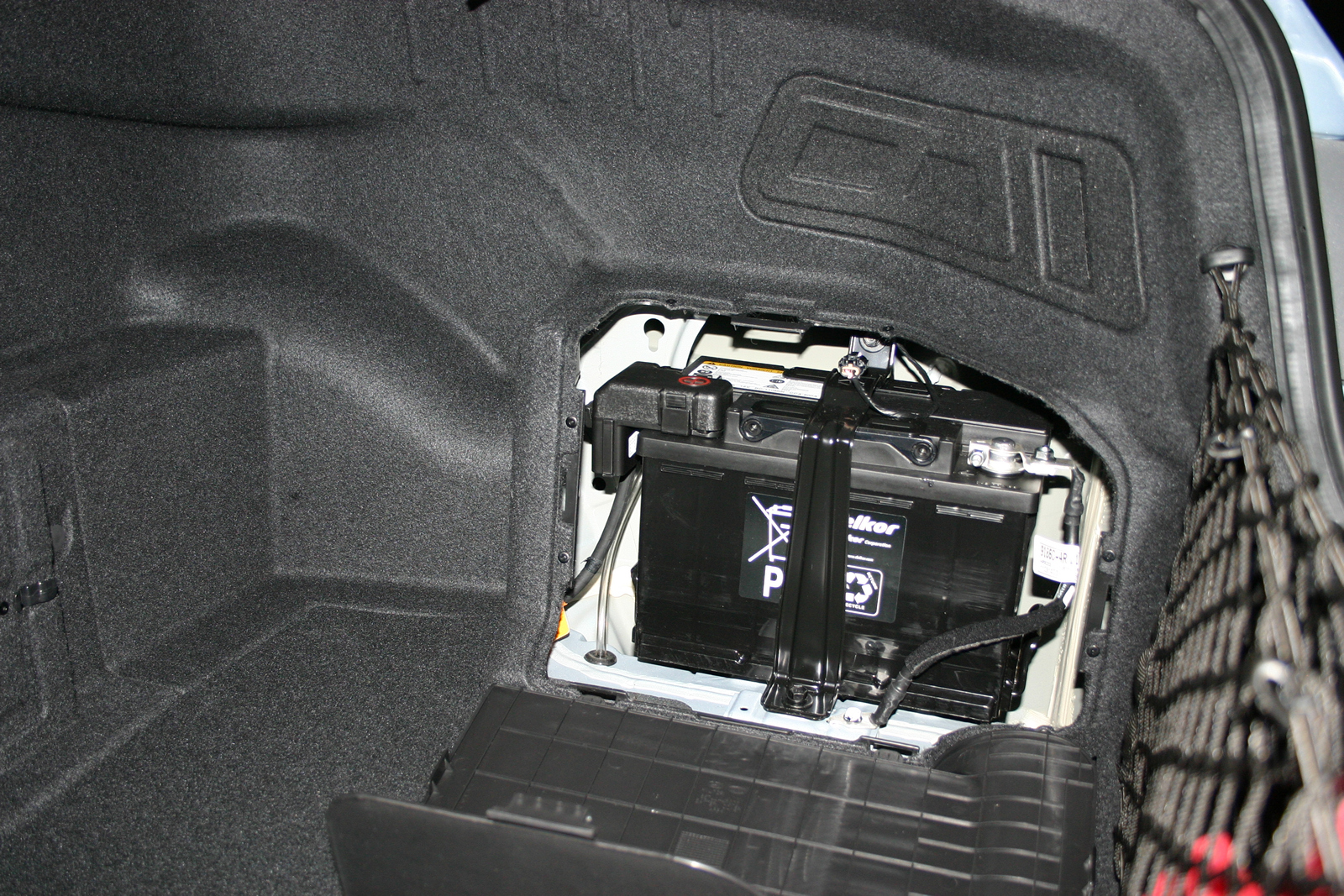
The auxiliary battery is used to start the engine and power accessories. Just like a "normal" car's battery.
My test car was the fully-loaded Sonata Hybrid with the Premium Package. With a base MSRP of $25,795, freight of $750, the total damage is a very competitive $31,545. The 2012 Camry Hybrid LE has a base MSRP of $25,900 and is EPA rated at 43 city/39 highway compared to the Sonata’s 35/40. Depending on your mix of driving, the two may come very close to each other in real-world use.

The Hyundai Sonata Hybrid will face fierce competition from Toyota. This is the just revealed 2012 Camry Hybrid. It will be priced almost the same as the Sonata and Toyota will hammer the fact that it's got much better city EPA ratings than the Sonata.
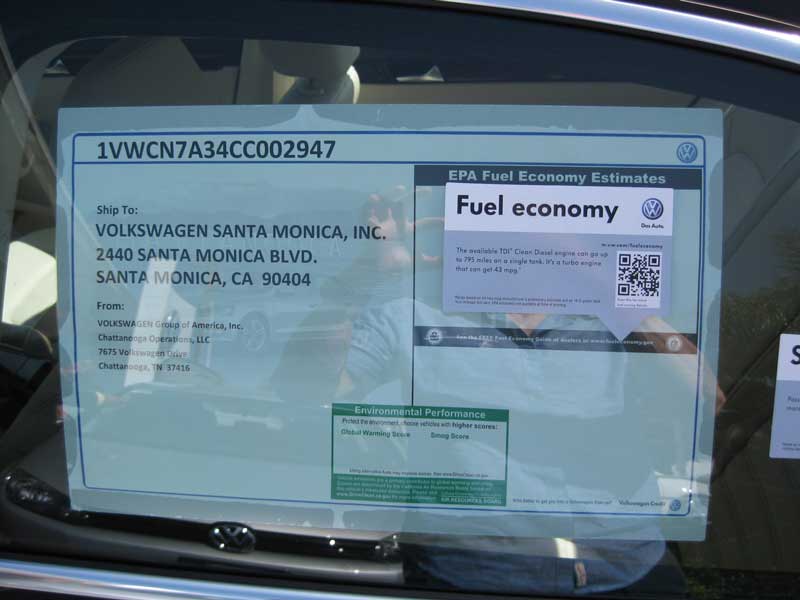
The next two years will see a more competitive field of mid-size fuel efficient sedans. In addition to the Sonata and Camry Hybrids, Hyundai’s sister company, Kia, has its own version of the Sonata Hybrid, the 2011 Optima Hybrid, with a MSRP of $26,500. I haven’t driven it, but it has the same hybrid drive system. Ford is readying an all-new Fusion Hybrid for sale in 2012 and Nissan will likely introduce a re-engineered 2013 Altima Hybrid later that year. And don’t forget that the 2012 Volkswagen Passat TDI (clean diesel) offers near-hybrid mileage with a sportier German demeanour.
If you’re in the market for a mid-sized hybrid sedan, the 2011 Hyundai Sonata Hybrid is a compelling choice. For me, the biggest techno-geek selling feature is the transmission. It simply imbues the Sonata Hybrid with a unique almost sporty character – something missing from most hybrids. It’s striking, solid, quiet, well sorted and generously appointed and now its my first choice in hybrid mid-size sedans. It slips so quietly and effortlessly through the daily routine, you may even name your car Electro Glide.
Basic Specs
| Base Price | $25,795 |
| Drivetrain | Front Wheel Drive |
| Curb Weight (lbs) | 3483 |
| City (MPG) | 35 |
| Hwy (MPG) | 40 |
| Horsepower | 206@6000 |
| Torque (lb-ft) | 193@4500 |
| Wheelbase | 110.0 |
| Length (in.) | 189.8 |
| Width (in.) | 72.2 |
| Height (in.) | 57.7 |






 Todd Bianco's ACarIsNotARefrigerator.com Blog