Archive for the ‘Hybrids, Electrics and other “Green” Technology’ Category


When I first downloaded the BMW EVolve app last week, I thought it was just a cute exercise in alleviating electric vehicle range anxiety.  The app uses the phone’s built-in GPS sensors to track your driving habits and routes — how far you drive, how fast you go, etc.  Think of it as pre-conditioning for the eventual electrification of the automobile and as a cheerleader for BMW’s i-Series (i3) electric MegaCity Vehicle (MCV) that won’t be here until 2013.

BMW's EVolve app for the iPhone

BMW i3 prototype caught in winter tests. Photos courtesy of AutoBlog.com.

However, in reality, the app was the drum roll before BMW’s Earth Day 2011 introduction its first EV to bear its own corporate logo: The ActiveE.  The EVolve app has a countdown battery gauge that starts with 100 miles, the claimed full-charge range of the upcoming ActiveE, an electrified 1-Series Coupé, that will be available for lease sometime later this year.

The MINI E was BMW’s warm up act.  Think of it as a rolling EV lab that uses humans as test drivers to better understand how batteries and electric drivetrains behave in “real world” driving conditions.  It was an expensive little car ($50,700 – but I think that’s a fantasy low-ball number picked out of thin air by BMW Financial Services) that gave early adopters a chance at driving a real EV.

2009 MINI E

Unfortunately, the MINI E was compromised with a large, heavy battery pack that took the place of the back seat. Worse, that battery tended to under-perform in the cold and overheat in the hot So Cal summers.

MINI E drivers were asked to pay a whopping $850+ tax per month ($932.87 in 9.75% LA County) plus the cost of installing a charger.  The lease included comprehensive and collision coverage; but not liability insurance.  There was grumbling in the MINI universe from “average Joe” drivers asked to pay that stiff $850+ tax/month while BMW offered the same car to various municipalities and non-profits for $10 (yes, ten dollars) a month.  Ouch.

The MINI E was originally leased for one year starting in 2009; however, BMW has “generously” allowed MINI E lessees a chance to extend their lease another year (2010 to 2011) and now, to keep their car until the ActiveE comes to market later this year.  MINI E lease holders will get first dibs on an new ActiveE later this year.  Of course, they still have to keep making those egregious lease payments.

I’m not sure who benefited most from the past two years of the MINI E experiment.  MINI E lessees drank the Kool Aid and can’t say a bad thing about the car;  however, I was specifically warned not to enter the trial because there were so many annoying problems with the car.  I’m inclined to believe my BMW insiders on this point.

That leaves the BMW engineers as the major benefactors. The past two years must have produced mountains of valuable information and feedback that will make the new ActiveE a much more competent and useful EV.

Not since the M1 of more than 30 years ago has a BMW had a rear-mid-ship mounted power plant.  The ActiveE’s, power electronics, electric motor and rear axle all form a complete unit.   This is the same configuration BMW will use in the upcoming i3 MCV.  The all-new liquid cooled lithium-ion battery back runs through the spine of the chassis and includes modules under the hood helping the ActiveE hit the magic 50/50 front/rear weight distribution ratio – a hallmark of the BMW brand.
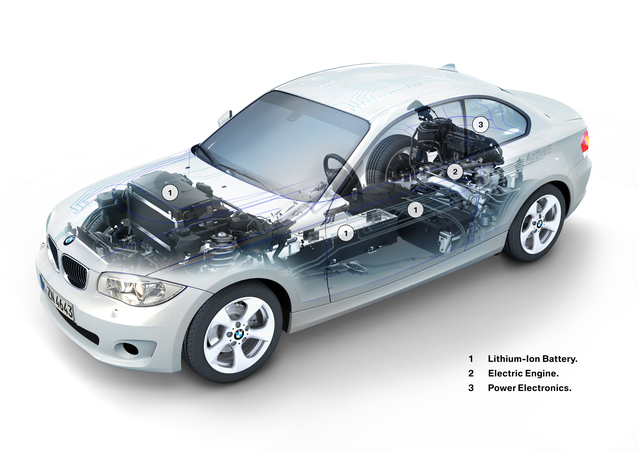
The BMW ActiveE electric guts revealed

BMW’s ActiveE drivers will be offered a much more affordable and realistic 24 month lease for $499/month with $2,250 down.  With tax and amortizing the up-front payment, the monthly cost pencils out to $650.54.  The insurance arrangement should be the same as the MINI E, but no one has seen the actual lease yet.

At one third less than the MINI E lease payment,  you get a car  fully capable of living up to BMW’s “Ultimate Driving Machine” tag-line.  As a bonus, you even get a two rear seats and a small trunk!
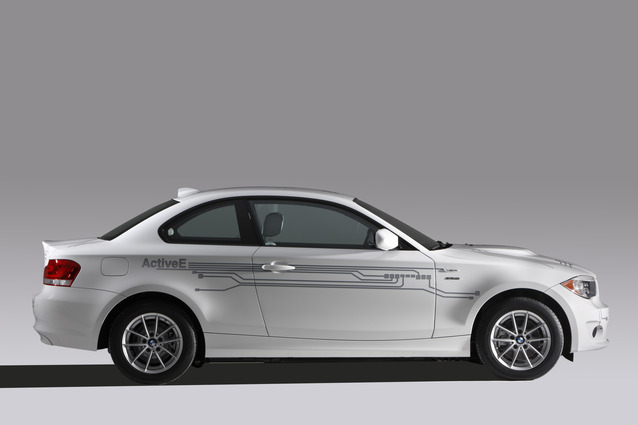
2012 BMW ActiveE - an electrified 1-Series Coupe

The BMW ActiveE

BMW Group engineers developed everything that constitutes the ActiveE:  the energy storage module, its wiring, the permanent magnet synchronous electric motor, the power electronics and the transmission.  If you want to control the quality of the product, keep it in-house.

The only the batteries were co-developed with SB LiMotive exclusively for automotive use (a knock at Telsa which uses stacks of lithium-ion batteries originally designed for laptop computers).  [SB LiMotive Ltd. is a 50/50 joint venture between Bosch and Samsung.]

BMW says the ActiveE has maximum power output from the electric drive system of 170 hp with 184 lb-ft torque, available from a standstill, as is the case with all electric vehicles.  BMW pegs the ActiveE’s 0-60 mph time at under 9 seconds with an electronically-limited top speed of 90 mph.

BMW ActiveE electronic umbilical cord

I’ve been testing the new BMW EVolve app on my iPhone. In general, there is almost no time that I could exhaust the 100 mile range in my normal daily struggle through our gridlocked, pot-holed streets.

However, I failed the EV test when I drove to Palm Springs over Easter weekend.  Yup, to get out of LA – any destination outside a 45 mile radius from my home – I’d need a “weekend car” or an extended Range EV like the Chevy Volt (MSRP $41,000 before federal/state tax credits) or Fisker Karma ($95,900 before federal/state tax credits).

2011 Chevrolet Volt extended range EV
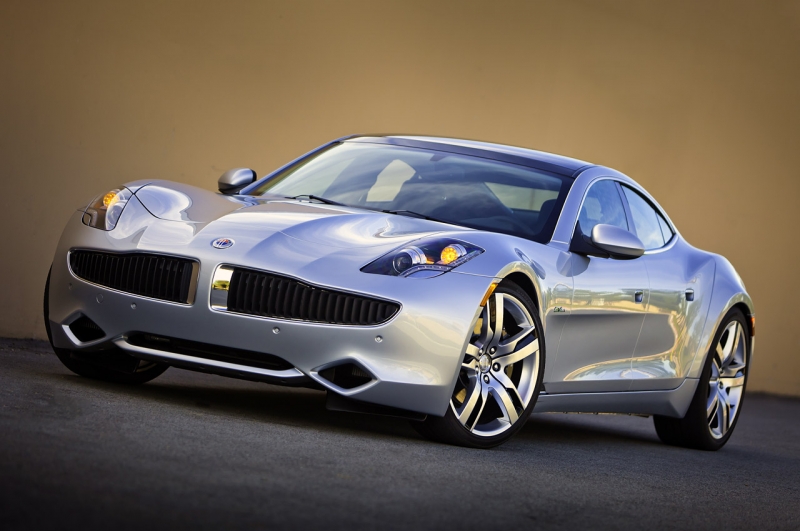
2012 Fisker Karma extended range EV

BMW is looking for customers interested in the ActiveE.  To lease the ActiveE, you have to live in one of the following metro areas: Los Angeles, San Francisco, San Diego, Sacramento, New York City, Boston and all of Connecticut.  You can explore more about the ActiveE and sign up to be notified when they start the field trials at BMWUSA.com.

BMW has also developed a slick Apple iPhone app for the ActiveE called ConnectedDrive, similar to those already developed for the Nissan Leaf and Chevy Volt.  ConnectedDrive can romotely lock and unlcok the doors, activate the horn or headlights helping you find your car, CarFinder to locate your car within a 3,300 ft radius and Google’s Local Search function.
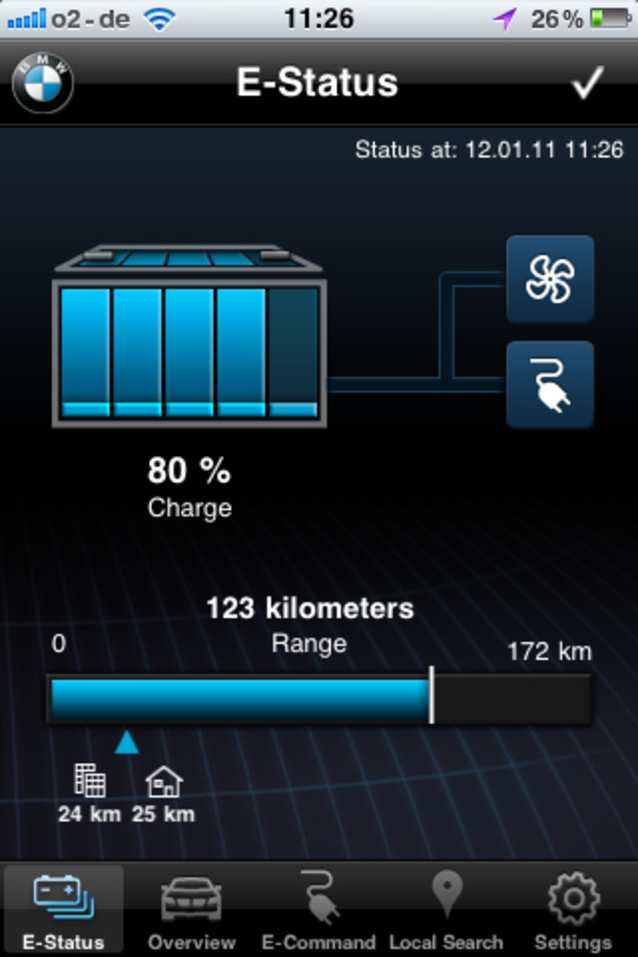
BMW ActiveE iPhone App
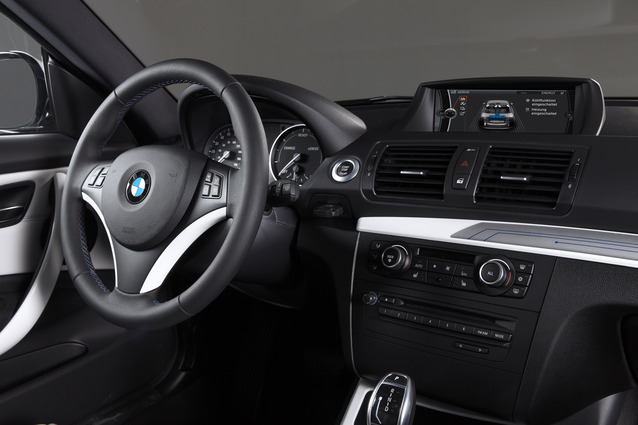
The ActiveE's information and navigation screen will mirror much of what is on the Smartphone app and is internet connected.

BMW will test a fleet of 1,000 ActiveE vehicles throughout the US, Europe and China.  For the MINI E trials, 450 of the 600 cars landed in the US, so it’s reasonable to expect at least 50% of the ActiveE allocation will come to the US.

I’d love to try it, but I’m waiting for my weekend car first.

Click here for a PDF of the press release: BMW_ActiveE_Electric_Vehicle_Press_Release


It was a cold but sunny Friday morning at Hollywood Park in glamorous Inglewood, CA – just across from The horridly-painted Forum, which is now home to a mega-church.  In its glory days, Hollywood Park (a misnomer because it’s nowhere near Hollywood) was home to some great horse racing and social events.  Now, located in Inglewood, a city just south of LAX, hard hit by the recession and poverty, Hollywood Park is more a gambling site for people who probably can’t afford to lose their money.

Hollywood Park parking lot at 8 am. The ambulances were ready, just in case of an accident. It was more likely that an octogenarian Buick owner would have a heart attack.

Hollywood Park has vast acres of parking surrounding the venue and it was a good place to play host to GM’s Main Street in Motion event (April 8-10 2011).  Some of the parking lot looked normal, with faded hash lines and washed out asphalt. Other portions around the periphery looked like they hadn’t been used in decades. Cracks were filled with weeds and the broken surfaces seemed happy to feel the warmth of rubber tires again.

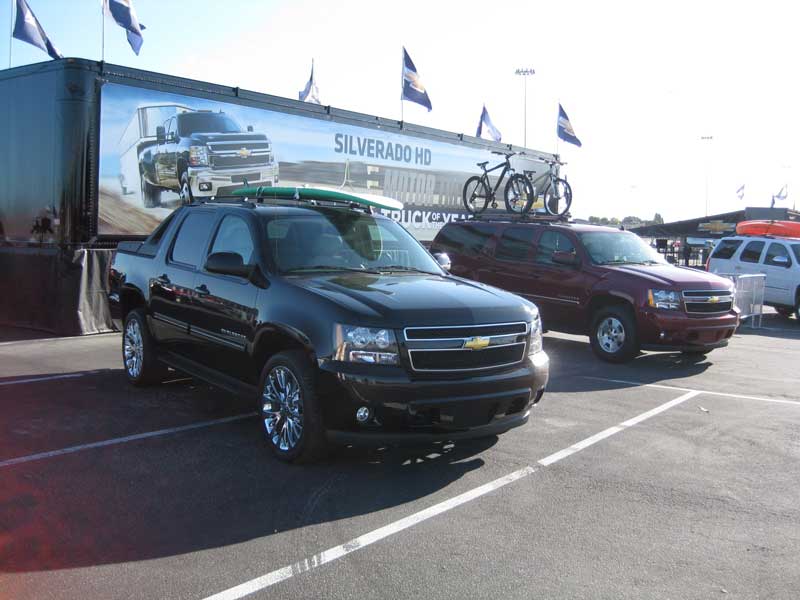
Chevrolet Pavilion

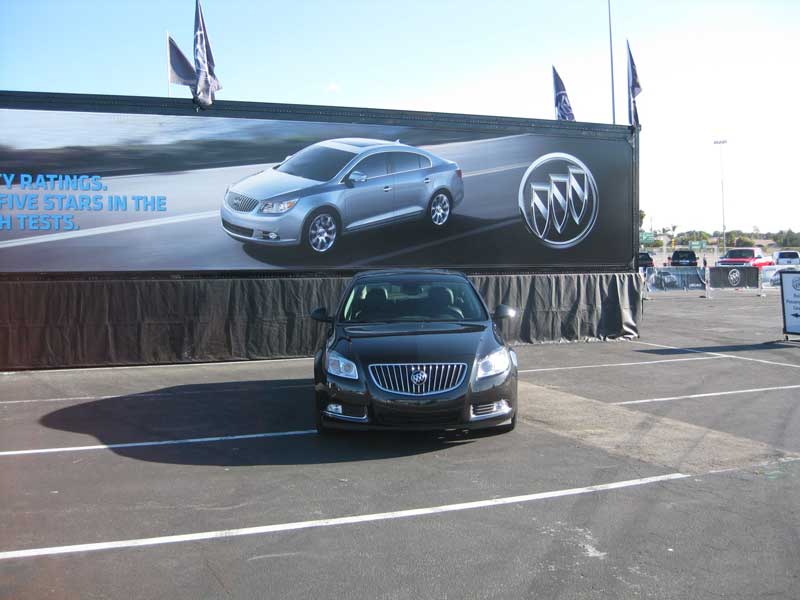
Buick GMC Pavilion

The course was pretty standard for these kinds of events.  You get to drive a short loop lined by orange cones that gives you some room to accelerate, brake and take hair-pin corners.   The course varied depending on the car.  The Corvette and Camaro got a more aggressive layout than the standard ones for the Chevy Malibu or Buick Regal.  The longest drive was with the Chevy Volt, which even took you briefly onto surface streets.

In addition to the “Grand Pavilion” for each brand (Buick – GMC and Chevrolet), there were eight different driving courses, sorted as follows:

  1. Chevy Volt Drive
  2. Chevrolet Performance: Corvette and Camaro
  3. Chevrolet Car Course
  4. Chevrolet CUV Course
  5. Chevrolet Truck and SUV Course
  6. GMC Truck and SUV Course
  7. GMC CUV Course
  8. Buick Car and CUV Course

There was also a special trailer setup to display the wonders of GM’s OnStar safety and telematics technology.

Buick cars and crossover tent and driving course.

GMC Crossover (CUV) tent and driving course.

Chevrolet Truck & SUV tent and driving course.

Chevrolet Volt Tent

Corvette Tent and driving course.

We got there early to avoid lines and get the staff while they were fresh and willing to chat.  After several hours and several hundred drivers, you would be less enthusiastic too.  My goal was to drive just a few cars that I was interested in and to give you my first impressions and quick ratings.

BEST CAR:  Hands down, the 2011 Chevrolet Corvette was the best car at this event. The Corvette felt like it was extruded from one aluminum billet, rock solid.  You open the door with the touch of a finger, push the start button of the keyless ignition and the sleek coupe’s 6.2 liter, 430 hp aluminum V8 roars to life.  Cue the singing angels.  The  seats were superbly supportive and comfortable and I found the correct driving position with the touch of a few buttons.  Steering was precise, quick and communicative.  The linear acceleration was a magical and intoxicating blending of torque and horsepower driving the rear wheels through the rear-mounted six-speed automatic.

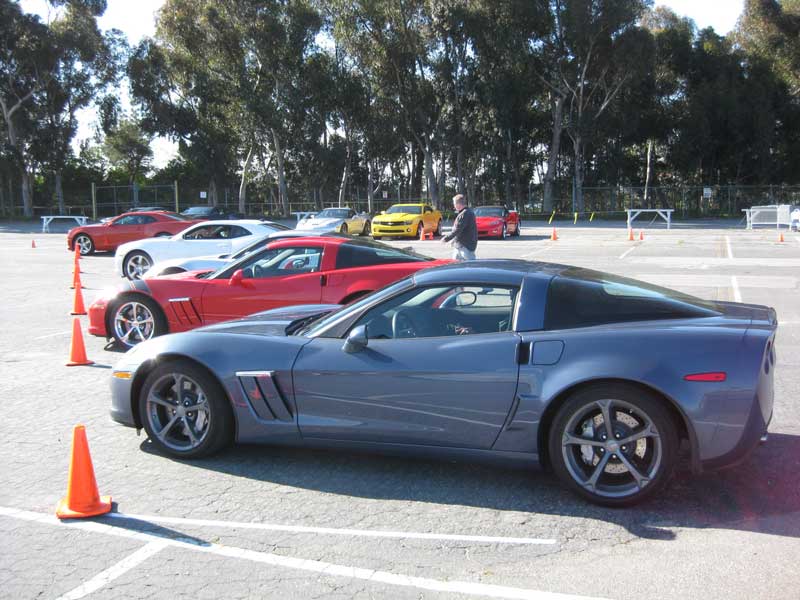
Corvette and Camaro test cars. I drove the blue Coupe pictured here.

The tester had the $1,995 Magnetic Selective Ride Control option which made the ride as smooth as Mercedes with the handling you’d expect from America’s premiere sports car.   The biggest letdown is the interior. The center console looks cheap, considering the Corvette’s base price of $48,950.  Aside from the gauges, the interior just doesn’t feel special enough to be a Corvette.  Unfortunately, this ding isn’t new for the sixth-generation Corvette that has been around since 2005.

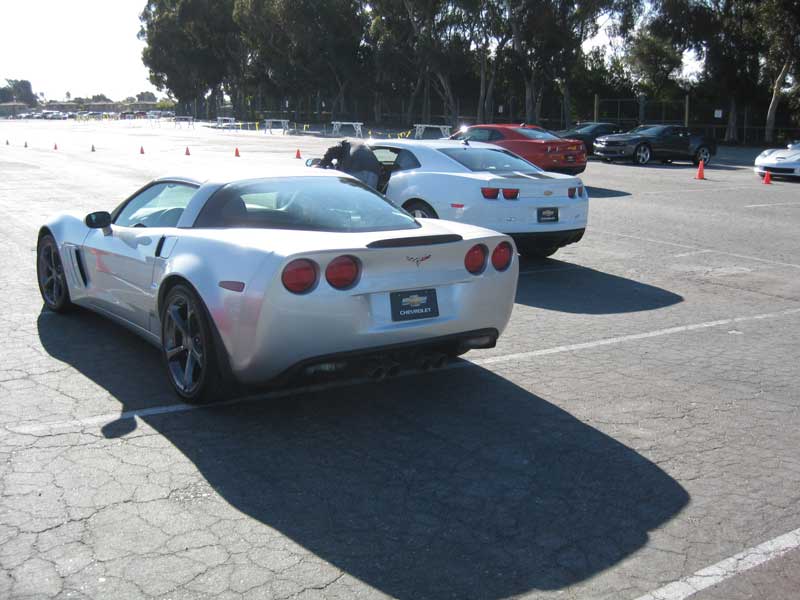
Corvette & Camaro performance driving course.

GM keeps promising a new Corvette sometime soon.  It couldn’t be soon enough to right the wrongs of the interior. We won’t get the all-new mid-engine design that was rumored pre-bankruptcy, so it’s likely that the C7 will be a heavily reworked version of the current C6.  Still, after all these years, this is the best modern GM product I’ve ever driven, and that includes the well-liked and well-reviewed Cadillac CTS.

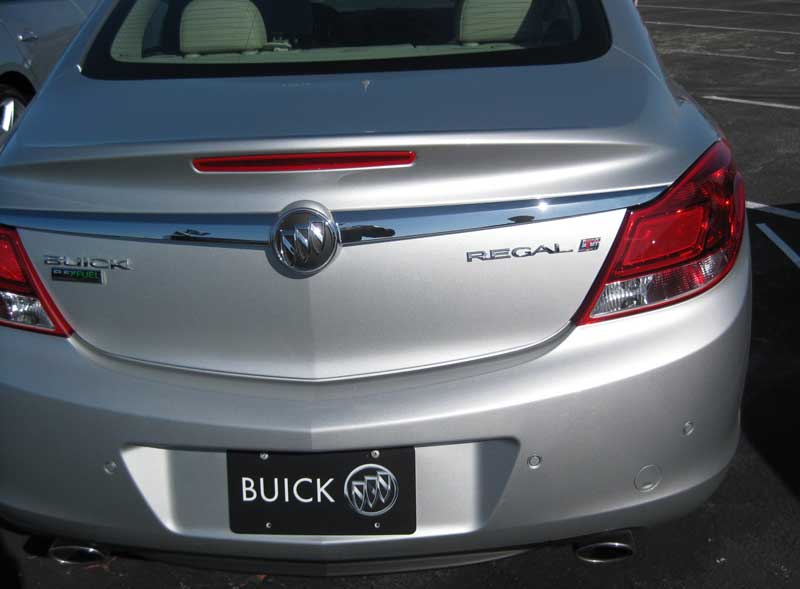
WORST CAR:  The 2011 Buick Regal Turbo was a major disappointment.  Perhaps it didn’t have the correct option packages, but my biggest gripe was the land-yacht steering and abysmal cornering for a car of this size. When turning sharply, the wheels pointed one way while the engine seemed to go the other.  I was also mystified by the cheapness of certain interior bits, particularly the plastic wood inserts.  When will GM get past this crap?

Our Buick Regal Turbo tester. The styling is contemporary and I like the "Regal T" badge.

The 2.0 liter direct-inject gasoline turbo engine felt powerful and I didn’t get any hit of turbo lag.  The styling was nice, assuming you like the new look of Buick.  Both the Regal and the larger LaCrosse are derivatives of the Opel Insignia – an excellent car.  Why the larger LaCrosse is more agile and competent baffles me. What got lost in translation?

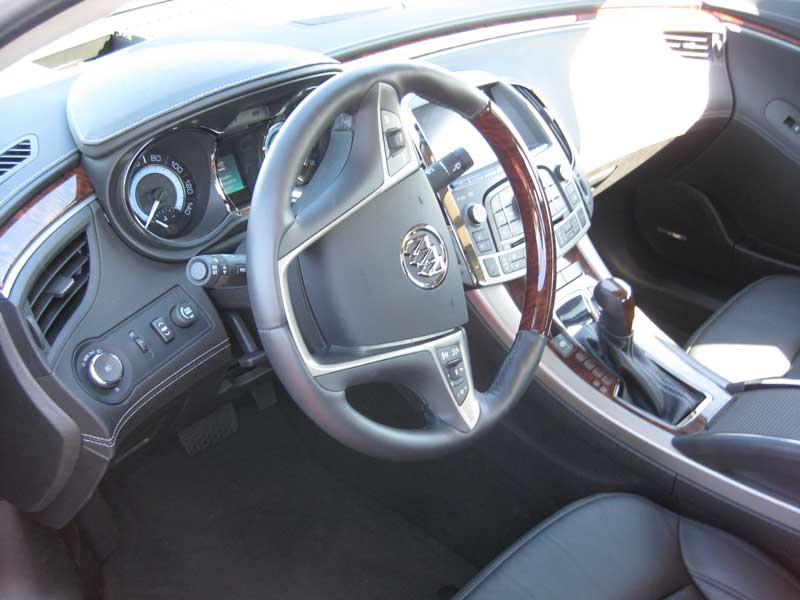
RUNNERS UP:  (1) The 2011 Buick LaCrosse front drive CXL with the optional 3.6 liter direct-inject V6 engine.  The LaCrosse cabin is a lovely place to spend time, and while the overall dimensions of the LaCrosse pale in comparison to past Buick behemoths, you don’t feel cramped.   It’s quiet and cushy – like you’d expect in a Buick – yet the driver-focused cockpit, sportier seats and fit and finish were light years ahead of the last generation LaCrosse and it easily out-maneuvered its smaller cousin, the Regal.   The interior materials were a cut above the Regal and the plastics didn’t feel or look as cheap.

Buick LaCross interior. The materials were mostly soft touch plastics and leather. Overall, a comfortable cockpit.

I really liked the LaCrosse; but I just couldn’t figure out who’s buying it.  I know sales are up significantly at Buick; but sales were so low before,  introduction of the completely revamped LaCrosse and reintroduction of the Regal nameplate assured an increase in sales.  I don’t know anyone my age (51 ) or younger who could bring themselves to actually buy a Buick, simply because of its damaged image as a car solely for your grandparents.

I see very few non-rental Buicks in LA and while I see many more privately-owned Buicks in the Coachella Valley where you’d expect them (Palm Springs, Palm Desert, Rancho Mirage, etc.), I still see more seniors driving a new Lexus ES350 or a Toyota Avalon.

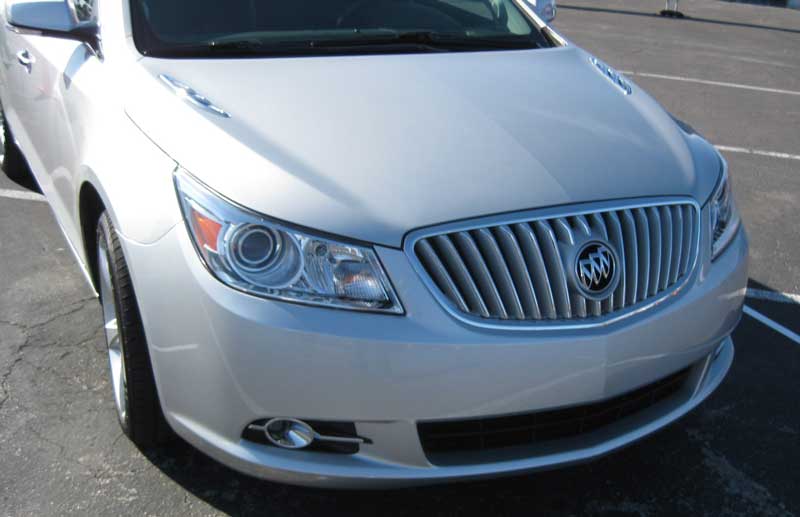
The nose of the LaCrosse carries Buicks cascading grill but sometimes its hard to tell the difference between the Regal and the LaCrosse.

New Rule: Its time for Buick to ditch the fake portholes made with fake chrome. Originally, the portholes were real. Four portholes on each side designated a V8, three designated a V6 (or in-line six back in the days).

(2) The 2011 Chevrolet Cruze.  The Chevy Cruze puts to rest the abysmal legacy of its fore-bearers: the Cobalt and the Cavalier.  No longer is the smaller Chevy relegated solely to the indignity of troglodyte duties in our nation’s rental fleets.  Now, in upper level trim, it could be a car that you’d be proud to own and feel comfortable that you’re at least keeping up with the competition.

The Cruze feels light and agile and well screwed together.  The seats were comfortable; but I thought there could be more lateral and thigh support.  For shorter drivers, that wouldn’t be a problem.  The plastics were mostly soft-touch and the two-tone interior was particularly pleasing. It also had more rear room than most sub-compact/compact cars.

[Chevy required you to drive the Cruze before you drove the Volt. Maybe that was because they are both of similar size riding on the same platform or maybe they knew that everyone would want to drive the Volt and this was an easy way of coercing you to drive the Cruze.]

There is one little problem with the Cruze: While it’s new to the US market, it’s been out in the rest of the world for over 2 years.  Two years is an eternity in the car business and the 2012 Ford Focus instantly makes the Cruze feel old and dated.   And the 2011 Hyundai Elantra offers more features, better fuel economy, a longer standard warranty and fresh, fluidic styling — all for less money.  Tick talk, Chevy.

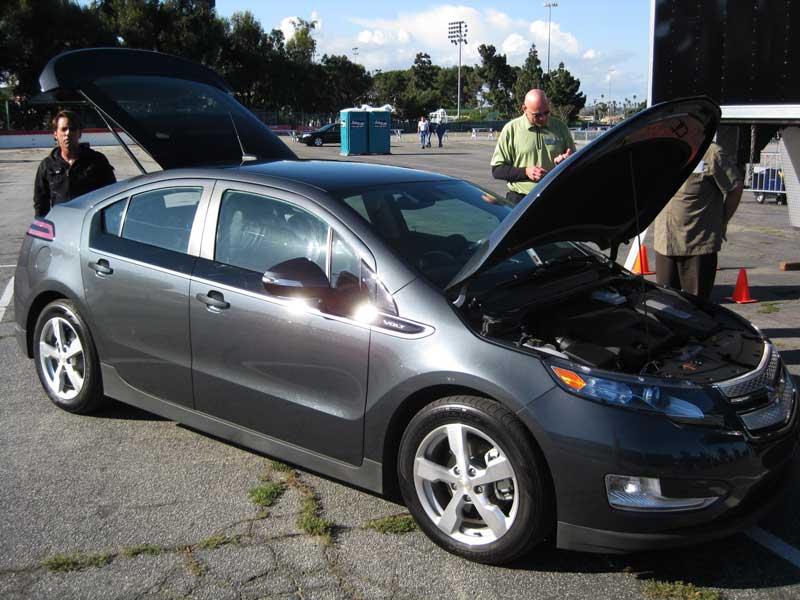
HONORABLE MENTIONS:  The 2011 Chevrolet Volt.  The size and shape of the Volt reminds you that it’s platform cousins with the Cruze; however, unlike the Cruze, the Volt is an amazing piece of fresh technology that works in the real world for well-heeled early adopters of electric vehicles.

Chevy Volts lined up for test drives.

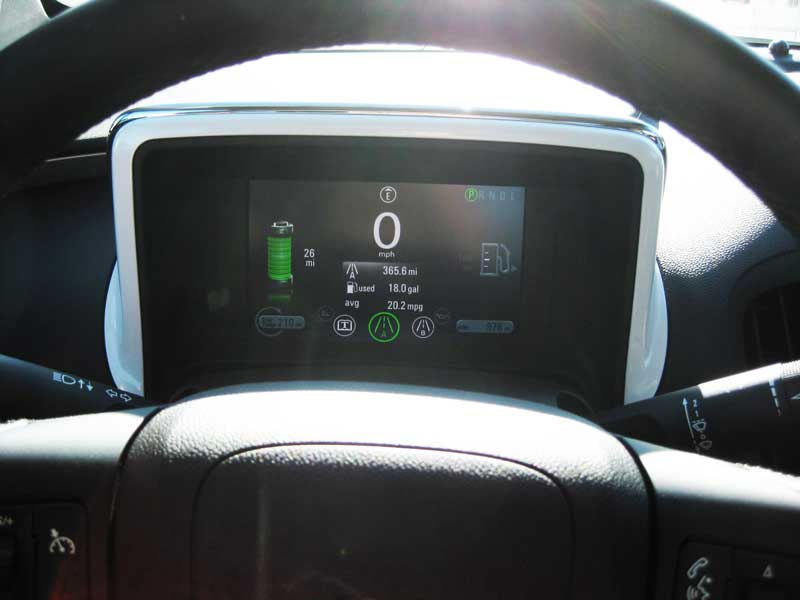
Our test drive in the Volt was longer than all other cars as it took us onto surface streets and then back into the parking lot.   If you’ve ever driven another hybrid like the Prius or Ford Fusion Hybrid, then you’re familiar with the start up procedure. Press the “Start” button, the colorful LCD screens – both front and center – come to life, and you know you’re ready to go. There’s no engine noise because it’s, well,  electric.  Clear graphics indicate the level of battery charge, estimated EV range and when the gasoline engine kicks in to power a generator to provide more electrons to drive the motor.  Move the shift lever to “D” and you’re off.  It’s that easy.

All gauges are digital on the Volt. The LCD screen was clear and easy to read, but there was some glare when the sun struck it at certain angles.

The Volt is heavy – 679 lbs more than the Cruze. Yet the weight gives the car a lower center or gravity and makes it feel more substantial. I felt that the the center-mounted  battery pack more evenly-distributed the Volt’s weight and gave it a handling advantage over the Cruze.   I also liked the hatchback configuration and two rear bucket seats better than the trunk and rear bench in the Cruze.   Although, if you’re tall, there isn’t much rear headroom with the sharply-raked rear hatch.

The Volt has plenty of room for four adults. However, headroom is in short supply in the rear seats. Im several inches taller than the guy sitting in the seat and look how close his head is to the headliner.

The dash’s center stack with a slick touch-surface looked better than the cheap plastics you usually see here.  Chevy wanted it to look clean and shiny – like an Apple device – and the engineers succeeded.

The Volts center console/control stack was easy to see and use. However, if you are near-sighted, the labeling may be too small to read without glasses.

The Volt is the first plug-in hybrid (GM wants you to think of it as an EV) to take advantage of the range-extending technology employing an on-board gasoline engine powering a generator.  Depending on your driving “style,” battery-only EV range is between  25 – 50 miles.   The extended range of the Volt using the gasoline engine to generate electrons is said to be up to 375 miles.   Pretty good for 90+% of drivers.

While the Volt is much more conservative than the concept version, its a pleasing shape. There is a Cruze 5-door hatchback in Europe that looks more like the Volt. The overall size is very managablae.

The Volt starts at $41,000 – but that’s fully loaded. The only option you’ll want is the $695 Rear Camera and Park Assist Package.  But there’s more.  While you can charge the Volt with a standard 110 volt wall socket (6-8 hours for a full charge), you may want to install a quick-charging unit in your garage.  The charger will set you back $2,000 – $2,500, but you shave 50% off the charge time.  Your local utility may have credits for or subsidize the purchase/installation of the charger.

You definitely will want a Smartphone – like an iPhone or Android-powered device – so you can download and use the Volt’s slick app that wirelessly interfaces with your car.  And it really helps if you can take advantage of the $7,500 federal and $5,000 California tax credits.

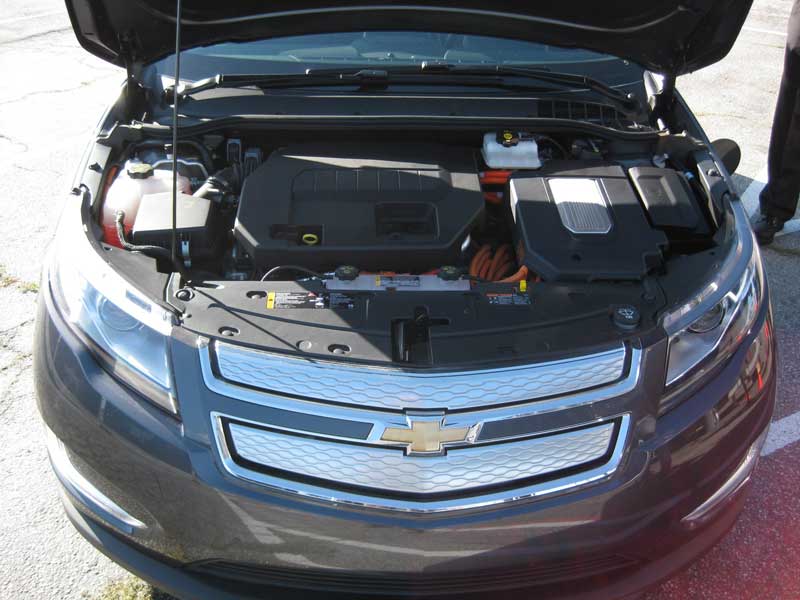
The engine/motor bay is crammed with the Volts electric motor and the gas engine that powers the generators to give Volt its extended electric range.

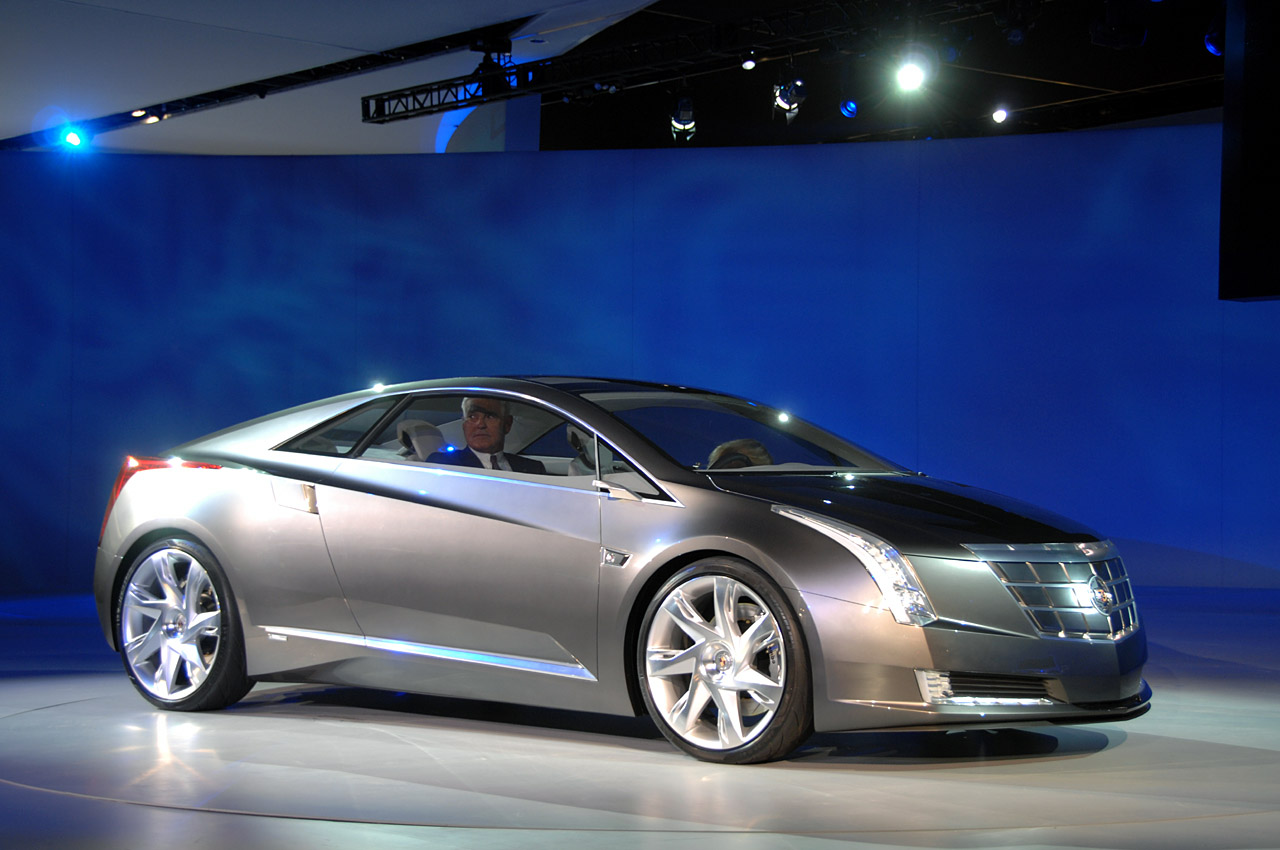
I look forward to more products from GM using Volt technology. Cadillac Converj anyone?

The Cadillac Converj Concept debuted at the 2009 Detroit Auto Show. Under that beautiful skin is Chevy Volt. Id pick the Caddy any day over the Chevy! GM still isnt committed to make it and if it does, it probably wont look this fantastic. But I can dream...