The rise of fuel prices in Los Angeles and the rest of the country has been a boon for the makers of Xanax and a pain in the wallet for all drivers. At this point, almost every grade of gasoline or diesel is $4.00/gallon or higher.
Americans seem to have collective amnesia after The Great Gas Panic of 2008. Remember when gas was nearing $5/gallon around LA? I do, but apparently most don’t. Throughout 2009 and 2010, sales of hulking trucks and SUVs that, at best, returned fuel economy in the high teens, were on the rise again. In fact, during 2010, residual values of big, heavy, gas-guzzlers increased significantly because there was such high demand. That may be coming to an end. The new Gas Panic of 2011 has arrived and it threatens to derail our already fragile economy.
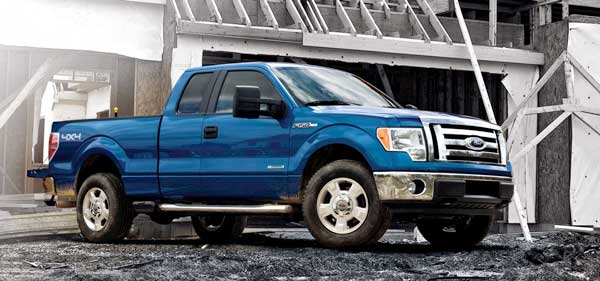
2011 Ford F-150, the best-selling vehicle in the United States.
As usual, the top-selling vehicle for 2010 was the Ford F-series pickup truck. Ford sold a staggering 528,349 units – great news for Ford. But if that wasn’t bad enough, the Chevy Silverado pickup truck was the number two selling vehicle in 2010 with 370,135 units. If you add the sales of GMC’s Sierra (Silverado’s spawn) of 129,794 units, total GM light truck sales totaled 499,929 units. Wow – you sure don’t see that in LA metro where it seems like almost every other car is a Toyota, Honda, Mercedes or BMW. Where I live in West Hollywood, you can’t throw a stone without hitting a Prius.
Even as recently as February 2011, the top selling vehicles in the US market were:
As usual, we can’t get enough of the big, bloated trucks. But is that about to change?
There was a short period during the 2008 Gas Panic when the Ford F-series truck was knocked from the top position by the Toyota Camry and Honda Accord; but that was short-lived as gas prices receded when the Wall Street-driven speculative oil futures bubble burst.
This time around, the price hikes are fueled by fears of uprisings in oil-producing countries in the Middle East and Northern Africa. There is no oil shortage – for now. However, as events in those regions unfold, and the stability of oil production and supply becomes ever more precarious, the high oil prices may stick around for a longer time. Assuming our “friends” in Saudi Arabia and the Emirates hang on to their kingdoms and autocratic authoritarian governments, eventually oil prices will stabilize at a lower level and gas prices will recede again. If those regimes fall, all bets are off. It looks like high prices at the pump are here to stay for a while.
There are many more great fuel-efficient cars on the market today than there were in 2008. However, there are very few choices in the luxury category if you want something that gets better than 25 mpg. It seems like if a luxury hybrid attains 22 mpg, it’s cause for celebration. But I think there is a larger market for affordable, luxury (or near luxury) cars that can top 35 mpg.
While Toyota’s Lexus division beats every other manufacturer with the sheer volume of hybrids, only the RX 450h, a fancy Toyota Highlander, offers a significant bump in fuel economy(>30%) over its gas-only cousin, albeit at a $4,560 premium. The new CT 200h is a gussied up, less fuel efficient, Prius. The HS 250h is a Toyota Adventis from Europe with the Camry Hybrid drivetrain. The GS 450h and LS 600h L have no Toyota analog, but neither have stellar fuel economy (see below). As things currently stand today, the CT 200h is the (near) luxury fuel economy champion.

2011 Lexus CT 200h

A close up of the interior panels of the 2011 Lexus CT 200h.
The new Infiniti M Hybrid, rolling into showrooms in April, is quite nice; however with an entry level price of $53,700 you pay a lot to chase its 32 mpg.
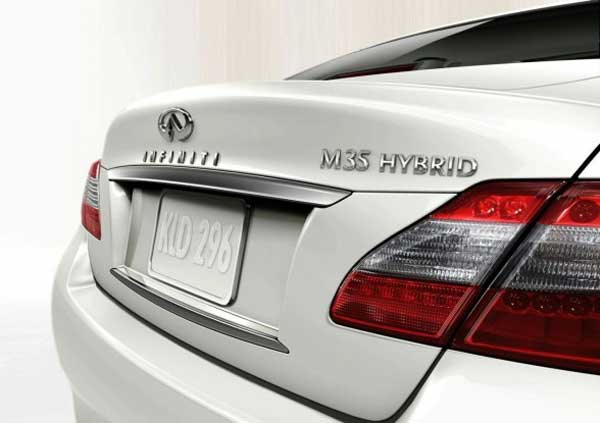
2012 Infiniti M35 Hybrid
The Lincoln MKZ is merely a rebadged Ford Fusion, and while it’s nice, I’m not sure it’s worth the extra $6,000. I’d pick the Ford over the Lincoln.
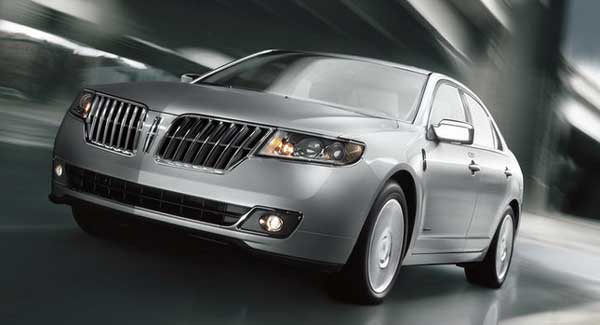
2011 Lincoln MKZ Hybrid
The German luxury brands – Audi, BMW, Mercedes-Benz and Porsche – all offer a hybrid or clean diesel, but mostly for big, heavy, expensive SUVs whose fuel economy sucked to begin with. So an increase of 15-20% seems great when you’re talking about a dismal 16 mpg in the city. Now you can get 18 mpg in town with a diesel or 20 mpg with a hybrid. Whoop de doo.
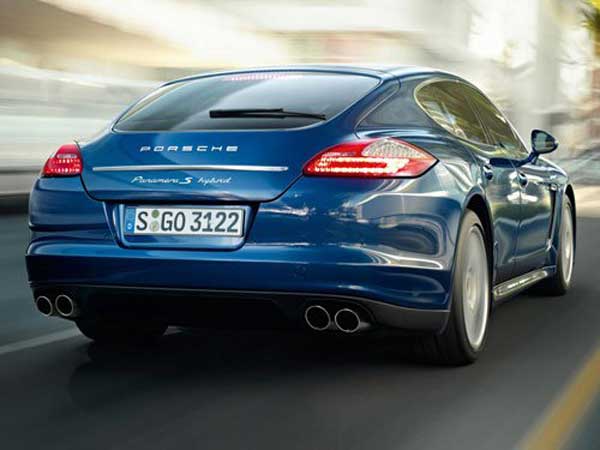
2012 Porsche Panamera S Hybrid starts at $95,000.

2011 Lexus LS600h L starts at $111,350 and gets a whopping 19/25 city/hwy.
Here’s a short list of luxury hybrids and advanced clean diesels. Most of them are so expensive that any bump in fuel economy is probably meaningless to the driver. If you are going to pay over $110,000 for the Lexus LS 600h L, do you really care about its fuel economy? If you drop $95,000 on the base Porsche Panamera S Hybrid (it’s at least $115, with options), do you care that it gets better fuel economy or do you just want the bragging rights when you toss the key fob to the valet at the SoHo House? Most of the luxury hybrid (or advanced diesel) SUVs are sold in low volume to people in L.A. with money to burn (or someone else’s money) who want a big SUV with “green” bragging rights. Such is life in Hollywood.
- Lexus CT 200h 43/40 City/Hwy FWD
- Lexus HS 250h 35/34 FWD
- Lexus RX 450h 32/28 FWD
- Lexus GS 450h 22/25 RWD
- Lexus LS 600h L 19/23 AWD
- Infiniti M35 Hybrid 27/32 RWD
- Lincoln MKZ Hybrid 41/36 FWD
- Cadillac Escalade Hybrid 20/23 RWD
- BMW X6 ActiveHybrid 17/19 AWD (this is a hybrid?)
- BMW 335d Advanced Diesel 23/36 RWD
- BMW X5 xDrive35d Advanced Diesel 19/26 AWD
- Mercedes-Benz ML350 BlueTec Diesel SUV 18/25 AWD
- Mercedes-Benz ML450 Hybrid SUV 20/24 AWD
- Mercedes-Benz GL350 BlueTec Diesel SUV 17/21 AWD
- Mercedes-Benz R350 BlueTec Diesel SUV 18/24 AWD
- Mercedes-Benz S400 Hybrid 19/25 RWD
- Porsche Panamera S Hybrid (TBD, but estimated around 33 mpg) RWD
- Porsche Cayenne S Hybrid 20/24 AWD
- Audi Q7 3.0 TDI Clean Diesel 17/25 AWD
- A3 Sportsback 2.0 TDI Clean Diesel 30/42 FWD
Of all the Germans, only the BMW 335d and Audi A3 2.0 TDI offer a significant leap in fuel economy over their gas-powered cousins. Both use advanced clean diesel technology.

2011 BMW 335d sedan
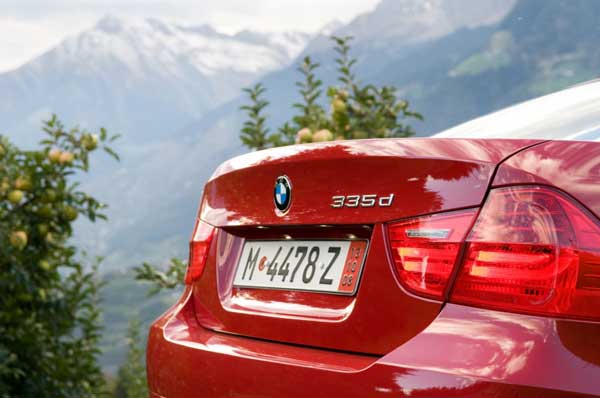
BMW 335d rear trunk lid and badge.
I’ve driven the BMW 335d and it’s a fantastic car. The 425 lb-ft of torque available at just 1750 rpm is intoxicating. The BMW 3-Series is the benchmark for all other sports sedans and the 3.0 liter TwinPower Turbo diesel engine is the most powerful and sophisticated in-line six diesel in production today. Put the two together, it’s magic. But magic is pricey. The 335d starts at $45,575, a whopping $3,525 premium over the excellent gas-powered 335i and a staggering $10,975 more than the entry level 328i. Yes, at 36 mpg, the 335d is 30% more efficient than the 328i, which is rated at 28 mpg — but at what price? When you add the normal options like the Sport, Cold Weather, Convenience and Premium Packages, navigation, upgraded sound and satellite radio to the 335d, the price is over $57,000. Almost any savings you get with the terrific fuel economy are negated by the extra cost of the diesel package. Would it have killed BMW to bring in a less expensive, more fuel efficient diesel engine to the US market?
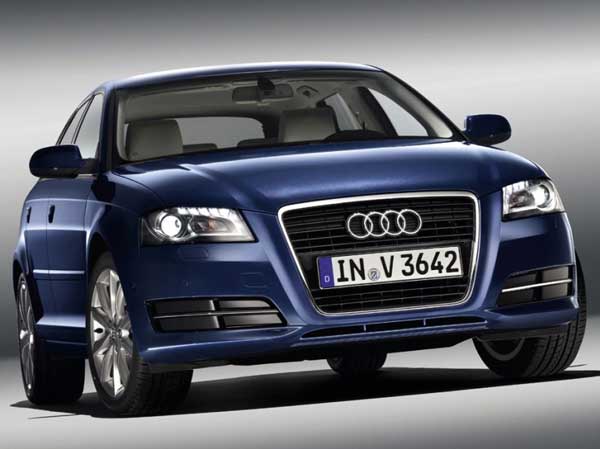
2011 Audi A3 2.0 TDI Sportsback
Having eliminated the big SUVs and ultra-expensive sedans, only the new Lexus CT 200h and the Audi A3 TDI offer a real-world, affordable mix of luxury and economy. Both cars are front drive 5-door wagons. However, the Lexus uses Toyota’s Hybrid Synergy Drive found in the current Prius while the Audi is using the Volkswagen Group’s 2.0 liter TDI engine found in the Golf and Jetta. The A3 also uses the Golf platform, which is an excellent, dynamic platform that has spawned many derivatives.
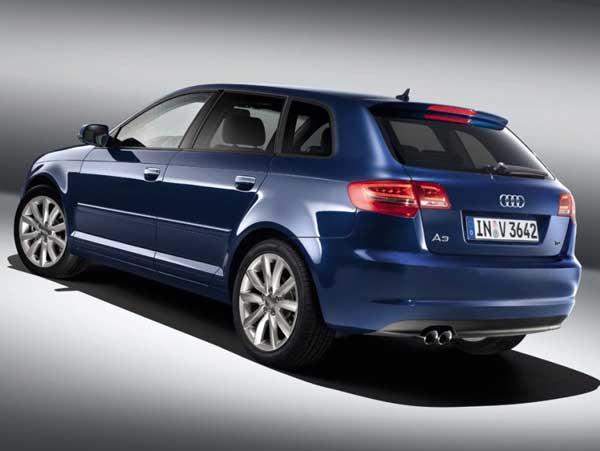
2011 Audi A3 2.0 TDI rear
In 2010, the A3 TDI won the Green Car of the Year award from the Green Car Journal. Of course, the 2011 GCOTY went to the Chevy Volt — everyone expected that; but the little Lexus could be a contender for 2012. However, with so many new electrics and hybrids coming to market for 2012, the CT may get lost in the electrified hype.
The CT is 1.2 inches longer than the A3 and both are almost identical in height while the A3 is 9 inches wider. The A3 has 19.5 cubic feet of cargo capacity (seats up) while the CT trails by 5 cubic feet. The weight advantage goes to the CT which tips the scales at 3,130. The Audi has an extra 188 pounds. When it comes to fuel economy, weight drags down the numbers.
The A3 2.0 TDI starts at $30,250, $1,130 more than the Lexus CT 200h at $29,120. Fully-loaded, the Audi can bust the $40,000 mark — more than $3,000 over a fully-loaded CT. On the fuel economy front, the CT beats the A3 handily if you just look at the EPA figures. However, there is lots of anecdotal evidence from TDI devotees that on the highway, the A3 (and Volkswagen Golf) TDI approaches 50 mpg – a good 10 mpg better than the Lexus. If you do more highway driving, like I do, the A3 may be the winner.
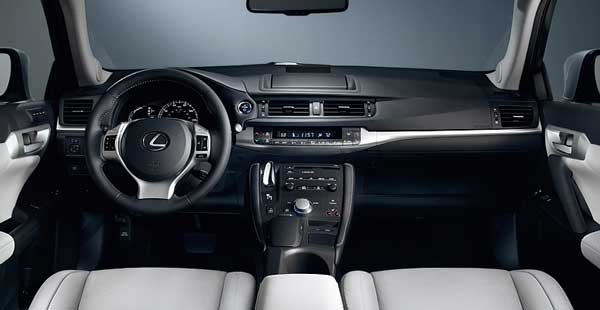
2011 Lexus CT200h interior

2011 Audi A3 TDI Sportsback interior
The A3 has a 2.0 liter common rail turbo diesel (TDI) rated at 140 horsepower with 236 lb-ft of torque. A six-speed S-tronic® dual-clutch automatic transmission is standard. Of course, it sucks down more expensive diesel fuel. The CT’s power comes from a 1.8-liter gasoline engine rated at 98 horsepower and an 80 horsepower electric motor. Together, they produce 134 net horsepower. Torque is rated at 152 lb-ft. A continuously variable automatic transmission is standard. The Lexus needs only regular grade gasoline, so it has the fuel price advantage. The A3 TDI does a respectable zero to 60 in 8.9 seconds while the CT clocks in at a leisurely 9.8 seconds.
Lexus is pitching the CT 200h as a “sporty hybrid” with its “Darker Side of Green” campaign, but it’s not going to match the A3 TDI for driving dynamics and sheer fun. The A3’s platform is more agile and I like to think of it as wonderfully-tossable. Its steering is sharper. The German engineering ethos applied to the little Audi imbues it with that intangible feeling that it’s more than just a dressed-up Golf. It feels as though it’s carved from a single billet of aluminum. It’s fun to drive and the TDI powertrain is deeply satisfying.
I haven’t driven the CT, but I have driven many Prii. The new Prius is a well-made car; the plastics and fit and finish are better than the previous generation. However, it still has that appliance vibe. I’ve seen the Lexus CT in the flesh and it is definitely an upgrade from the Prius, particularly inside, but the styling between the Prius and CT is a toss up and if I had to pick, I’d prefer the Prius front styling with the hatchback of the CT. The CT is 88 pounds heavier than the Prius and coupled with the reprogrammed “sports” drivetrain, it doesn’t get near the 50 mpg of the Prius.

Front of the 50 mpg 2011 Toyota Prius
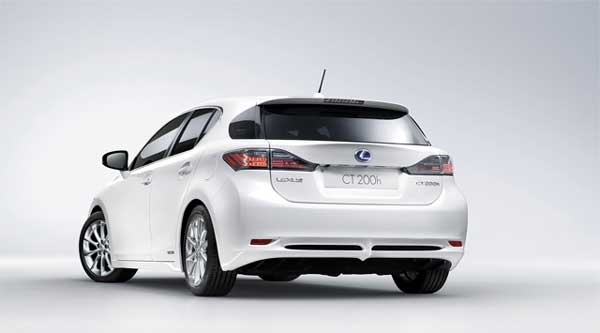
Rear of the 2011 Lexus CT200h
For my money and driving fun (and yes, I’m a car-crazed enthusiast), I think the 2011 Audi A3 TDI packs the most luxury with exceptional fuel economy. The Lexus is tempting, but it’s not the enthusiast’s choice. With lackluster sales of the HS, GS and LS hybrids, Lexus hopes for more sales and younger buyers for its entry-level CT.
The A3 TDI is already a very popular car. In 2009, Audi sold only 3,874 A3’s. With the introduction of the A3 TDI for the 2010 model year, sales jumped 69% to 6,558 units of which 53%, or 3,480 units, were the TDI. Audi sells every TDI it can get in the US, so be prepared for the dealer to tell you that they can’t find the A3 TDI that you want. Keep looking, it’s out there.







 Todd Bianco's ACarIsNotARefrigerator.com Blog