The Palm Spring car club, Great Autos of Yesteryear, held its fourth annual Casual Concours this past Saturday October 20, 2012. Past events were held at the Indian Canyons Golf Club in south Palm Springs; however, this year, it moved to the aptly-named Desert Princess Country Club in Cathedral City.
The sun was shining and a nice breeze cooled down the 90 degree weather. While light wasn’t optimal for pictures, everyone was snapping away at the gorgeous, graceful dinosaurs, most from the glory days of the Big 3 Detroit automakers. The paint was flawless and the chrome was polished like within an inch of its last layer.
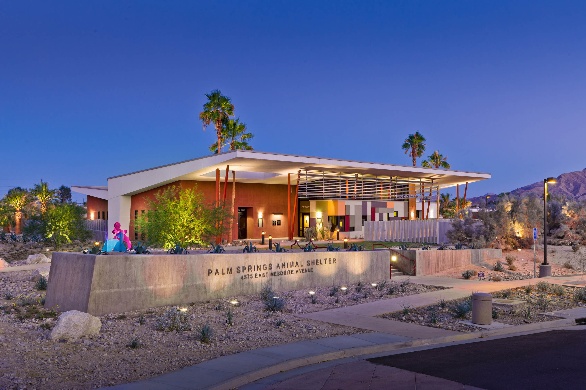
The lovely new Palm Springs Animal Shelter. Like any municipal animal shelter, it needs volunteers and donations (both cash and in-kind) to fulfill its mission.
Proceeds from the show ($10 general admission) went to benefit the Friends of the Palm Springs Animal Shelter, which supports the shelter, and are dedicated to building a community for responsible pet stewardship and the humane treatment of animals. The City of Palm Springs built a beautiful new animal shelter and now the City doesn’t have the money to run it properly. Big surprise, huh? It’s nice to be able to help our furry friends in need.
Below are pictures I took at the event. I arranged them by year, just for simplicity. Enjoy!
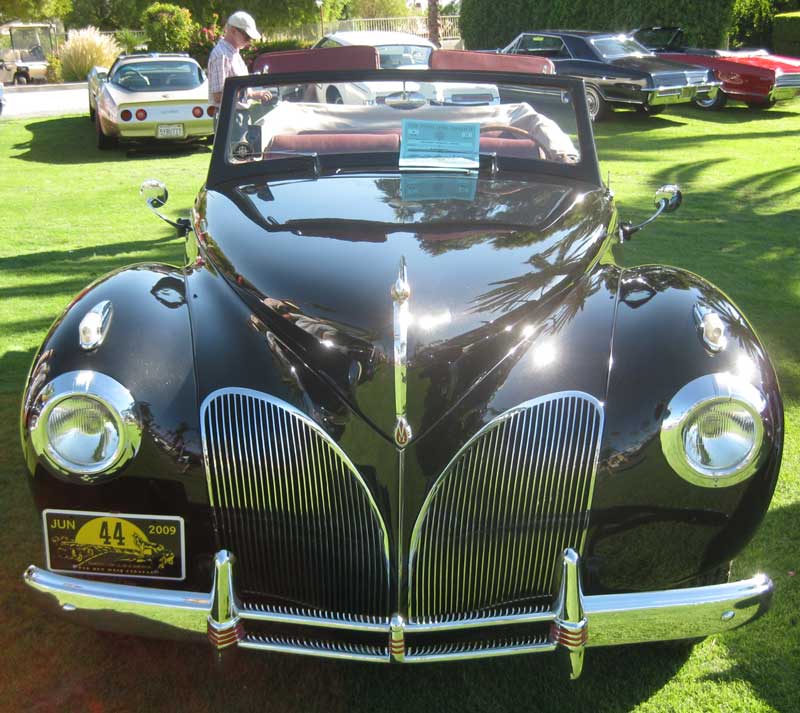
1941 Lincoln Continental Convertible. If you look at he grille of this Lincoln, it is the inspiration for the all-new grille and face of Lincoln on the 2013 Lincoln MKZ.

1941 Studebaker Starlite.

1953 Bentley R-Type
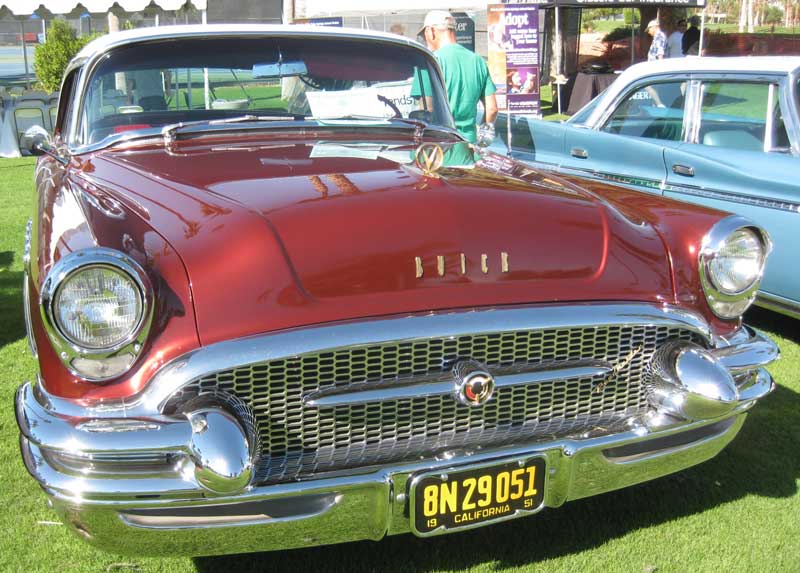
This lovely 1955 Buick Roadmaster certainly has presence.
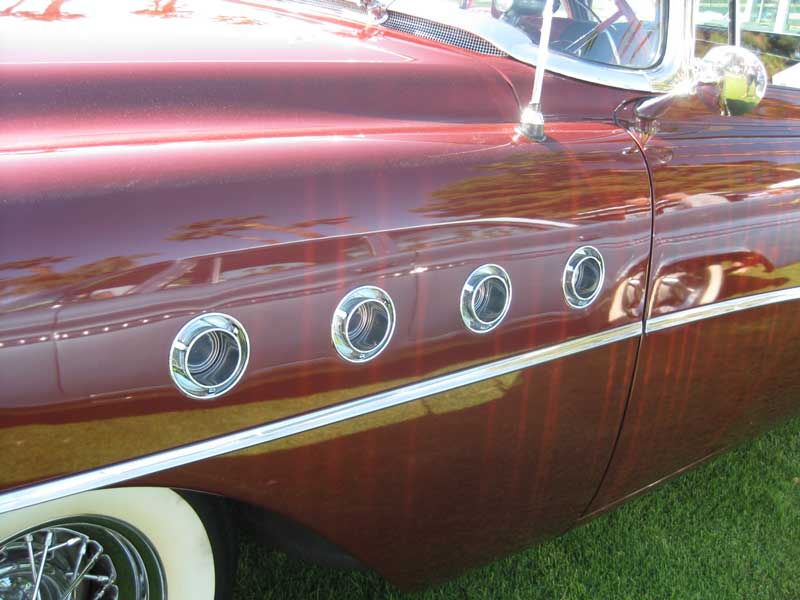
The portholes on each side of this Buick Roadmaster tells us there is a V8 under the hood – four portholes on each side for the eight cylinders. In 1955 this detail really stood out. Today, Buick still uses portholes, but they look fairly lame in plastic chrome and are non-functional.
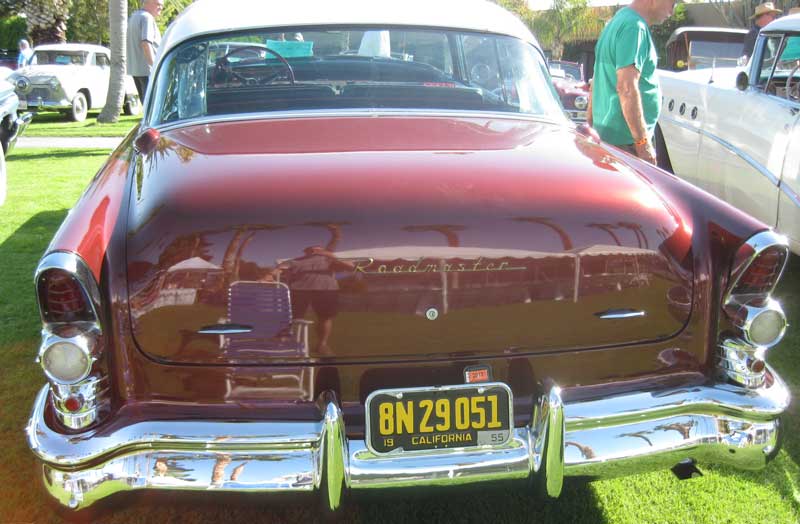
The rear of the 1955 Buick Roadmaster.

A lemon yellow 1956 Lincoln Premier

I love the interior dash of the 1955 Lincoln Premiere. It was common to match the exterior color inside.
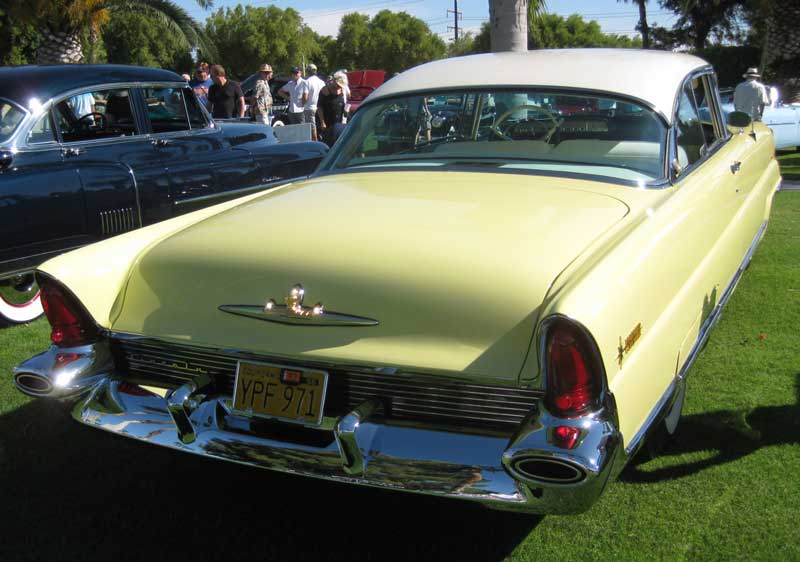
Fins were a distinctive styling cue in the 1950s and early 1960s. 1956 Lincoln Premier.

I think this was the only wagon at the show. This 1957 Ford Del Rio Ranch Wagon was lovingly restored and just fabulous.
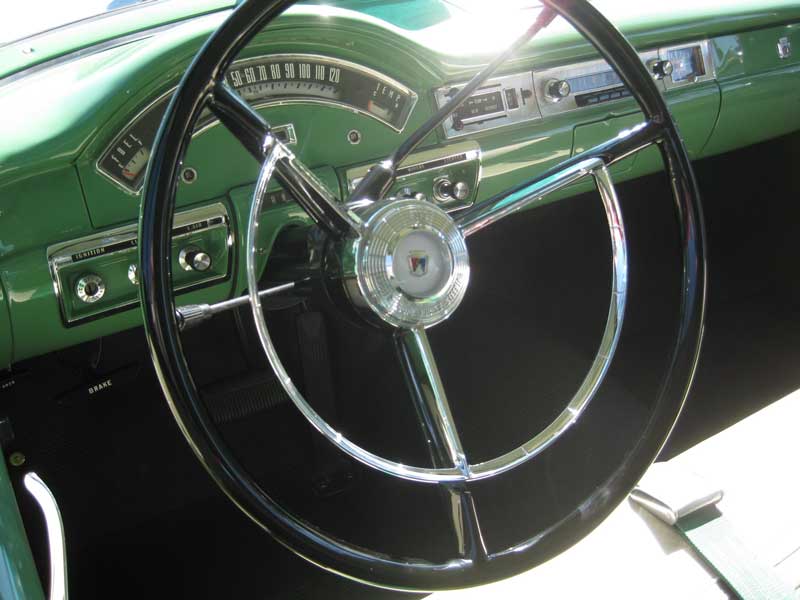
As with other cars of the era, the exterior color carried into the interior. 1957 Ford Del Rio Ranch Wagon.
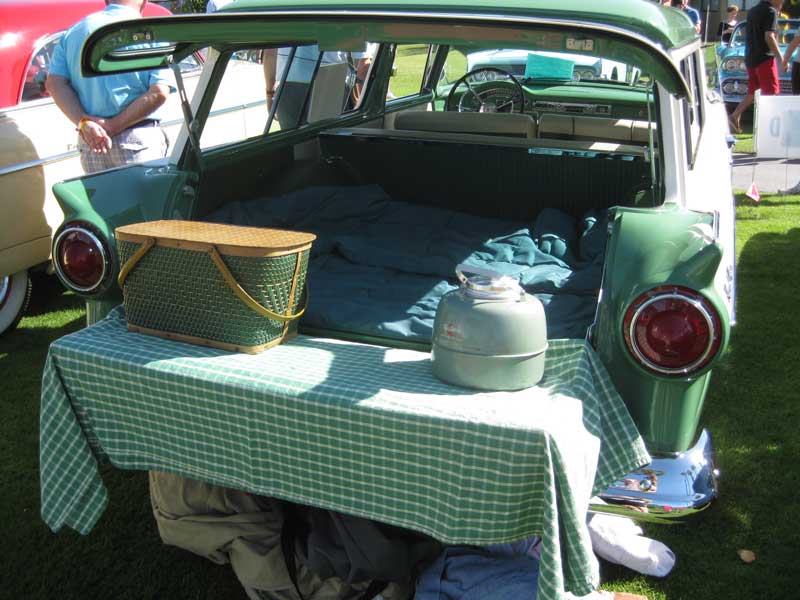
I’m old enough to remember family trips in our station wagon with a cooler and Thermos. The owners of this 1957 Ford Del Rio went all out with the accessories.
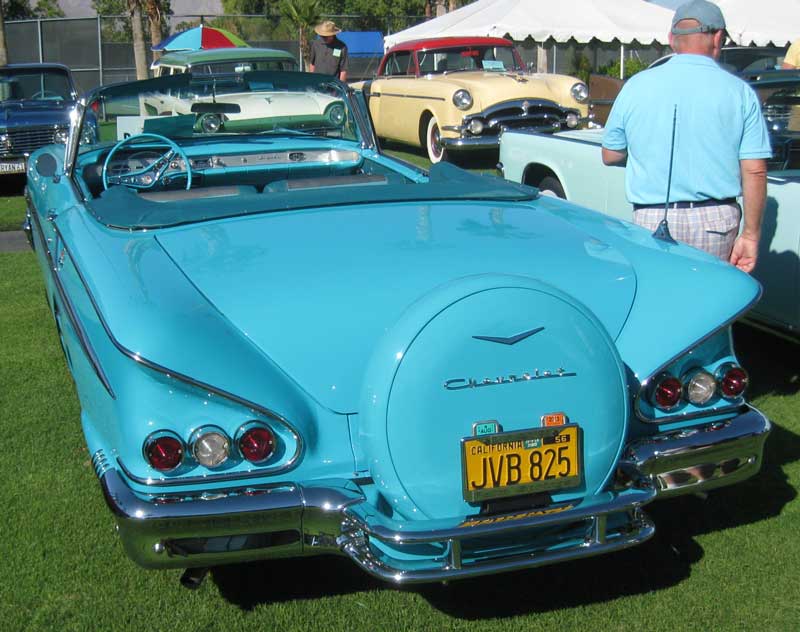
This is the first generation of the Chevrolet Impala. This turquoise 1958 Impala Convertible sure makes a statement.
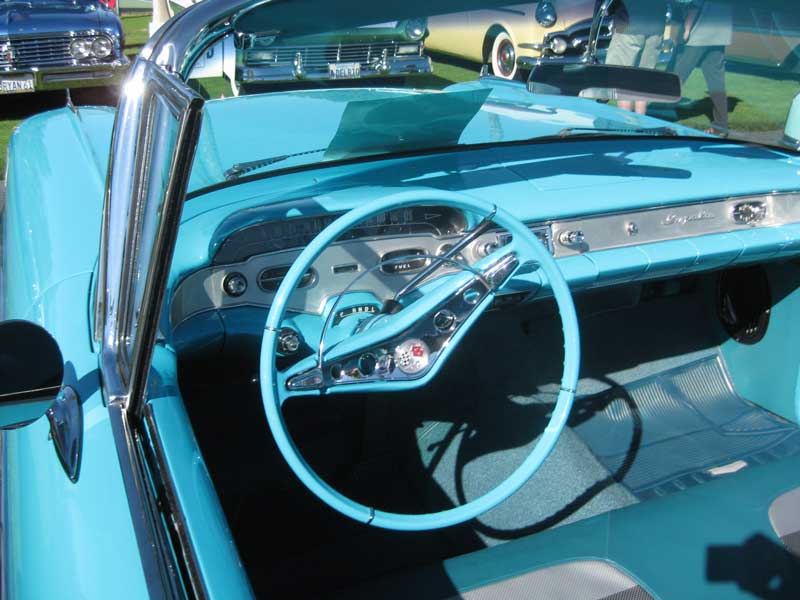
Interior of the 1958 Chevy Impala Convertible. Turquoise everywhere – get out the sunglasses.

This is a model you don’t see often. It’s a 1959 DeSoto Adventura. At this time, DeSoto was part of Chrysler and shared many parts, drivetrains and styling similarities with stablemates Dodge and Plymouth.

Interior of the 1959 DeSoto Adventura.

1959 Plymouth Fury. Christine, anyone?
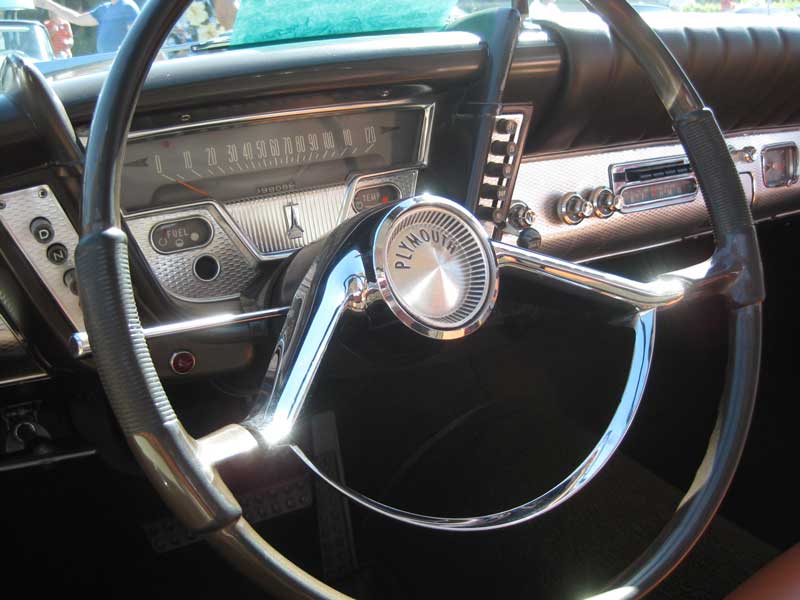
Interior of the 1959 Plymouth Fury. Love the push button transmission.

Ford didn’t make the Skyliner for very long. This lovely 1959 Ford Skyliner shows how its hard top retracts into the trunk. Fast forward five decades and the retractable hardtop is back again on cars like the BMW 3-Series convertible and the Volkswagen Eos.
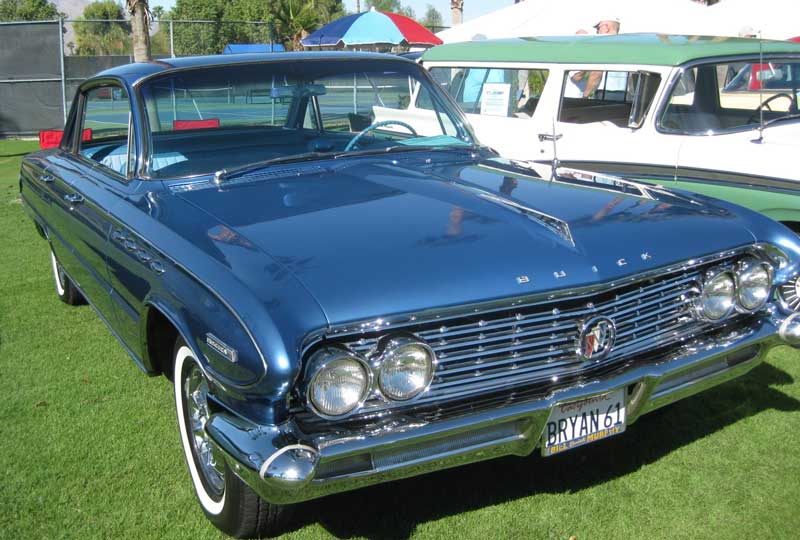
This is a 1961 Buick Electra 225. It was really two hundred and twenty five inches long. Try fitting this into a modern garage!
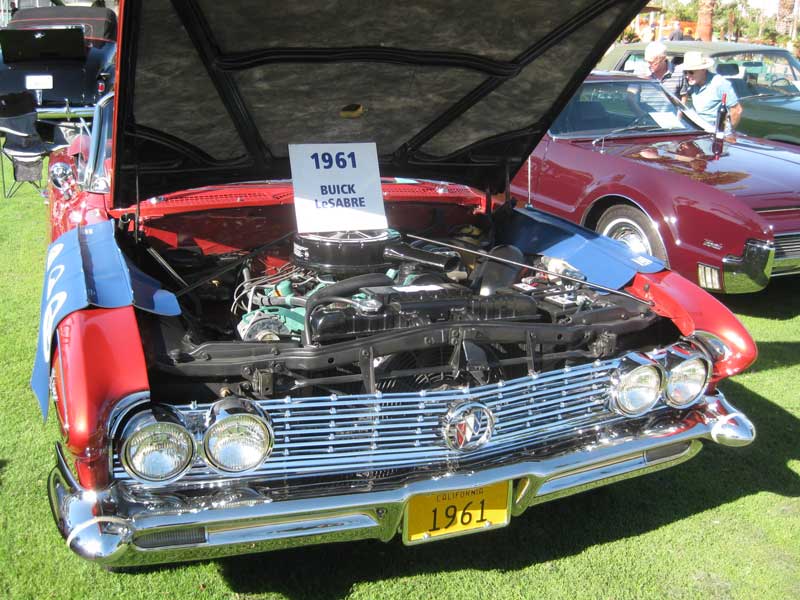
The owner of this 1961 Buick LeSabre Convertible was very proud of his engine bay.

A 1961 Chrysler Imperial LeBaron. It looks very upright and proper, doesn’t it?
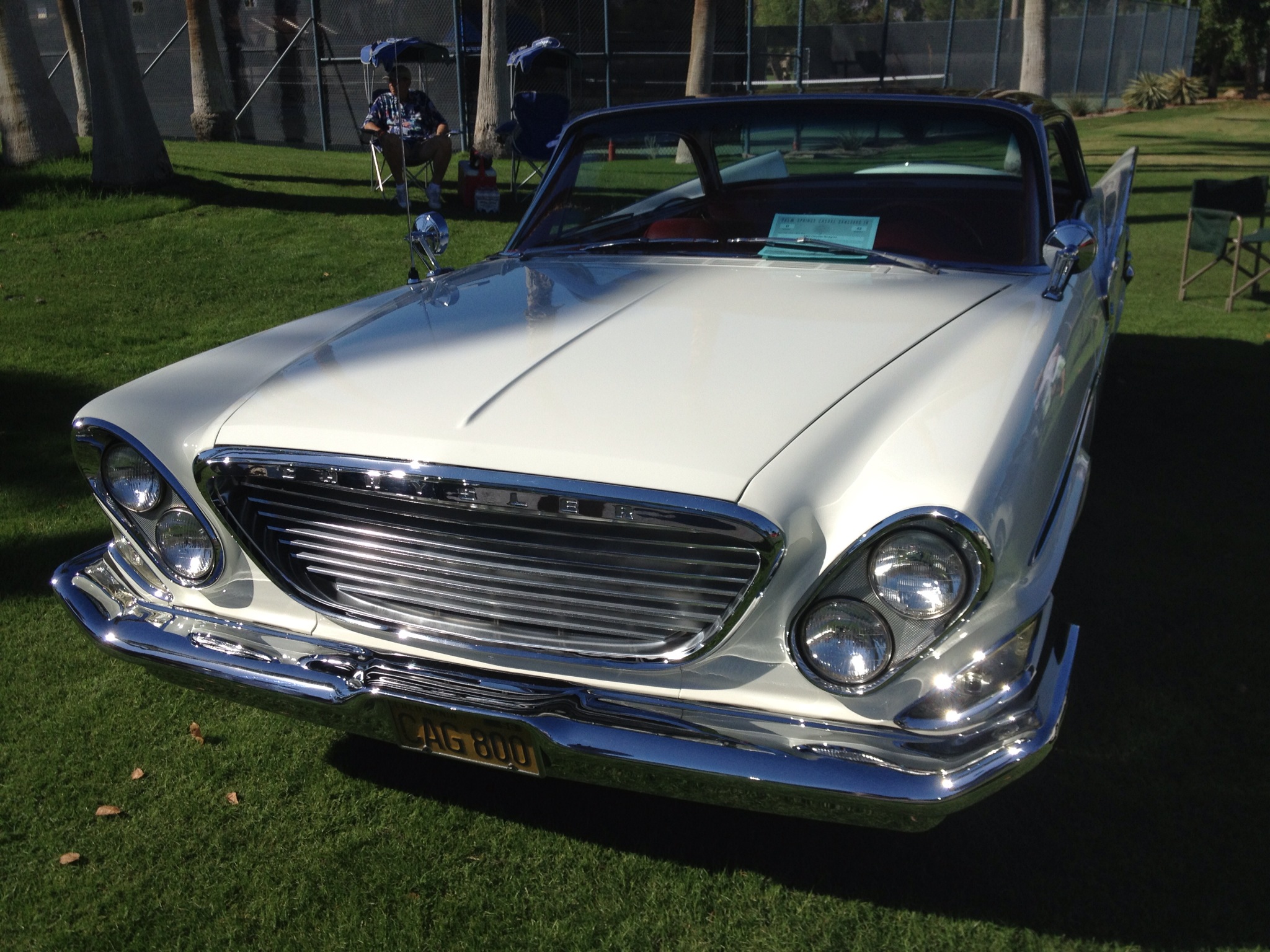
This was my favorite car of the show and it didn’t photograph well because of the shadows. It’s a 1961 Chrysler Newport with a cream body and deep burgundy top.

Here’s a side view of the 1961 Chrysler Newport.
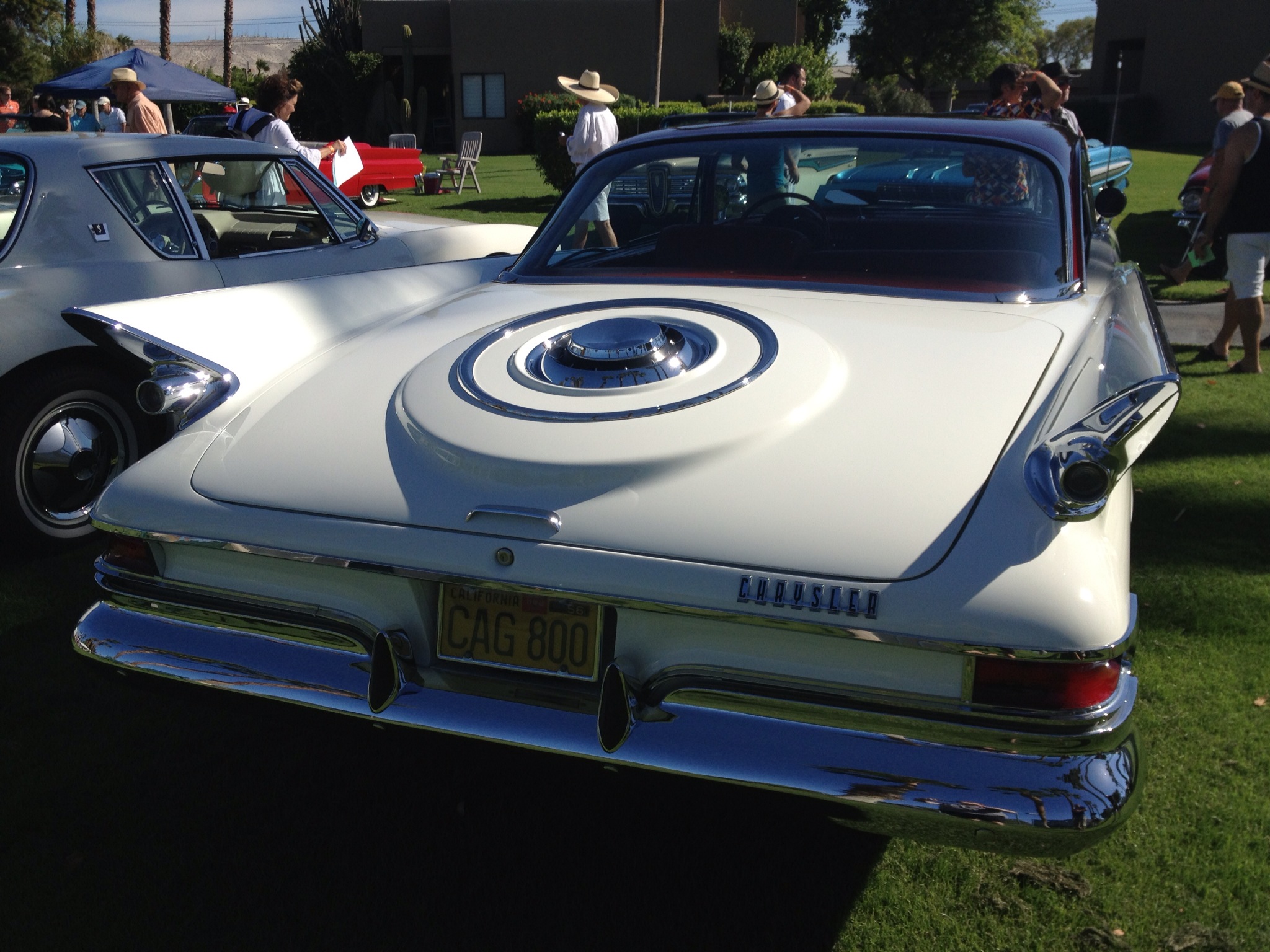
The rear of the 1961 Chrysler Newport sports fins AND a spare tire relief.
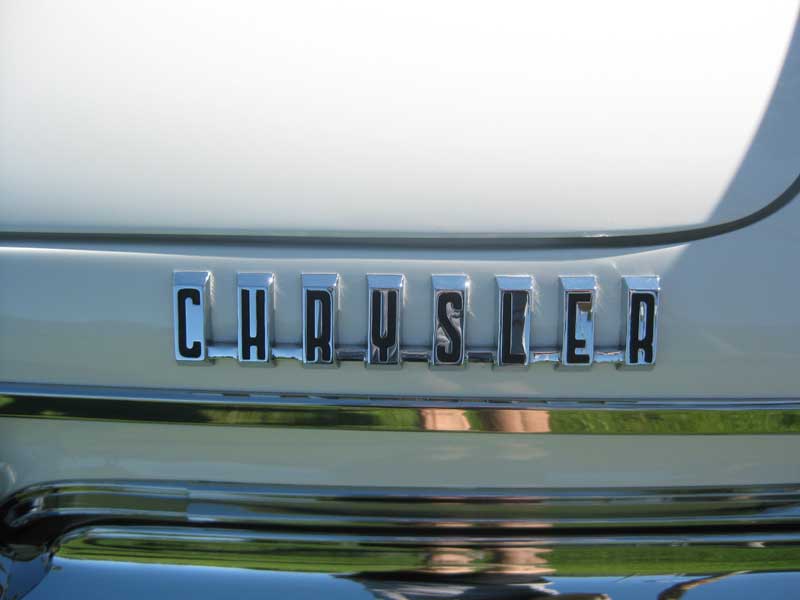
Check out this detailed chrome and paint Chrysler badge.

My favorite interior color is red and this 1961 Chrysler Newport interior was very red – everywhere – and the detail of the instruments as well as the other driver controls was just exquisite.

1963 Studebaker Avanti. It was designed in Palm Springs by Raymond Lowe. It still looks futuristic today. Fantastic design.

The interior of the 1963 Studebaker Avanti is light, airy and sporty. High quality materials were used. It was meant to be a halo car for the dying Studebaker brand.

I love this sticker that still exists on the rear window of this Avanti. In those days, air conditioning was a luxury feature. Today, it’s standard.
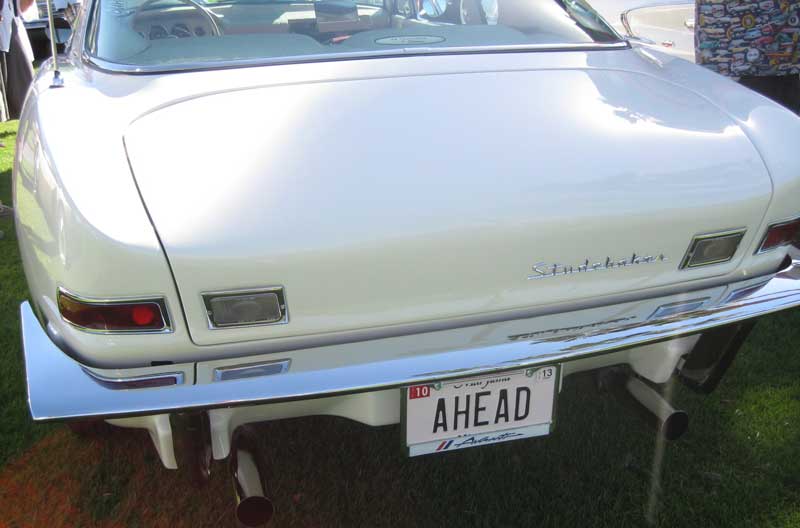
The rear of the Studebaker Avanti.
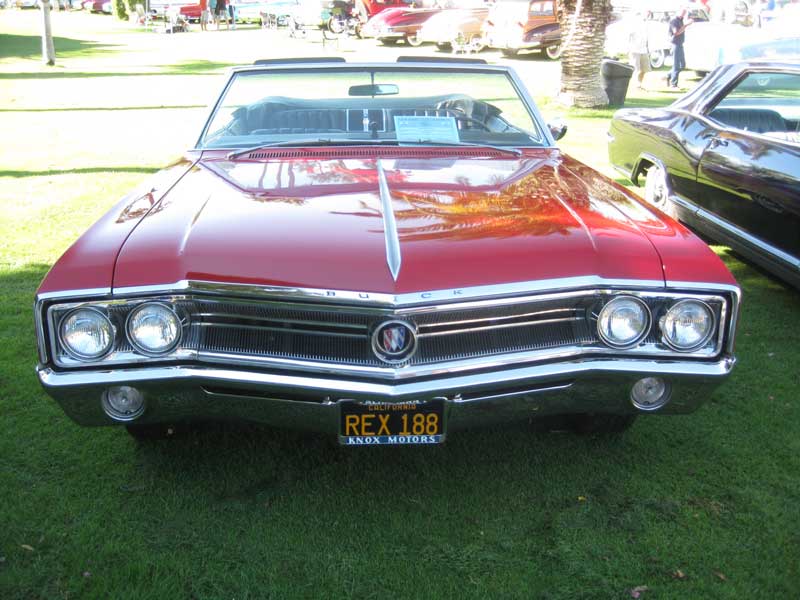
This 1965 Buick Wildcat Convertible was just majestic and wide. Great proportions.

The interior of the 1965 Buick Wildcat was very sporty for the day. Great steering wheel.

I particularly liked this 1965 Chevrolet Malibu SS. It’s small by 1965 standards and you rarely see it in black with the white interior. It still wears its original California black plates — always a plus for collectors.
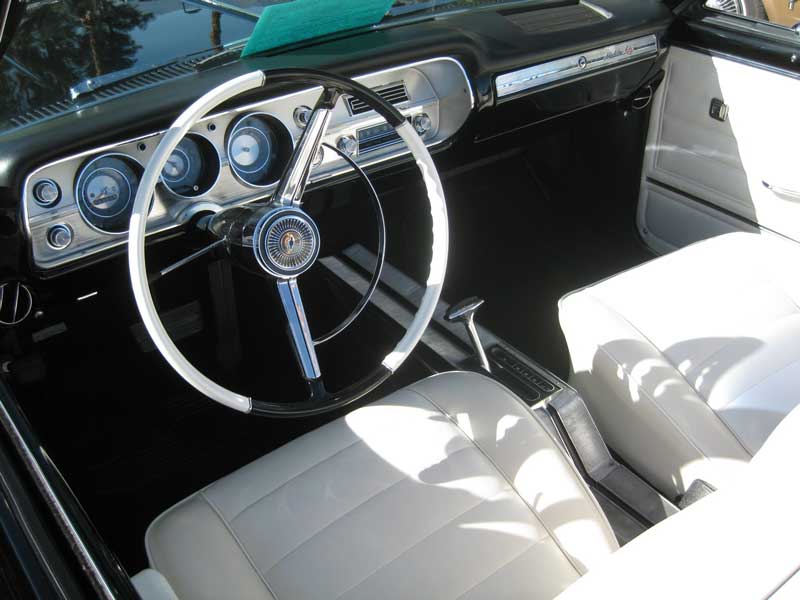
Chevrolet was the entry level brand for GM, and this 1965 Malibu SS is spartan by Buick, Oldsmobile or Cadillac standard, but I think it really works in this car.
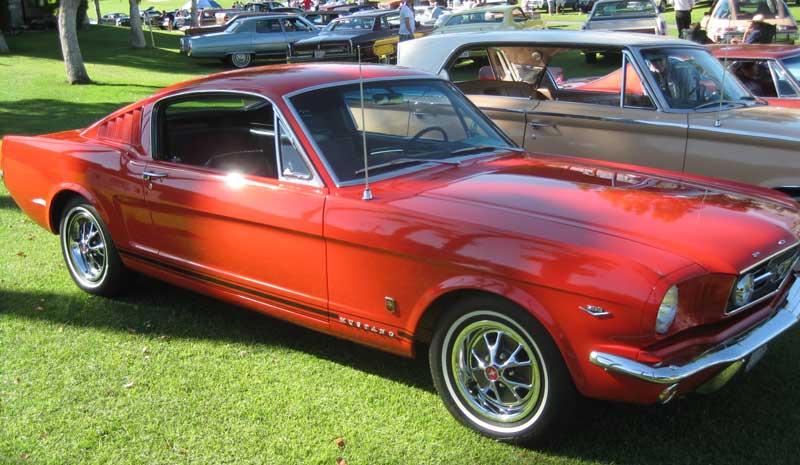
There was only one Mustang at the show, but this1965 Ford Mustang GT Fastback in bright orange was nice to see. I’ve always like the fastbacks best, possibly because of their rarity.
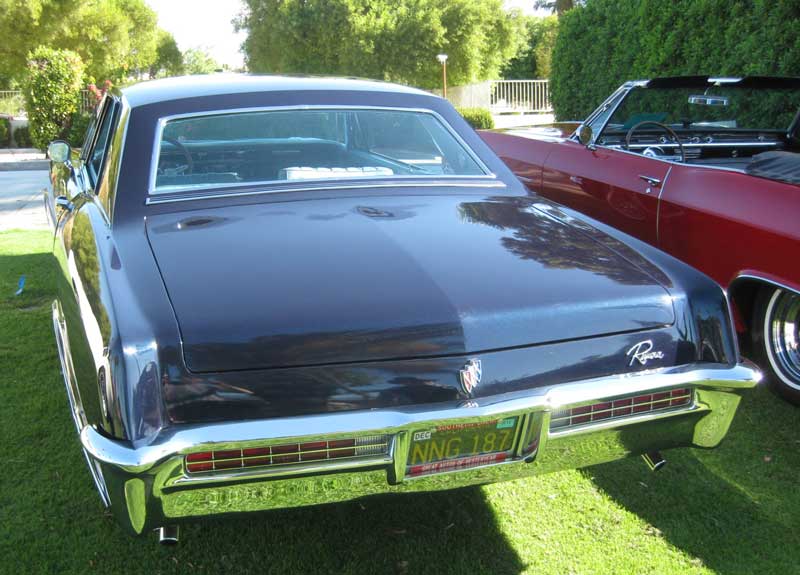
I think this is a 1965 Buick Riviera. The first generation (1963-1965) has always been my favorite.
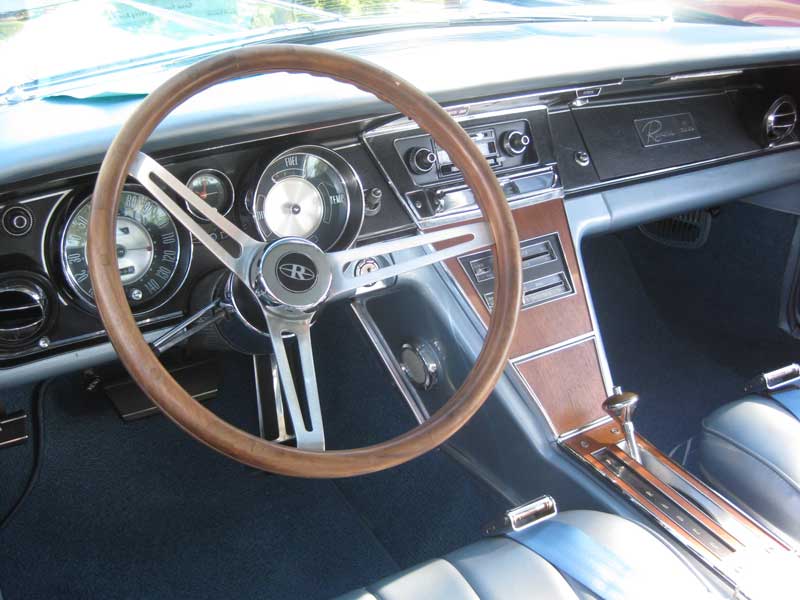
What a fantastic interior on this 1965 Buick Riviera. That wood in the center console was real wood and it was very expensive to build. It still looks sharp.
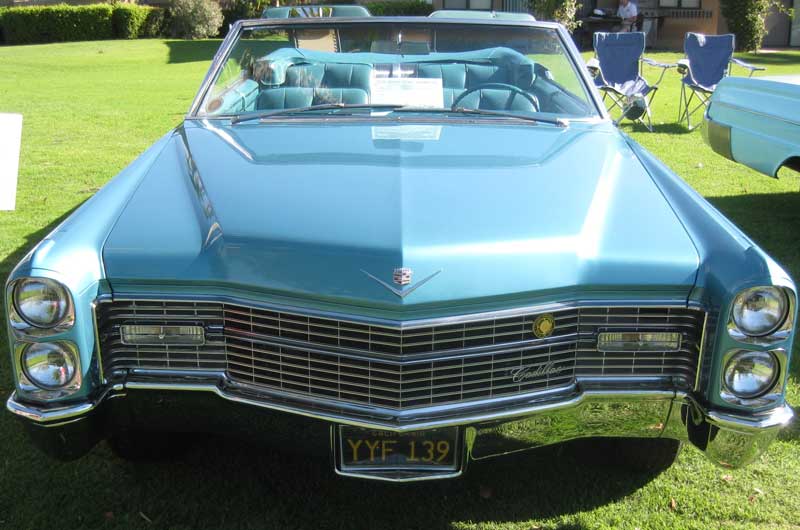
This 1965 Cadillac Coupe de Ville Convertible has presence. Cadillac was the king of the road in the 1960s.

This 1966 Chrysler New Yorker still wears its original paint and interior.
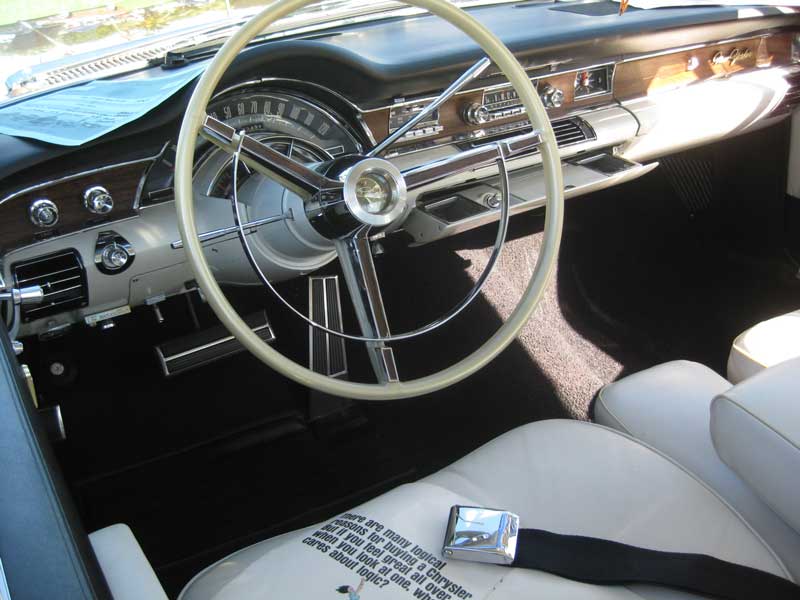
Interior of the 1966 Chrysler New Yorker.

This 1966 Oldsmobile Toronado has great fastback, futuristic styling. This car was meant for a wealthy executive.
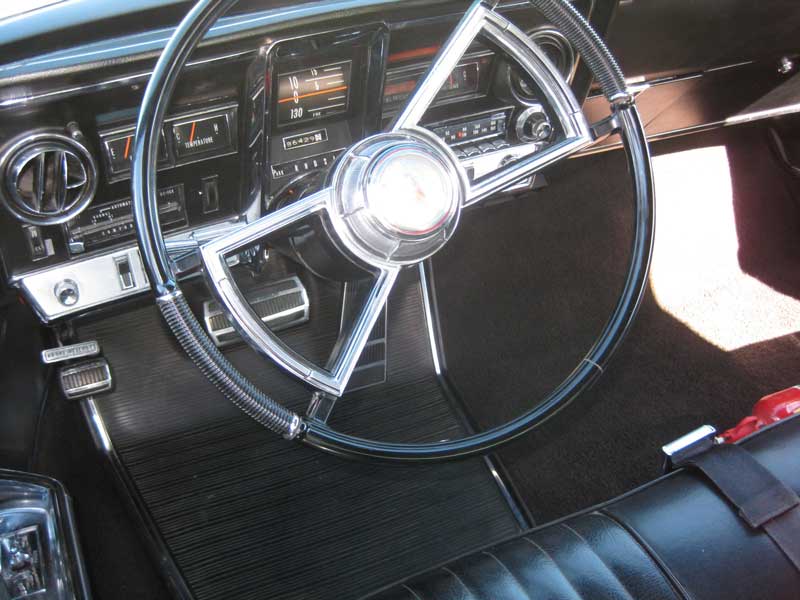
Interior of the 1966 Olds Toronado. Check out that scrolling speedometer and flat floor. The Toronado, like the Cadillac Eldorado of the same era, was a front drive car. Front drive was very rare in the 1960s.

A “humble” 1968 Chevrolet Camaro Convertible. There weren’t a lot of pony or muscle cars at the event.

This 1969 Chevrolet Camaro SS Convertible outshines the red 1968 Camaro above. The SS Convertible is among the most collectible of the muscle cars of the 1960s.
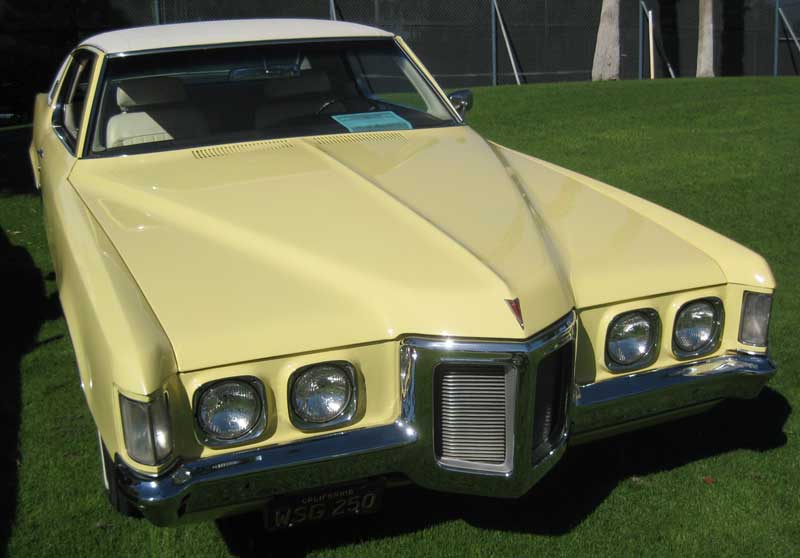
1969 Pontiac Grand Prix Model J. It has a 400 cubic inch engine with 350 horsepower. You don’t see many cars this color any longer.

This 1970 Mercury Cyclone Spoiler is fairly rare. Yellow must have been a popular color in those years, as yellow cars seemed to be in abundance at the show. This muscle car looks menacing with the gigantic hood scoop.
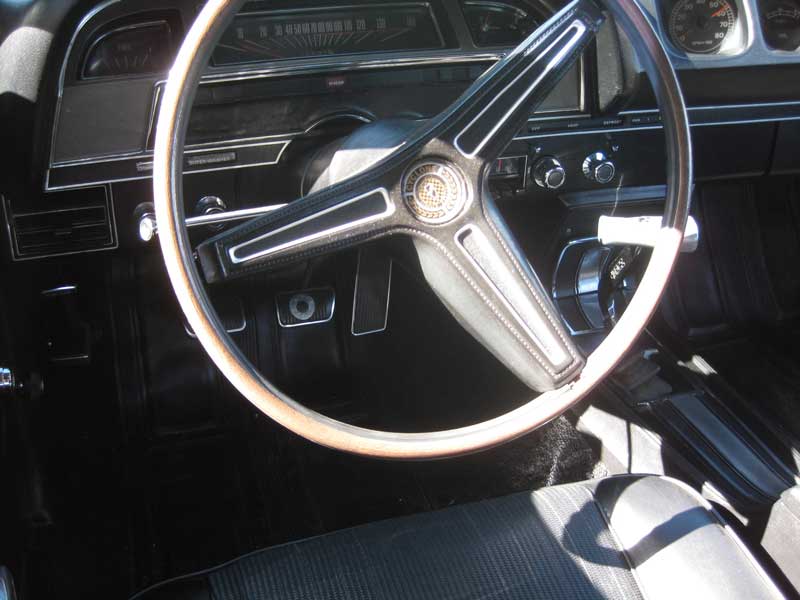
The interior of this 1970 Mercury Cyclone looks a bit drab, but the Hurst 4-on-the-floor shifter is a signal that it’s ready for a race – but only in a straight line.
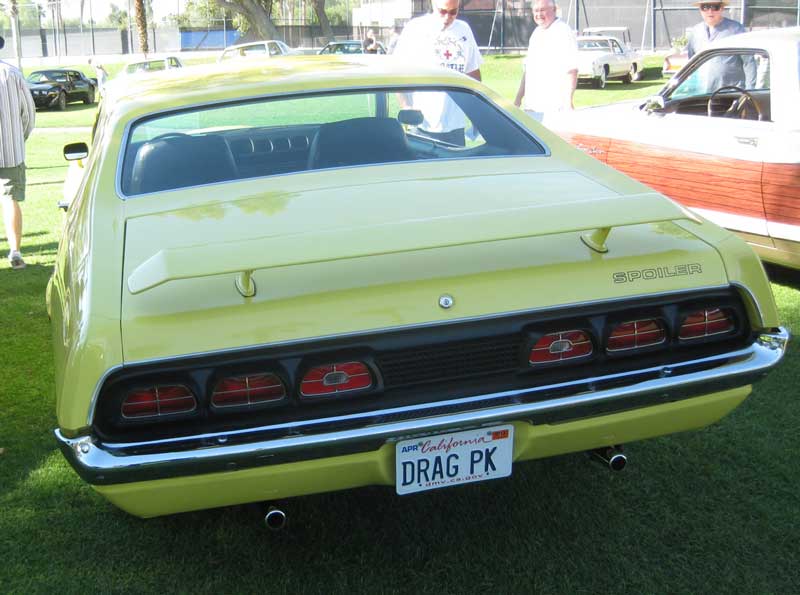
The rear of the 1970 Mercury Cyclone Spoiler.

This is a clean example of the landmark BMW 2002 sedan. It became the benchmark for all sports sedans and it is the forerunner of the modern BMW 3-series. This 1972 2002 looked a bit lonely as it was the only BMW and one of only a few imported cars at the show.
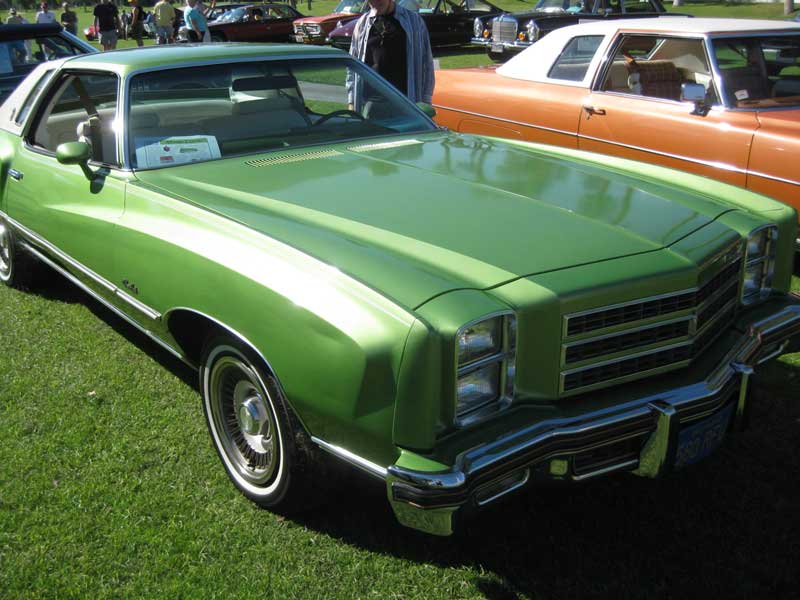
I don’t think the later half of the 1970s were great years for GM. But you have to love this very green 1976 Chevrolet Monte Carlo with that lovely white vinyl opera roof.
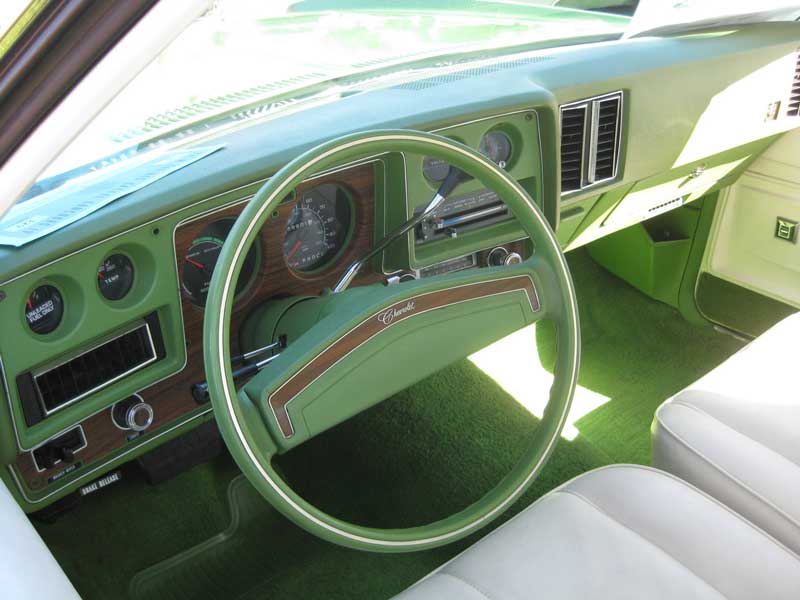
And if the green exterior of the 1976 Chevy Monte Carlo wasn’t enough, you got to look at a sea of pea green inside too. Wow. Also note the really cheap-looking fake plastic wood inserts. GM wouldn’t have done that even a decade earlier.

I couldn’t resist including a picture of this 1979 Pontiac Trans Am. That’s a decal on the hood, not paint, so most didn’t last well after years of washing, sun, rain and snow.
Smokey and the Bandit anyone?

What may be a future classic is this 1990 Buick Reatta. It was meant to be a personal luxury roadster for an executive. It’s not bad – but check out the picture below of its original sticker.

This is the original window sticker for this 1990 Buick Reatta Convertible. No wonder so few were sold. $36,641 – wow. Over its 4 model year run (1988-1991) only 21,751 units were sold. GM had hoped for 20,000 PER YEAR. The convertible was only sold in 1990 and 1991 and was done by an outside firm (ACS) so the price got jacked up beyond what most people would pay for a Buick.


 Todd Bianco's ACarIsNotARefrigerator.com Blog