When I attended the Nissan Leaf Electric Drive event in Century City this past October, I was a non-believer. I may not be ready to buy into the high voltage pitch; however, I think there are plenty of LA drivers for which this car makes sense.

The Zero Emissions tombstone logo at the Century City Electric Drive event.
The Leaf is an utterly boring car. While this may sound like a slam, it’s not. Nissan has worked magic to make this car drive just like every other subcompact four-door hatchback economy driving appliance. The fear of driving an all-electric car almost vanishes when you get behind the wheel.
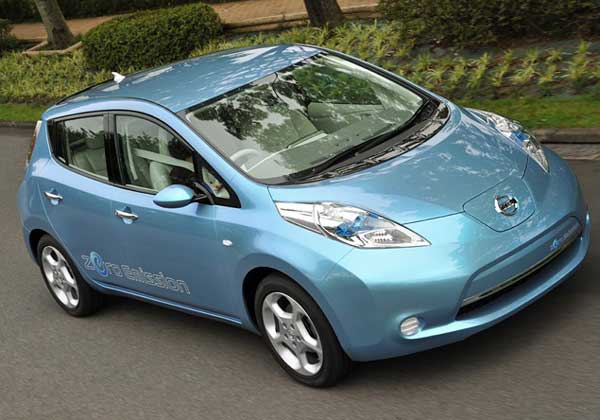
The Leaf is about the size of a Versa, but 100% of the Leaf is unique, including the razor-finned headlamps.
Everything seems familiar in the Leaf and if you’ve ever driven a Prius (which is likely if you’re considering the Leaf), even the center drive mode knob is familiar and can be mastered on the first drive. The only thing missing is the sound of four hamsters thrashing around in a so-last-century internal combustion engine.
When you press the start button, the car sounds a melodious chirp and the brightly-lit digital instrument panel springs to life and you’re ready to go. Nudge the selector knob to drive, press the accelerator pedal and without fanfare, you are driving the future. The electrons jump from the laminated (to manage heat) 24 kWh lithium-ion battery pack to the “high response” 80kW AC synchronous electric motor.

The Nissan Leaf Shift Knob. It feels good in your hand and it's very simple to use.
If you’re like me, you have no clue what that means. What I took away from my drive was that the Leaf accelerates briskly, stops and drives like an ordinary car with real-world, every day driving range. The 0-60 time is not spectacular – just under 10 seconds. The range is between 62 and 138 miles (average 100), depending on your use of climate control, driving style, speed, cargo and topography. Flat = good, hill = bad. The highly accurate range indicator is continuously calculating how much further you can go. There is no guesswork here.
The interior plastics and fabrics are made from post-consumer recycled materials. The driver’s seat lack the 16 power adjustments you’d find on a Porsche; but it has the normal seat adjustments you’d expect on an economy car. It’s just as comfortable, or uncomfortable as an economy car. I’m 6’1” tall and my legs just fit. The usual engine drone doesn’t exist; instead, road noise annoys you.


 Todd Bianco's ACarIsNotARefrigerator.com Blog