To understand writer and director Chris Paine’s new documentary, Revenge of the Electric Car, you really need some background from his 2006 film Who Killed The Electric Car? The ensuing five years is only one product cycle in the auto biz; but these last few years were unlike anything the industry has seen in more than half a century.

Who Killed opens with a mock funeral for GM’s EV1 electric car at the Hollywood Forever Cemetery, complete with Hollywood celebrities and environmentalists. It’s a fitting introduction to Mr. Paine’s investigation into the untimely death of the EV1.

The 2002 GM EV1

The film follows the fight between a group EV1 drivers and an evil corporate monster by the name of General Motors that refused to extend the leases or sell the cars to the lessees at the their stated residual values. You just know this isn’t going to end well.

The saddest and most dramatic moment from Who Killed takes place on March 14, 2005 when GM trucked all the remaining EV1s from a nondescript storage parking lot in Burbank to a desert graveyard where they were all crushed. [GM did donate a disabled EV1 to the Petersen Automotive Museum.]

From 2005, a stack of crushed EV1s in a desert graveyard.

There was a lot of blame to go around as far as who really killed the electric car. GM didn’t want to send a mixed message of “clean” versus “dirty” vehicles to its customers and its dealers didn’t see much service revenue from an electric car.

Then there was the false hope, pushed by oil companies, of a hydrogen fuel cell car when mass market hydrogen technology and infrastructure was still decades away. And it goes without saying that Big Oil isn’t thrilled with a transportation future that doesn’t involve sales of their products.

And then there was the surprise villain, the California Air Resources Board (CARB), that caved into pressure from automakers, oil interests and federal and state politicians to get rid of California’s zero emissions vehicle mandate. Once the mandate was gone, GM no longer needed the EV1 in its portfolio.

At the end of Who Killed The Electric Car? there was a ray of renewable sunlight that pure electric and plug-in hybrid vehicles were already mounting a come back. The Tesla Roadster was promising and aftermarket tinkerers were modifying the standard Prius to be a plug-in vehicle.

2011 Tesla Roadster 2.5

Fast forward to 2011 and oh how things have changed. The world economy tanked in 2008 and we are still in a recession or a jobless recovery, depending on how you look at it. GM and Chrysler were put though government-sponsored bankruptcies in 2009 and both have emerged stronger than ever with new products people are actually buying.  And Americans are buying smaller cars with smaller engines.

In 2010, the previously-unstoppable Toyota juggernaut hit an iceberg with numerous sudden acceleration, safety and quality problems. Ford survived the Great Recession without a government bailout and it’s now on a roll with great new products people want.

But most significantly, GM is back in the EV game with the Chevrolet Volt, a plug-in electric-hybrid vehicle and the battery-electric Nissan Leaf  is on sale now.  Of course, Los Angeles is ground zero for both of these advanced alternative fuel vehicles.
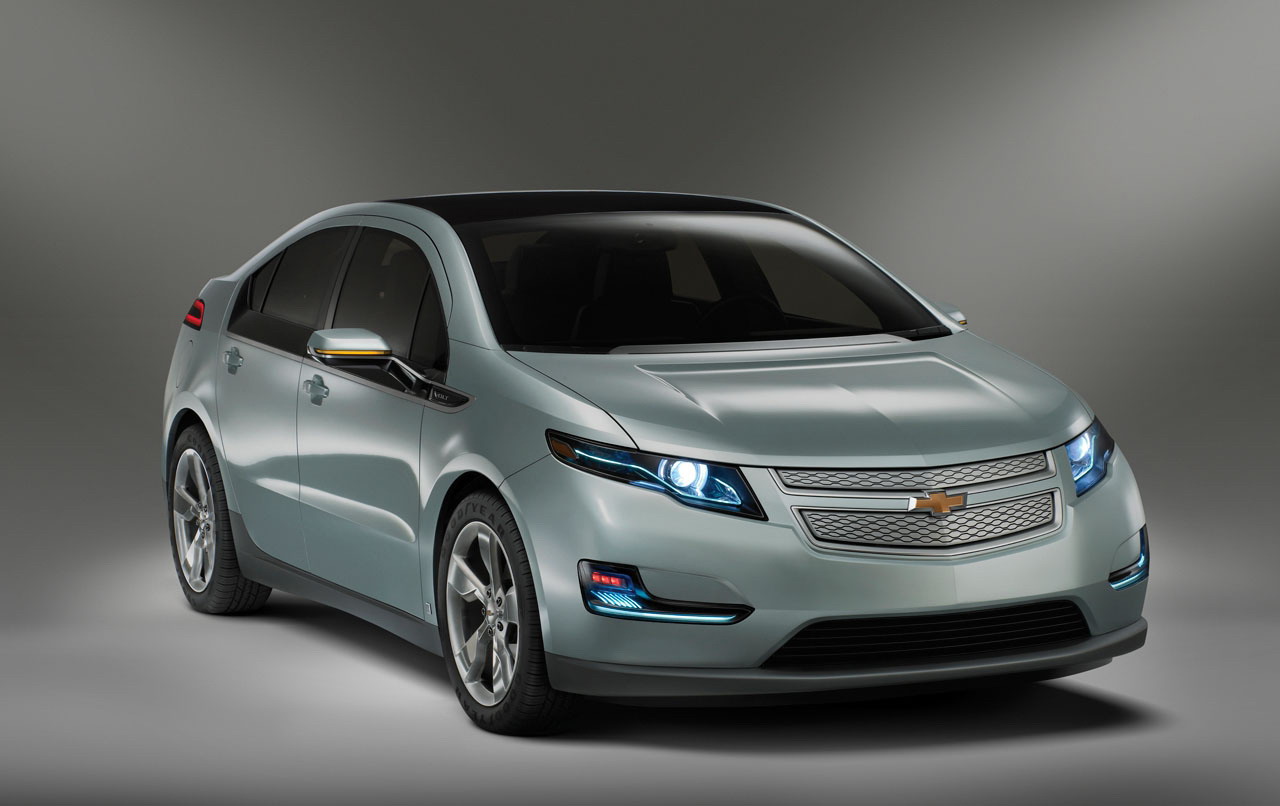
A 2012 Chevrolet Volt

The 2011 Nissan Leaf

Mr. Paine’s new documentary, Revenge of the Electric Car, opens with classic aerial views of the Los Angeles freeways. Dan Neil, arguably the smartest and most influential automotive journalist in the country, the man that critiques anything from a Ferrari F458 sports car to a Mazda5 minivan, explains his transformation from a gasoholic to a true EV believer.

Where as Who Killed is a “who done it,” Revenge is about “who’s doing it” and the race to be first to market with consumer-friendly electric cars. To tell the story, Pain weaves together the tale of four very different but equally dedicated EV protagonists.

Tesla Motors CEO Elon Musk

"Maximum" Bob Lutz, former GM Vice Chairman

First up is the mercurial, PayPal-rich entrepreneur Elon Musk, a co-founder and CEO of Tesla Motors. Tesla’s precarious finances nearly bankrupt both the company and Mr. Musk. In one dramatic scene, Mr. Musk is accused by angry Tesla customers of perpetrating a bait-and-switch by selling them a Roadster at one price then raising the price on delivery. Astonishingly, Mr. Musk pretty much admits to doing just that.

Cigar-chomping, fighter jet piloting, egotistical, Mr. Horsepower, EV and global warming skeptic and (at the time) GM Vice Chairman “Maximum” Bob Lutz is the unlikely champion of the Chevy Volt. Mr. Lutz had the foresight to drag GM out of its self-made corporate sink hole and pushed for the development of the unique extended-range electric Volt.

Although GM’s 2009 bankruptcy slowed it down, the Volt became a production reality in December 2010. The fact that it exists is no small miracle given GM’s legendary insular, glacially-paced culture and most of the credit goes to Lutz.

Nissan and Renault CEO, Carlos Ghosn

Reverend Gadget: Greg Abbott and his wife Charlotte

Then there is the impenetrable and laser-focused Brazilian-Lebanese-French Carlos Ghosn, the Chairman and CEO of Nissan and Renault. He is confident in his leadership and he’s bet the future of Nissan on the electrification of the automobile. If he’s right, Nissan will become a global leader in electric cars.

The role of the backyard converter is played by the real-life Greg “ Rev. Gadget” Abbott, a scrappy guy who can electrify any car. Based in LA, Greg and his company, Left Coast Electric, struggle to stay in business. You really root for Rev. Gadget and, in the end, Greg and his wife successfully drive an electrified vintage Porsche 356 Speedster replica the more than 120 miles from LA to Palm Springs on one charge. It’s a beautiful love story – both personal and professional.
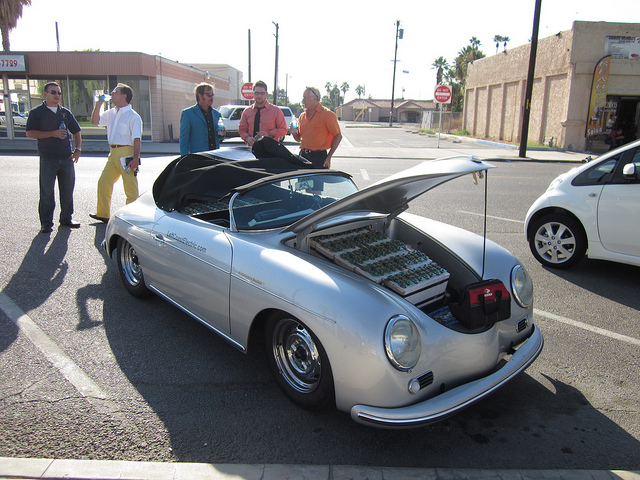
Rev. Gadget's electrified Porsche 356 Speedster

Revenge of the Electric Car is well knitted together and fast paced. The filmmakers had unprecedented access to the inside workings of Tesla, GM and Nissan and the results are both revealing and fascinating.

Tim Robbins narrates and smart editing interjects all different perspectives from politicians like Gavin Newsom, celebrities like Danny Devito and Stephen Colbert, and journalists like Thomas Friedman of the New York Times and Ray Wert of the automotive website Jalopnik.com.

The story of the electric car is still being written; but if you want to know how we got to where we are, Revenge of the Electric Car is a rare and intriguing look behind the scenes of the highly-secretive automotive industry.

Elon Musk, Rocket Man:

Bob Lutz, Mr. Detroit:

Carlos Ghosn, The Warrior:

Greg “Gadget” Abbott, The Outsider:

Revenge of the Electric Car opens in Los Angeles and New York on October 21.
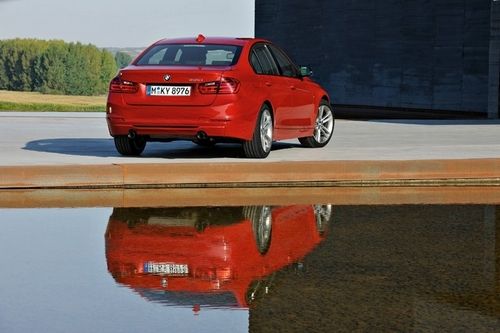

In a surprise move, today, BMW introduced the all-new 2012 3-Series on Facebook.  Facebook? WTF?

2012 BMW 3-Series sedan

No, the world debut wasn’t at last month’s Frankfurt Auto Show (that show belonged to the all-new Porsche 911).  And it’s not at the upcoming (18-27 November) LA Auto Show (even though Southern California is BMW’s largest regional market).  It will make its auto show debut at the North American International Auto Show (NAIAS) in Detroit (9 January 2012).   But it was Facebook that scored the world introduction.   So much for tradition.  But the reality is that Facebook is a bigger platform than any physical auto show.

It shows you just how important social media has become since the outgoing BMW 3 (internal codes E90 – E93) debuted in 2006 (2005 in Europe).  Facebook was barely getting started in 2005.  YouTube was just starting up and Twitter hadn’t been invented yet. Six years later, Facebook is the largest social media platform in the world – not just the United States – with more than 800 million users.

It speak volumes that BMW chose Facebook as the worldwide launch platform for it’s most important product. Today, if you’re looking to reach as many people worldwide as possible at a very low cost, it makes perfect sense to do it on Facebook and control the information, content and images.  It sure gets lots of people to “like” your Facebook page! You can be sure that there will be many YouTube clips posted withing nano-seconds of the live broadcast (See below).

The 3-series is the heart and soul as well as the bread and butter for BMW. It has to be a success for BMW to prosper in the future.  You can’t afford any misstep in the cutthroat automotive business or another company with newer, fresher, more desirable products will suck up your customers. Just ask Toyota. It’s US market share has dropped from 15.3% to 11.5% between 2010 and 2011.  That’s partly due to the earthquake shortage and partly due to a dull product line and heated competition from Hyundai/Kia, Ford, GM and Nissan.

A product cycle in the automotive business isn’t like any other.  It’s so costly and complex to engineer a new model that it takes a few years – a minimum of 3, and more likely 4-5 years – to complete.  By the time you see a new car in showrooms, the car company is already deep into the development of the next refresh.  If  the car is a flop or if it has serious deficiencies, it can’t just be changed with the flick of a switch or snap of a finger.  It takes an army of engineers and designers to make even small changes.

Some disasters can be reversed in a relatively short amount of time:  New Coke and Classic Coke.  Netflix and Qwikster. But even short-lived blunders can cost companies dearly in market share and brand image.

In the automotive world, serious blunders can kill sales and aren’t easily or quickly fixed.  The prime example today is the 2012 Honda Civic.  Honda’s sales are down, and it’s not just because of the earthquake earlier this year.  The new Civic looks worse outside and has been cheapened inside. With the exception of the sporty SI model, the Civic has been branded “uncompetitive.” In fact, Consumer Reports, which usually can’t find a Civic it doesn’t like, couldn’t recommend the new Civic.  Ouch.  It will take Honda longer to dig out of the Civic ditch than it will for Japan recover from the Tōhoku earthquake or the radiation leak at the Fukushima Nuclear Power Plant.

2012 Honda Civic Sedan EX. The poor thing just isn't the belle of the ball any longer. It's a shame. What happened to Honda?

That future will not be in the tea leaves for BMW’s new 3-Series.  Below is the short-version press release from BMW this morning.  You can also download the full English version of the press release here:  BMW_3er_EN.

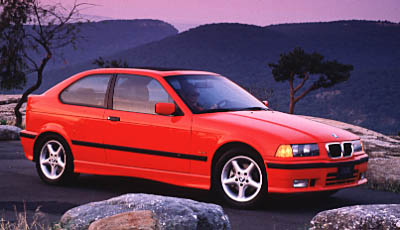
1999 BMW 318ti

The big news comes from the drivetrain department. For the first time in ages (since the BMW 318ti 1995-1999), BMW’s entry level 328i will come with a 2.0L 4-cylinder, direct-injected Twin Turbo gasoline engine making 245 hp and 258 lb-ft torque mated to an 8-speed ZF automatic transmission. Yes, a 6-speed manual will still be available, but in LA, you won’t find that many takers.  The new powertrain is more powerful and more fuel efficient that the 3.0L inline six it replaces.  The reports I’ve read of this powertrain in a BMW 528iT were very enthusiastic.

It should be in showrooms on 11 February 2012.  At the end of 2012, probably as a 2013 model, BMW will introduce a 3-series gas-electric hybrid for the first time.

————————————————————————-

  • New BMW face emphasises dynamic and elegant design.
  • BMW 3 Series now available in three different equipment lines.
  • Full-colour Head-Up Display for the sports sedan.
  • Sporty suspension tuning with enhanced ride comfort.
  • All engines with the latest BMW TwinPower Turbo technology.
  • All engines can be combined with an eight-speed automatic gearbox.
  • Driving Experience Control with Eco Pro mode; Auto Start-Stop function included as standard.

The sixth generation of the BMW 3 Series Sedan, the world’s best-selling premium car, sets new benchmarks in terms of sporting prowess, elegance and comfort. The pioneering history of the 3 Series serves as inspiration for the new sports sedan, whose powerful styling represents a fresh interpretation and conscientious development of traditional BMW design cues. The new BMW face, with flat headlights reaching along as far as the BMW kidney grille, emphasises the elegantly dynamic design of the new BMW 3 Series. The sixth generation of the 3 Series has grown in size compared to its predecessor, with its wide track (front + 37 mm, rear + 47 mm) particularly prominent, and the car’s increased length (+ 93 mm) and augmented wheelbase (+ 50 mm) also accentuate its sporting silhouette. Inside the new BMW 3 Series Sedan, the noticeable increase in space benefits the rear passengers above all. And the BMW 3 Series range is now also available in a trio of trim and equipment variants – the Sport Line, Luxury Line and Modern Line. Each presents its own individual take on the character of the sports sedan, with exclusive, high-quality material combinations and unbeatable build quality underlining the premium ambience of the new range.

Drive and chassis technology have always been key areas of expertise for the brand, and agility and driving dynamics remain outstanding attributes of the new BMW 3 Series Sedan. The new car belies its larger dimensions with a kerb weight 40 kilograms (88 lb) below that of its predecessor. In addition to the sports performance typical of the brand, the further enhanced levels of comfort on board the new 3 Series make a significant contribution to driving pleasure.

A choice of four refined, economical and muscular engines – all of which feature new BMW TwinPower Turbo technology – will be available for the new BMW 3 Series Sedan from launch. In addition to two further optimised diesel powerplants and the already successful six-cylinder petrol unit, customers can also enjoy the talents of the new turbocharged four-cylinder variant in the BMW 328i. This latest-generation petrol engine rewards the driver with a dynamic driving experience coupled with reduced fuel consumption and emissions.

BMW is the first carmaker to offer an eight-speed automatic gearbox in the premium mid-size segment. It can be specified in combination with any of the petrol and diesel engines in the range and links up with the Auto Start-Stop function that comes as standard. Compact and exceptionally efficient, it allows the new BMW 3 Series to match or outperform models fitted with the standard six-speed manual gearbox in terms of both fuel economy and emissions. The new eight-speed automatic brings together shift comfort, dynamic performance and efficiency of the highest order, making it the perfect partner for the new sedan’s dynamic potential.

As components of the BMW EfficientDynamics technology line-up, the Auto Start-Stop function, Brake Energy Regeneration, Optimum Shift Indicator and need-based operation of ancillary components (including a disengageable air conditioning compressor) also play their part in reducing fuel consumption. Added to which, the new Driving Experience Control switch not only offers Comfort, Sport and Sport + options, but also ECO PRO mode, which gives all the models in the range the potential to further improve these figures. This switch helps drivers maximise fuel economy through their driving style, thereby enabling them to increase the distance they can travel between visits to the pumps. The same goes for the CO2-minimising BMW 320d EfficientDynamics Edition, whose peak output of 120 kW/163 hp contrasts with average fuel consumption in the EU driving cycle of 4.1 l/100 km (68.9 mpg imp) and CO2 emissions of 109 g/km. BMW will add further cutting-edge engines to the line-up in 2012, when the BMW ActiveHybrid 3 will also celebrate its premiere.

Enhanced superiority, convenience and safety thanks to intelligent connectivity.
BMW ConnectedDrive offers an unmatched combination of driver assistance technology and mobility systems for the new BMW 3 Series range. A new arrival in the premium mid-size segment is the latest-generation full-colour Head-Up Display, which projects key information – in sharp resolution – onto the windscreen so it appears directly in the driver’s field of view. Also available is Surround View with Side View and Top View, which gives a bird’s-eye perspective of the vehicle and the area around it. In addition, a parking assistance system helps the driver to manoeuvre into parking spaces. Among the other assistance technology available under the BMW ConnectedDrive banner are Active Cruise Control with Stop&Go function, the Lane Change Warning System and Lane Departure Warning System with camera-based Collision Warning system, which are offered for the first time in a BMW 3 Series Sedan. Real-Time Traffic Information (RTTI) and special apps such as “BMW Connected” for using social networks are also available. An innovative comfort access function allowing hands-free opening of the boot lid and the additional Active Protection occupant protection system are likewise included on the options list, as is Advanced eCall with automatic position finding from BMW Assist. In the event of an accident, this system gives the emergency services detailed information on the nature of the collision before they arrive at the scene of the accident.

This slideshow requires JavaScript.