Archive for the ‘Fuel Economy’ Category


The Environmental Protection Agency (EPA) has proposed new window stickers for all cars/trucks sold in the United States.  The mandates come from a 2007 law (not implemented by the Bush Administration) that requires labels to put a new vehicle in context with the rest of the herd.  The EPA’s mandate must take into account (1) fuel economy, (2) greenhouse gasses and (3) smog-forming pollutants.  It also must contextualize your average car/truck with a gasoline-fueled internal combustion engine with EVs, hybrids and advanced clean diesels.

One of two new stickers assigns letter grades (remember elementary school?) from A+ to D-.   It’s pretty easy to guess which car gets the highest and lowest grades.  A pure EV (electric vehicle), like the Nissan Leaf, will get an A+ (117  mpg and higher) while my Italian friends, Lamborghini and Ferrari, would get the D-.

Proposed EPA-DOT Window Sticker with Letter Grade

Note that the sticker even has a QR Code™ that can be read by your smartphone to get even more information about the car and the EPA’s ratings.

A plug-in hybrid, rated at the equivalent of 59 – 116 mpg, like the upcoming Chevy Volt (it has an internal combustion engine that runs a generator to juice the batteries to give it an extended range) would get an A.   “Normal” hybrids like the Toyota Prius and the Ford Fusion would earn an A-.  Lesser hybrids, like the Nissan Altima, Ford Escape and Toyota Camry will have to sit in the second row and with a B+. (more…)

ACINAR Issue 303, 26 July 2010

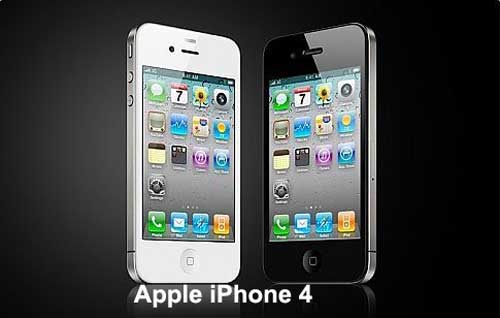
There were collective gasps when Consumer Reports publicly chastised Apple for the antenna defect in the hot-selling iPhone 4. The watchdog’s fix? Put some duct tape around the beautiful, industrial-chic stainless steel band that fuses the front and back of the device. No Apple devotee is going to do that. They’d rather never use it to make a phone call than destroy the aesthetics. For this flaw, CR couldn’t give the new iPhone 4 a recommended rating.


Apple's iPhone 4

The iPhone 4

What may be more instructive is that if you checked Consumer Reports’ website, you’d also notice that the iPhone 4 is still its top-rated smart phone. Despite the legendary failures of AT&T’s 3G network, the iPhone 4 out-scored all other smart phones for all other carriers. So the top rated smart phone can’t be recommended because of its propensity to drop voice calls more frequently than its predecessors. That’s astonishing.

Even with all the blogs, YouTube videos and news reports about the defect, Steve Jobs, Apple’s CEO deflected and downplayed the criticism and offered free plastic cases or bumpers to anyone who wanted one. The iPhone 4 is so popular that it’s sold out in all worldwide markets. Neither Apple nor AT&T can’t keep them in stock.

The obvious lesson is that if people love and lust after something, almost no empirical evidence of defect will kill its popularity.

That brings me to Land Rover’s Range Rover. The Range Rover (HSE and Supercharged) and its lesser, but dashing cousin, the Range Rover Sport (a dressed-up LR4-Discovery) have become standard issue to Hollywood Hills real estate agents, Beverly Hills lawyers and The Housewives of Orange County.

2010 Range Rover

Land Rover's 2010 Range Rover

The Range Rover is no ordinary luxury SUV. It has such off-road capabilities that it could easily cross the wrecked roads of Los Angeles after the big one. The floods of water resulting from either broken water mains or the tsunami after the earthquake would barely ruffle its massive, 5,697 pound body perched on 22 inch wheels. The great urban jungle called Los Angeles has been tamed.

People love their Range Rovers. In January, the 2009 Range Rover was awarded the Polk Automotive Loyalty Award by R. L. Polk & Co. in the Luxury Sport Utility Category for the second year in a row. The Polk Loyalty Award is based on actual customer surveys and records.

In July, the Range Rover was the overall top-rated vehicle in AutoPacific’s 2010 Survey of the Most Ideal Vehicles, as surveyed by new owners. AutoPacific surveys owners in the United States to rate new vehicles by how close they come to their ideal,using 15 categories, such as power and acceleration, interior lighting and storage, and seating visibility and comfort. (more…)