This seven minute Porsche PR video (bottom of post) invites you to visit its Leipzig, Germany factory where it manufactures the Cayenne SUV and Panamera four-door luxury sedan (i.e., NOT the sports cars).
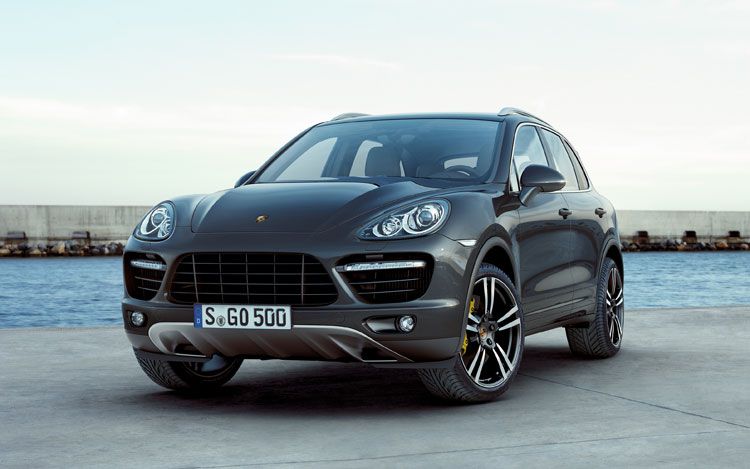
2011 Porsche Cayenne Turbo
The centerpiece of the sprawling facility is the futuristic Customer Center, a.k.a. “The Diamond.” You could also look at the structure as a giant bowl of cash because the vast majority of Porsche’s profits come from sales of the Cayenne (base MSRPs $47,700 – $106,000) and the Panamera (base MSRPs 74,400 – $173,200).
2011 Porsche Panamera 4
Porsche’s US sales are up 46% for the first four months of 2011, led primarily by high demand for the Cayenne and Panamera. The recession must be over, right?
Let’s look at the numbers. Through April 2011, Porsche sold a total of 3,272 sports cars (Boxster, Cayman and 911). During that same period, Porsche sold 2,297 Panameras and 4,610 Cayennes – total 6,907 units. So Cayenne (4 variants) sales were double that of the Panamera. And the Panamera (7 variants) outsold the flagship 911 (23 variants) by 202 units.
2011 Porsche Panamera 4 (rear)
It’s impossible to know how much profit is built into each Cayenne and Panamera; however, Porsche has stated numerous times that its profits from the Cayenne alone completely revived the company and cemented its reputation as the most profitable car company on the planet. The Panamera, in its second model year, is another cash cow. The combined sales of these non-sports car offerings is more than double the combined sales of the sports cars.
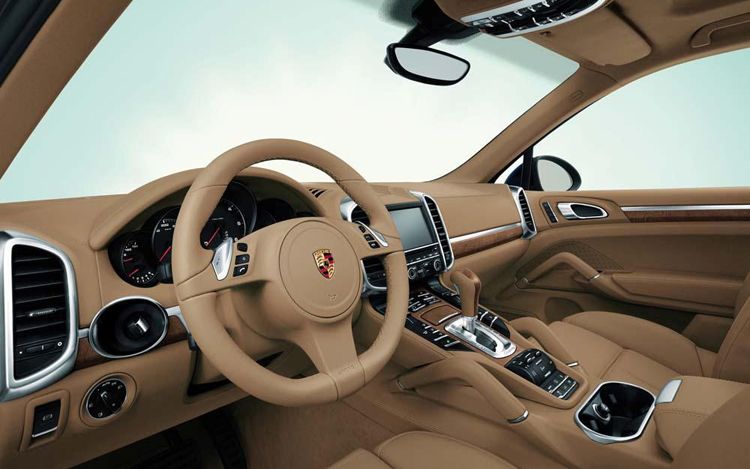
2011 Porsche Cayenne interior
The sports car purists were beside themselves (me included) when the bloated Cayenne SUV debuted in 2002. It was the end of Porsche. Who would want that hideous thing? It’s sacrilege for Porsche to build an SUV. Well, I and every other pundit was wrong and the Cayenne sold like tickets to a Lady Gaga concert. Now in its second generation, the Cayenne is a much more visually appealing and sportier SUV and Porsche can’t keep them in stock.
The Porsche literati also predicted doom for the 2009 introduction of the all-new 2010 Panamera 4-door luxury hatchback sedan. It’s hideous. It weighs too much. It’s not a “real” Porsche. It will flop in the market. Porsche is too small to take on Mercedes, BMW and Audi. Blah blah blah. The naysayers were wrong again. Like with the Cayenne, Porsche is struggling to keep up with strong worldwide demand for the Panamera. In LA, you can’t turn a corner in Beverly Hills or Century City without running into one.
2011 Porsche Panamera V6 interior
But I digress. Back to Porsche Leipzig. The test track and off-road courses (for testing the abilities of your Cayenne SUV) are breathtaking and meticulously-crafted. Who wouldn’t want to jump in a new Porsche and take driving lessons from a condescending German factory expert? You don’t even have to rough up your new Porsche – you drive factory-provided models. I don’t care how much they don’t like Americans — sign me up!
The video is an impressive, convincing puff piece. I’d LOVE to “collect” my new Panamera Turbo at the factory. If you’re actually in the market for a Cayenne or Panamera, I think it would be a lifetime experience to fly to the factory, take delivery, have every aspect of your new car explained to you in detail by the people who built it and enjoy expert driving instruction, a museum tour and delicious food prepared to your specifications. Leave the Leipzig factory and tour the rest of Europe in your new Porsche before it’s carefully wrapped and shipped back home. Wunderbar!
I have a confession to make – and it shouldn’t come as a surprise to long-time readers of my musings: I love station wagons. There, I said it.
In the United States, the venerable station wagon seems like a vestige of a bygone era. Before the Dodge division of Chrysler invented the emasculating minivan in 1984, suburban families drove station wagons to haul the kids and groceries. After all, Carol Brady had a station wagon that somehow fit all eight Bradys plus Alice in a pinch.
This is an ad for a 1971 Plymouth Fury Station Wagon, similar to one used in the TV Show, The Brady Bunch.
There was the Ford Country Squire. The Buick Roadmaster. The Chevy Nomad. The Chrysler Town & Country. In it’s original conception, a station wagon really was the car that picked you up at the train station with your luggage and took you to your country vacation home.
I envision the scene in the 1967 film, Valley of the Dolls, when Anne Wells (Barbara Perkins) leaves her glamorous life as a model in New York City and returns to her snowy New England hometown. Of course, she’s picked up at the train station in a station wagon.
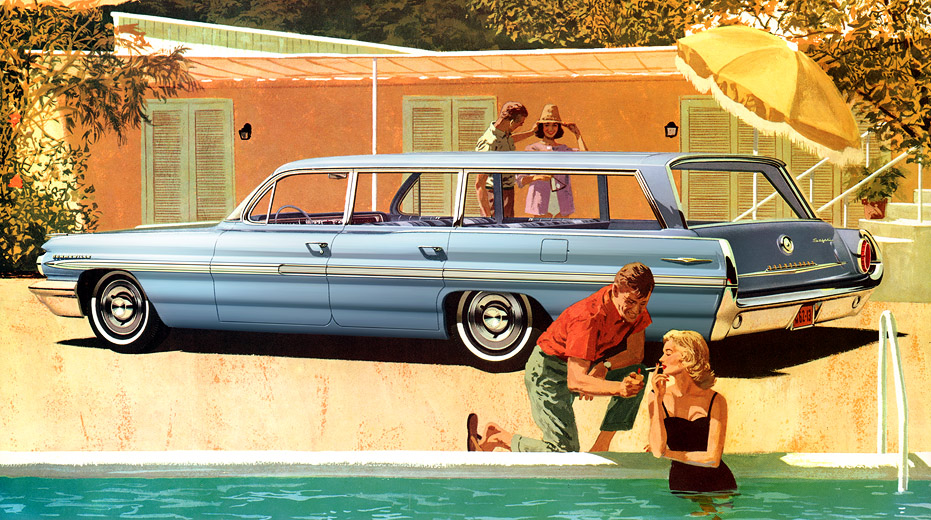
I love this post card featuring poolside smoking and a 1962 Pontiac Safari station wagon.
These gigantic barges had third row rear-facing seats that folded into the floor. They had heavy tailgates with a power rear window. Some tailgates opened both down flat and to the side like a door. Some even disappeared under the rear bumper. You could haul enough groceries for a small city. Surfers stuck their surfboards out the rear window and threw their wetsuits covered in sand and seaweed in back.
Check out the disappearing tailgate on this 1972 Pontiac Safari. You could get the same option on Chevy, Buick and Oldsmobile wagons that year too.
But the ultimate use for a station wagon was road trips with the mythical nuclear family. The Summer Vacation. Thanksgiving trips to Grandma’s country home. The great promise of Route 66 and the Interstate Highway System. See the USA in your Chevrolet. It was about our collective sense of freedom to go wherever and whenever we wanted and that the US, particularly the Western states, had endless opportunities.
The much maligned station wagon fell out of favor in the 1980s and nearly disappeared in the 1990s with the advent of the Sport Utility Vehicle. SUVs are merely wagons on steroids and stilts. And while station wagons were merely a big box on a sedan platform, most SUVs were built on heavier truck platforms.
In the first decade of the 21st Century, many manufacturers moved their big heavy SUVs to smaller, lighter car platforms and the term “Crossover Utility Vehicles” or CUVs was coined. American consumers immediately loved CUVs because they had better driving dynamics, a more comfortable ride and better fuel economy while having all the utility of, well, a tall station wagon.
It should be noted that the obsession for overly-large SUVs was mostly an American phenomenon. Sure bigger SUVs are sold in Europe; but station wagons never fell out of favor. The Brits called them “Estates.” BMW and Mercedes-Benz favored the term “Touring.” Audi uses the moniker “Avant.” VW likes “SportsWagen” for it’s Jetta wagon. Volvo still has wagons; but its slightly taller wagons are called “Cross Country or XC” as a nod to US consumer tastes.
The one thing they all have in common is that they are car-based and size-appropriate for the streets and parking constraints of older European and Scandinavian cities. And while they are very utilitarian, they are also well-engineered, better-packaged, highly-optioned and more desirable than their sedan platform mates.
It’s American’s irrational fear and loathing of station wagons that has led to a paucity of cool, modern wagons available here. BMW stopped importing its large 5-Series wagon last year. Even Volvo, famous for its sturdy, reliable, safe wagons, is exiting the station wagon market in the US with the demise of the over-priced V50. Volvo will keep its CUVs – the XC models – but no basic wagons.
To my delight, for the 2011 model year, Honda’s Acura division, in a very unusual move, expanded its TSX product line to include the Acura TSX Sport Wagon.
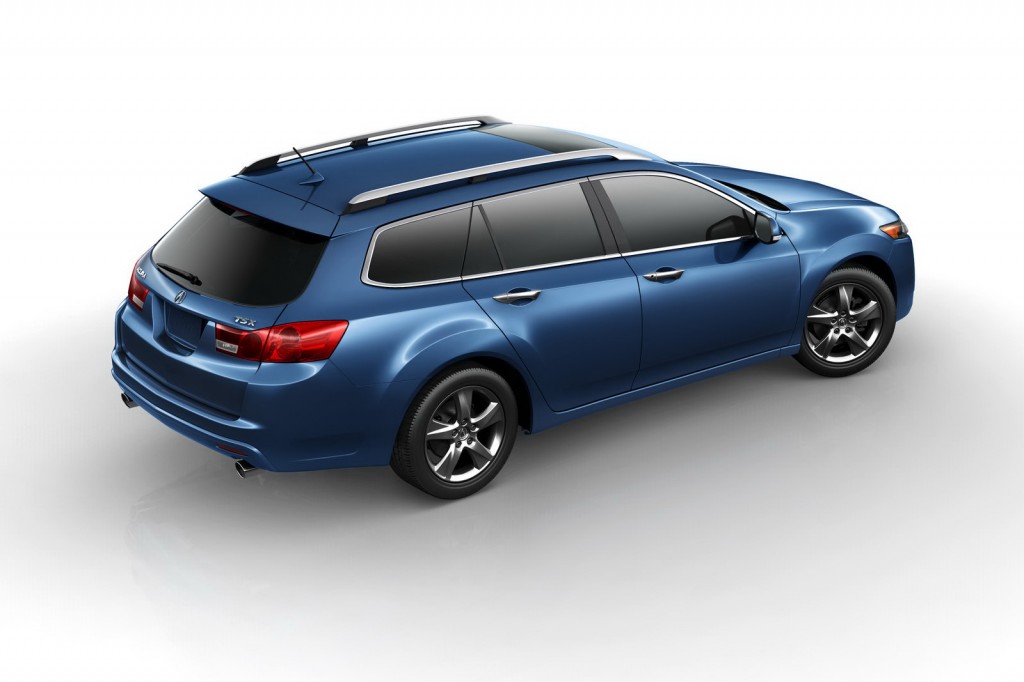
2011 Acura TSX Sport Wagon
As background, the TSX is the European Honda Accord. The American Accord is a much bigger and less agile appliance designed to fit the fat bottoms and lower expectations of US buyers.
The TSX gets the Acura luxury treatment for the US market; which is a good thing. Fortunately, the TSX retains its excellent chassis and dynamic handling characteristics that are expected in Europe. Thank you, Acura.
Remember the last time Honda offered an Accord wagon? Yeah, neither do I. It’s been a long time. In Europe, the Honda Accord Tourer is a very popular car. One of the most famous car commercials ever produced, The Cog, featured the (then) new Honda Accord Tourer – just don’t call it a wagon.
I drove the 2011 Acura TSX Sport Wagon recently at Acura of The Desert in Cathedral City, CA. It’s much easier to test a car when the roads are wide open with little traffic to hinder my sharp turns, punched acceleration and stomped brakes. I just feel sorry for my passengers and the nervous salesperson.
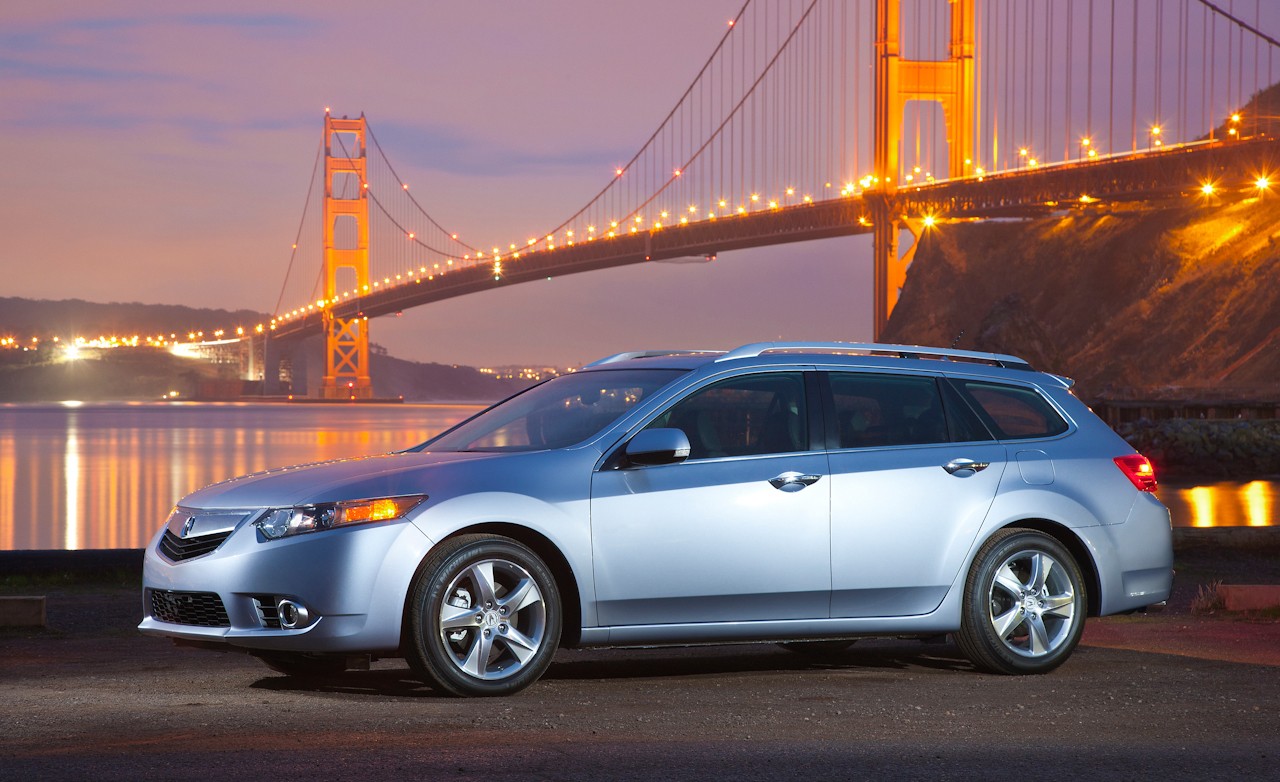
The 2011 Acura TSX Sport Wagon in front of the Golden Gate Bridge
The TSX Sport Wagon comes in only two trim levels – Base or Technology Package. When you get the Technology Package, there are no additional options. For $34,610, you get lots of car and gadgets and it’s probably the best overall package deal offered by Acura.
The base model comes well-equipped with perforated leather seats, Bluetooth and dual-zone climate control at $30,960. The $3650 Tech package adds an Acura/ELS 460-watt 10-speaker surround sound system with a 15 gigabyte hard drive to store your music; Acura Navigation with real-time traffic and weather; XM Radio; voice recognition for audio and climate controls; GPS-linked and solar sensor climate control and a remote activated power tailgate with one-touch close. It’s worth every penny.
The TSX only comes in front drive with Honda’s excellent 2.4 liter I4 i-VTEC engine that produces a high-revving 201 hp and 170 lb-ft of torque. The only transmission is Honda’s aging 5-speed automatic with Sequential SportsShift paddles. That’s not a lot of grunt to tug around 3,623 pounds; but it never seemed overtaxed, even with two passengers. That said, the TSX isn’t going to win any drag races, but for the target audience and most buyers, it’s more than adequate.
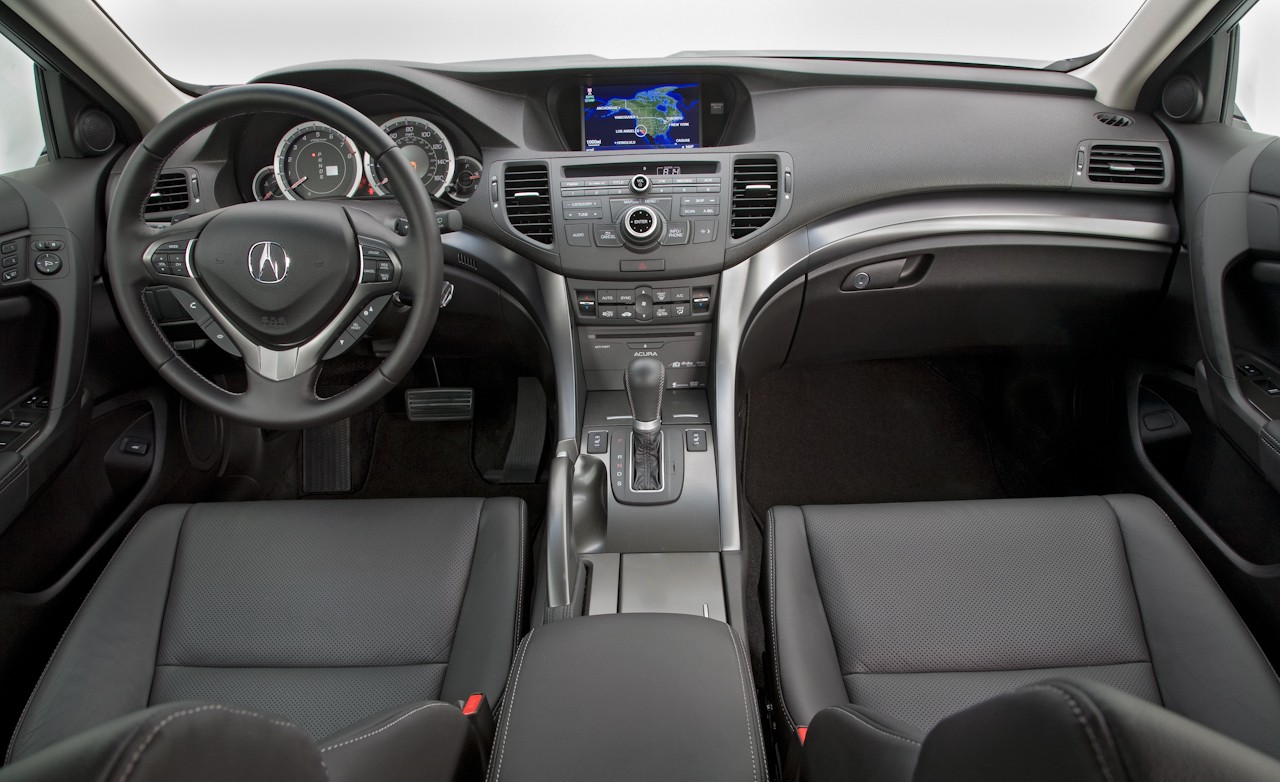
The interior of the Acura TSX Sport Wagon is almost identical to the sedan and a very nice place to spend time.
The steering was well-weighted and on center and I didn’t feel any torque steer in my test drive. The brakes felt strong and linear. In short, it’s a proper Honda product – as expected.
The interior is well-tailored with sweeping arches of matte-metallic plastic trim that won’t offend anyone. I felt comfortable and supported in the 8-way power and heated seats. The passenger only gets a 4-way power adjust. The steering wheel is loaded with controls that you could learn with more time in the cockpit. I found the interior quiet and engine noise was only annoying when it was pushed hard.
Adult back seat passengers will be cramped unless they are tiny; but it you’ve got young kids, they will fit fine. With the seats folded you get a whopping 61 cubic feet of cargo space – as good or better than the competition.
There is lots of cargo space in the TSX Sport Wagon. Note the extra storge compartment under the floor in back.
The engine drinks premium unleaded and is rated at 22 mpg city/30 mpg highway. That’s good, but not great. It still beats the Audi A4 Avant (21/29) and the BMW 328i Sports Wagon (18/27).
If Acura had wanted a stand-out product, it should have imported the TSX with Honda’s outstanding advanced clean diesel engine that would improve fuel economy by at least 30%. Unfortunately, the TSX Sport Wagon is such a low-volume product that it’s cost-prohibitive to certify a new engine for Federal and California emissions standards.
I have a few minor complaints. The remote key fob has driver memory, but not a keyless ignition system. Automatic high-intensity discharge (HID) headlights were standard, but rain-sensing wipers were missing. HomeLink garage opener system, available in much less expensive cars, was MIA in the Technology package. I also wished for an all-wheel drive system which you can get in the competition (BMW 328i xDrive Sports Wagon and Audi A4 Avant Quattro).
I don't know how many people are loading their TSX Sport Wagon with bikes, but this shot shows it's capable of carrying them (and surfboards too).
Acura is playing a game with the supply of these cars. It doesn’t expect to sell many, but if you go to an Acura dealer (and there aren’t that many of them), they will tell you they sell every one they get. So right now demand is high and inventory is scarce. Expect to pay sticker price for one.
Overall, I was favorably impressed with the Acura TSX Sport Wagon. I think it’s a very capable, solid, handsome and stylish alternative to the me-too SUV/CUV craze.
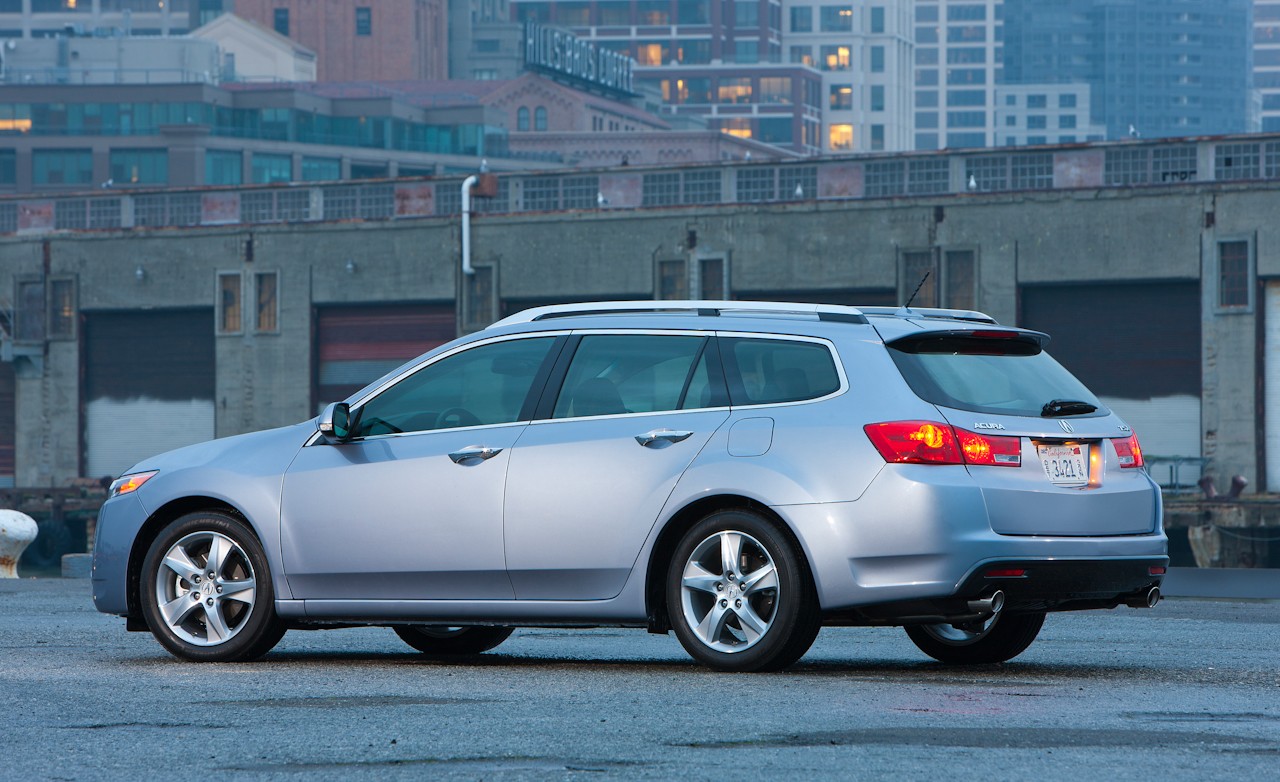
The 2011 Acura TSX Sport Wagon looks great from this angle.
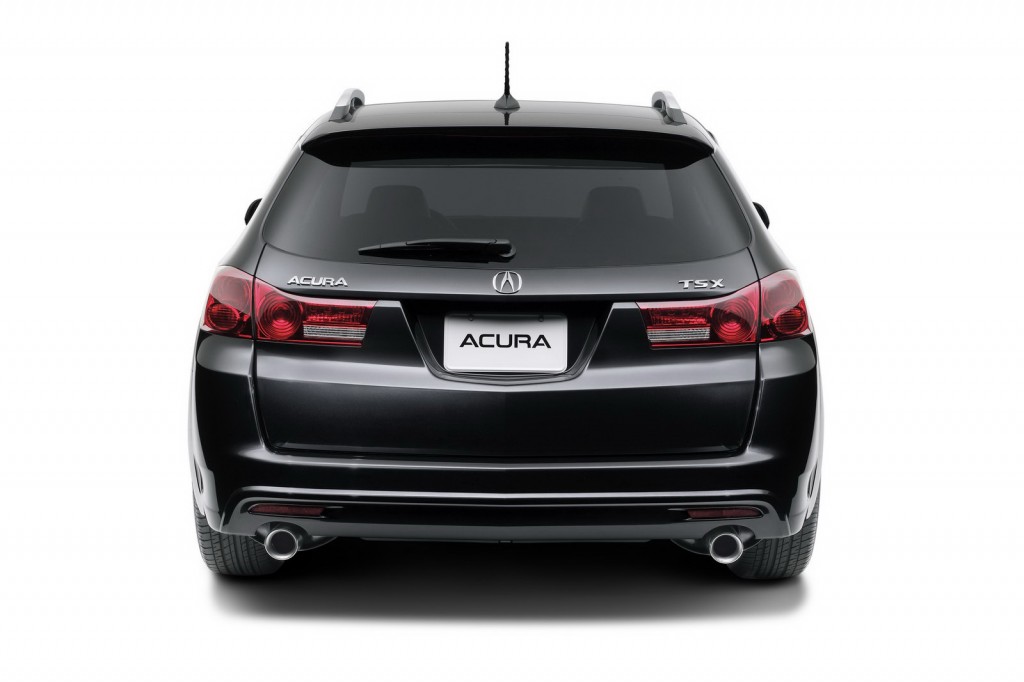
The rear styling of the TSX is streamlined, beautifully-proportioned and balanced by the sporty dual exhausts.
The front of the 2011 Acura TSX is a much more conservative, toned-down look from the over-sized Jack-O-Lantern or snaggle tooth Acura grilles from the past few model years.








 Todd Bianco's ACarIsNotARefrigerator.com Blog