Archive for the ‘Automobile Manufacturers’ Category


It’s been more than twenty years since Mercedes-Benz offered a four cylinder diesel engine in the US market. The new 2.1L biturbo-diesel engine in the 2014 GLK 250 BlueTEC compact crossover is so sweet that it’s bound to win over even some of the die-hard diesel haters.

2014 Mercedes-Benz GLK 250 BlueTEC
2014 Mercedes-Benz GLK 250 BlueTEC

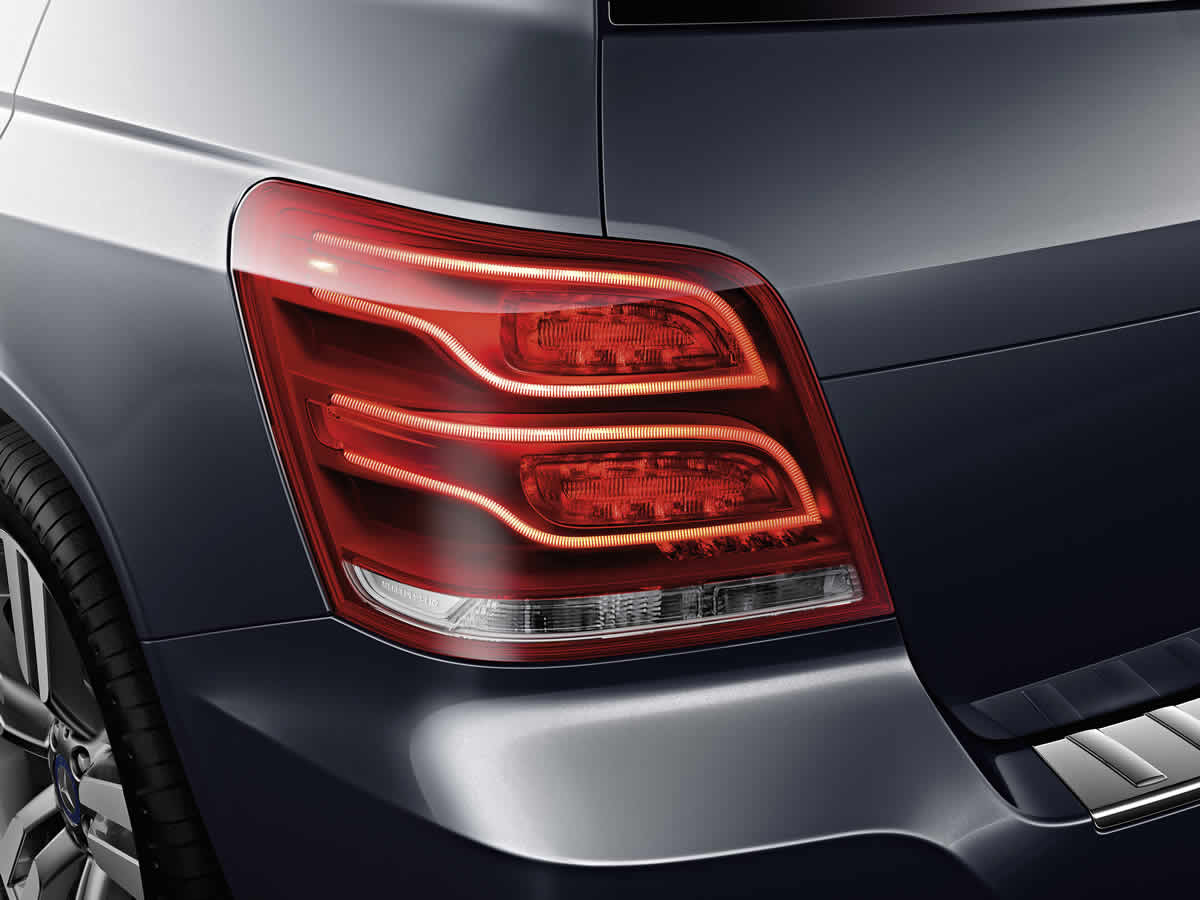
The detail of the taillight of the redesigned for 2013 GLK shows more depth and detail of design. A nice touch.

The detail of the taillight of the redesigned for 2013 GLK shows more depth and detail of design. A nice touch.

Nowhere except inside the fuel filler door and in the driver’s handbook will you see the word “diesel” on the new GLK 250.  Despite the fact that the Three-Pointed Star has been making diesel engines for over a century and despite diesel’s strong popularity around the world, Mercedes’ US marketing arm would like to reintroduce Americans to the charms of diesel power without mentioning the “d-word” – so powerful is the American public’s alleged dislike of the noisy, dirty, smelly, doggedly-slow diesels of yore.

The rear badging of the 2014 Mercedes GLK 250 BlueTEC doesn't have a "diesel" badge. In the "old days" this car would have been badged GLK 250D and the word "diesel"  or "turbo-diesel" may have appeared on the opposite side.

The rear badging of the 2014 Mercedes GLK 250 BlueTEC doesn’t have a “diesel” badge. In the “old days” this car would have been badged GLK 250D and the word “diesel” or “turbo-diesel” may have appeared on the opposite side.

Twist the key of the $39,495 GLK 250 BlueTEC (you have to pay $650 if you want the pushbutton convenience of Keyless Go) and the engine fires right up. Common-rail direct diesel injection banishes any lingering memories of glow plugs and waiting for a light to go out before you could start the engine. From inside, there is little evidence of a noisy diesel engine. Even outside the cabin, you have to listen carefully to hear the diesel’s low-revving churns.
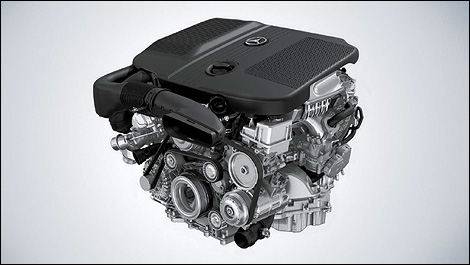
The 2.1L Biturbo diesel engine in the 2014 GLK 250 BlueTEC.

The 2.1L Biturbo diesel engine in the 2014 GLK 250 BlueTEC.

Also relegated to the dustbin of history is any whiff of diesel fumes or black clouds of particulates. Mercedes’ BlueTEC system scrubs diesel emissions with a series of steps including a catalytic converter, a particulate filter and a squirt of a urea and water solution. The result is exhaust clean enough to meet California’s stringent standards which do not distinguish between diesel or gasoline engine emissions. In short, a 50-state legal diesel engine.

The rewards are a compact crossover with top tier fuel economy. The EPA rates the 2014 Mercedes GLK250 BlueTEC at 24 city 33 highway 28 combined. This beats almost all the competition – at least for now. Only the BMW X1 xDrive28 ties the GLK for highway fuel economy. Lesser brand crossovers like the extremely popular Honda CR-V or Ford’s highly-touted Escape with a 1.6L EcoBoost engine can’t touch the diesel for sheer economy.

The GLK, first introduced in the US for the 2010 model year, was thoroughly revised and reworked for the 2013 model year.  While I love Kim Cattrall as Samantha on Sex in the City, showing her loading up a GLK on Rodeo Drive in the 2008 film didn’t make me rush out to buy one.

My first drive of the GLK 350 (previously the only model available) was less than inspiring, mostly because I couldn’t get past the horribly cheap interior and junior-GL styling that I didn’t think worked.

Fast forward to 2013 and I’m a convert. That me-too was properly laser-sculpted and is now much more fluid and mature. While she’s still not a sexy kitten like the Audi A4 Allroad, the GLK just looks more comfortable in its sheet metal.

The double-bar grille is more prominent and the front fascia and new headlamps flow more organically.

The double-bar grille is more prominent and the front fascia and new headlamps flow more organically.

More important is the quantum leap in interior quality and ambiance  The steering column stalks are now up-to-date. Plastics feel substantial, thick and soft, where appropriate. Switch gear remains stock Mercedes parts bin.
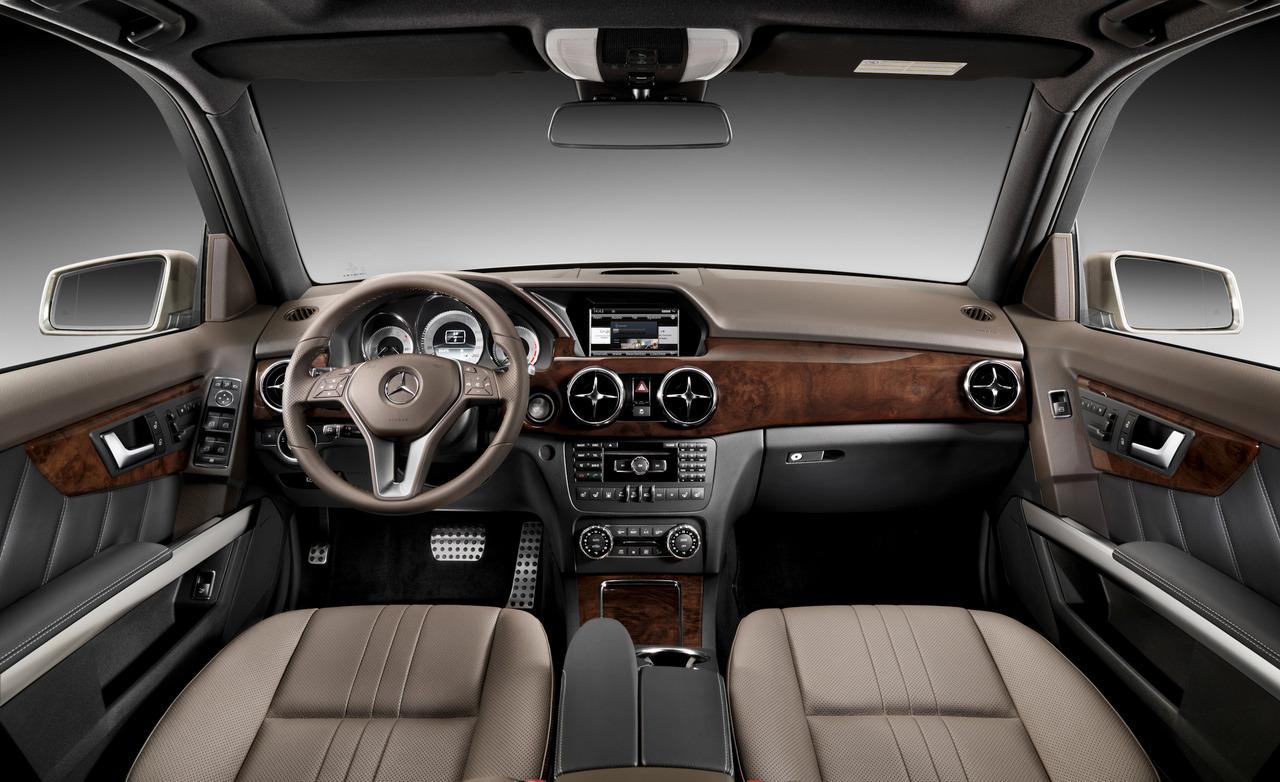
The interior of the 2014 GLK 250 is more driver focused with the re-positioning of the 7 inch navigation screen and the center console mouse-like controller.

The interior of the 2014 GLK 250 is more driver focused with the re-positioning of the 7 inch navigation screen and the center console mouse-like controller.

The leather-wrapped three-spoke steering wheel is small in diameter, and almost sporty – although at 4,246 pounds curb weight, you really can’t call the GLK sporty.
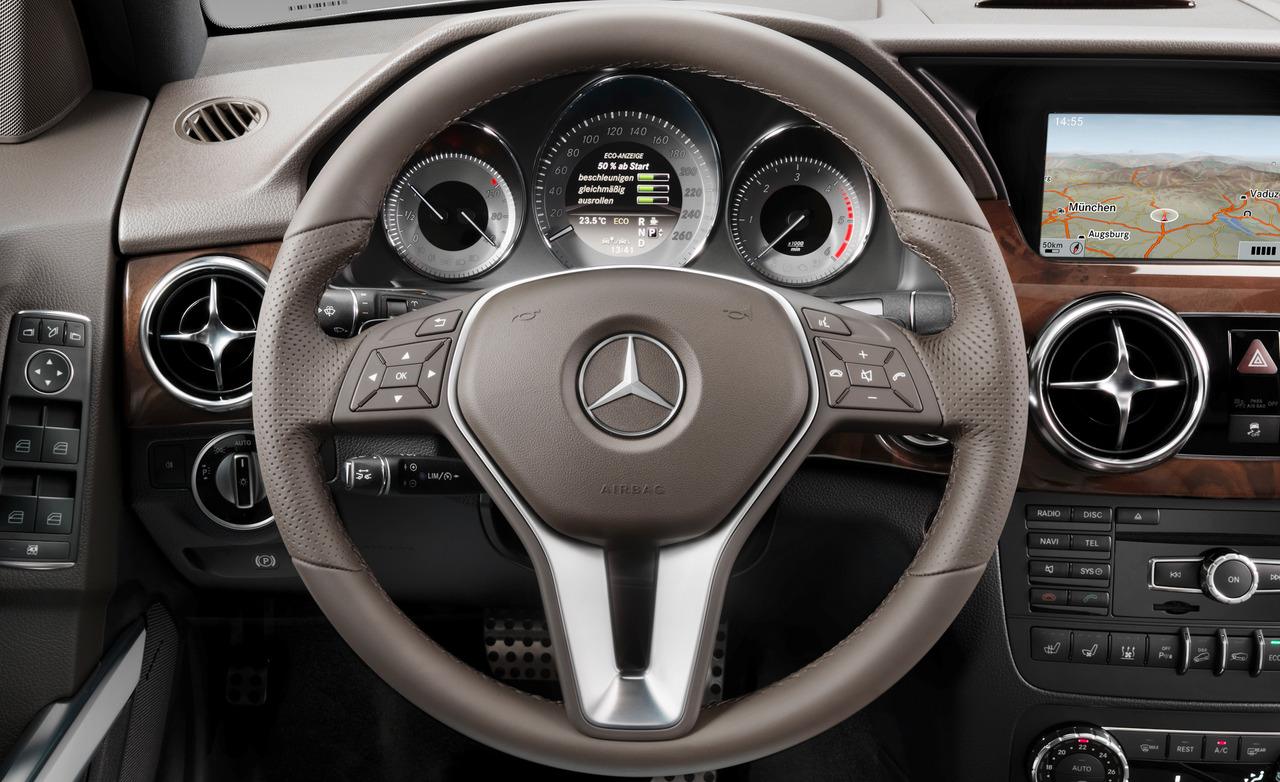
The instrument panel and steering wheel feel properly upscale and very Mercedes-Benz -- which is a good thing.

The instrument panel and steering wheel feel properly upscale and very Mercedes-Benz — which is a good thing.

I particularly like the four round air ducts with the aluminum-look bezels and cross-hairs. They really elevate ambiance and overall premium look. Pleated leather in the door inserts add a touch of luxury and the wood accents are convincing.

You sit quite upright in the cabin – more so that almost any other car on the market. I found the position as well as the stock Mercedes seats quite comfortable and leg and shoulder room more than adequate. The GKL has real cup holders – something that you will appreciate when you realize that BMW forgot to put decent ones in the X1.
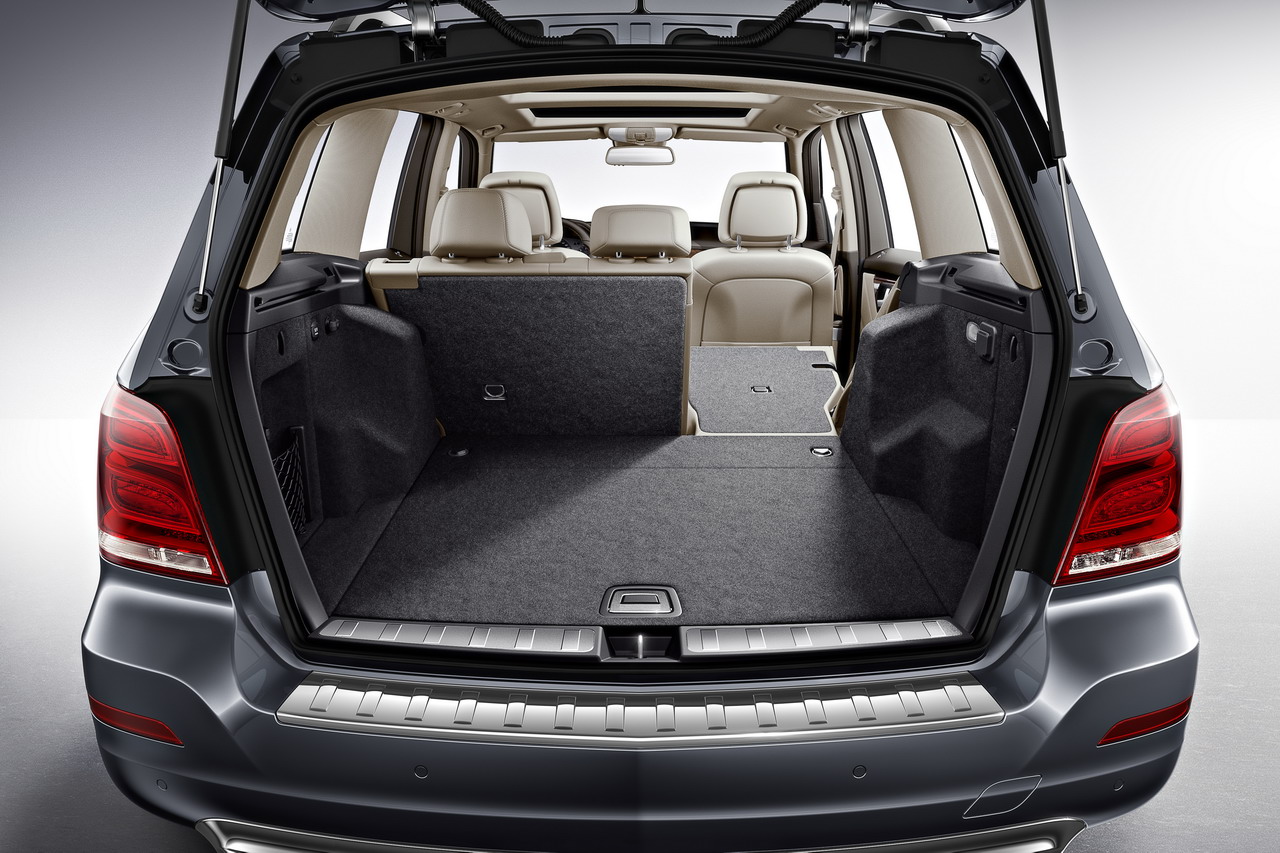
The 60/40 split rear seats fold flat in the GLK. There isn't a ton of space, but it's all well tailored and properly flocked.

The 60/40 split rear seats fold flat in the GLK. There isn’t a ton of space, but it’s all well tailored and properly flocked.

Of course, for me, what sealed the deal was that sweet little engine. While it won’t win any speed records, 369 pound-feet of torque at only 1600 rpms more than makes up for having only 200 ponies. Mercedes’ standard in-house 7-speed automatic is flawless.

The 4Matic all-wheel drive system, standard on the GLK 250 BlueTEC, has a rear-drive bias and doesn’t shave much from a fairly tight turning radius of 37.7 feet (a full foot shorter than the 2013 Ford Escape).  I found the electronic rack-and-pinion steering tracked straight with a light feel — more than passable for a small crossover with no sporting intentions. It’s a distant cry from the recirculating ball gears of my 1988 190E.

Like all German cars these days, you have to add pricey options to get them to the level of options you’d expect on a luxury car. For example, the rear visibility of the GLK isn’t great, so you would be wise to look for a rearview camera. It’s standard on the base $23,000 Honda CR-V, but on the GLK, you have to opt for the $2,790 Multimedia Package, which includes COMAND hard-drive navigation on a 7-inch color display, 10GB Music Register, SiriusXM Traffic and Weather and Enhanced Voice Control.

You also can’t get the handy power tailgate by itself, you have to buy it as part of the $3,450 Premium 1 Package which includes a Panorama roof, SiriusXM Satellite Radio, Auto-dimming rear and side view mirrors with a digital compass and garage door opener. No unbundling! Heated front seats are a $750 stand-alone option.

The panorama glass sunroof is part of the Premium 1 Package. I wish it could be unbundled.

The panorama glass sunroof is part of the Premium 1 Package. I wish it could be unbundled.

Needless to say, all this quickly adds up to something north of $50,000. The GLK 250 4Matic is $1,500 more than the rear-drive GLK 350 but $500 less than the 4Matic version.

If the price for the car doesn’t confuse you, there is the  issue of the price of diesel fuel. It routinely fluctuates from below regular grade gasoline to more than premium. However, you are supposed to use premium gasoline in the GLK 350. For me, the fuel price is a push and the increased economy you get out of every gallon of diesel more than repays any price premium at the pump.

The interior of the new GLK looks like a nice place to spend time. Road trip anyone?

The interior of the new GLK looks like a nice place to spend time. Road trip anyone?

Also, diesel power makes sense for people who do most of their driving on the highway. Simple Google searches will tell you that diesel drivers routinely get better than EPA estimates on long trips and the GLK 250 BlueTEC has a road trip-friendly range of more than 500 miles.

The best news is that the GLK now feels like a proper Mercedes-Benz and I have confidence in more than 100 years of diesel engineering experience. Still, nothing sells a car like 369 lb-ft of torque behind every push of the pedal. Try it and I think you’ll be hooked too.


Somewhere in cyberspace, an anonymous scribe is preparing an entry for Fisker Automotive, Inc. in Wikipedia’s List_of_defunct_automobile_manufacturers_of_the_United_States.

2012 Fisker Karma. R.I.P. Fisker Automotive, Inc. 2007-2013.

2012 Fisker Karma. R.I.P. Fisker Automotive, Inc. 2007-2013.

Fortunately for investors in Fisker Automotive, this week the media’s attention is focused on much more serious events happening in Boston. Sure, Fisker’s filing for bankruptcy will make the news, just not for nearly the number of news cycles usually devoted to this kind of failure.  Bloviating “experts” will excoriate the Obama Administration for giving Fisker a $528.7 million Department of Energy “Advanced Technologies Vehicle Manufacturing” loan. Automotive executives will say that they knew Fisker had bad karma.  Blah, blah, blah….

The Fisker Karma's interior looks nice, except there were lots of complaints about sloppy workmanship, poor fit/finish and cramped quarters.

The Fisker Karma’s interior looks nice, except there were lots of complaints about sloppy workmanship, poor fit/finish and cramped quarters.

In Los Angeles, we have different tea leaves that pick winners and losers in the rarefied niche market of advanced technology hybrid and electric vehicles. Roaming our streets on a daily basis is a never-ending parade of beautiful, fast, exotic, expensive and classic cars – not to mention the countless hybrids. LA has a large enough market for low-volume high-tech, advanced drivetrain vehicles that low volume, expensive cars have a place here. If we like it here, the vehicle and/or its underlying technology stand a good chance of expanding and flourishing.

On any given day driving around Metro LA, you can see exotic cars like the Honda FCX Clarity, a Tesla Roadster or a Mercedes-Benz B-Class FCV (Fuel Cell Vehicle). The Chevy Volt is more popular than the Chevy Cruze.  The BMW ActiveE isn’t a stranger.  Last year, the Toyota Prius was the best-selling vehicle in California – no surprise to anyone as you can’t drive anywhere without being surrounded by them.

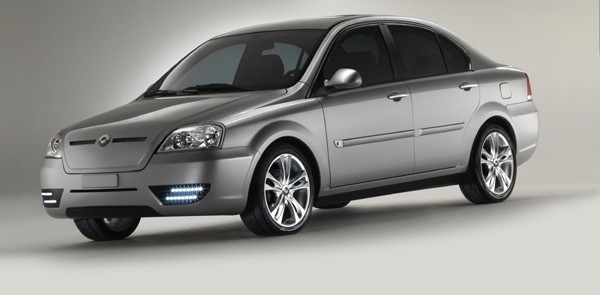
The Coda sedan. CODA Automotive's first and likely its last car.

The Coda sedan. CODA Automotive’s first and likely its last car.

When CODA Automotive opened up its first store in the fall of 2011, in the Century City Shopping Mall, I visited the store and tested the Coda – the company’s first offering, an all-electric sedan. That was November 2011 and I pronounced the Coda dead-on-arrival. The $45,750 (later reduced to $37,250) Coda was far to expensive, even with up to $10,000 in federal and state tax credits. It borrowed styling from a decades-old still-born Mitsubishi econobox and I found it primitive and uncomfortable. It was a battery and a drivetrain in search of a body. No one bought it.

By the time CODA Automotive abruptly ceased nearly all operations in December 2012, the LA Times reported that it had sales of no more than 78 vehicles based on a recall notice issued by the National Highway Transportation Safety Administration. I never saw one on the open road.

By contrast, the Nissan Leaf was less expensive, thoroughly modern, futuristic-looking and far better equipped. And the Leaf was backed by an extensive network of Nissan dealers. Last year, Nissan sold 9,819 Leafs. Last month (March 2013), Nissan sold 2,236 Leafs. Today, the Leaf is a common sighting in LA.

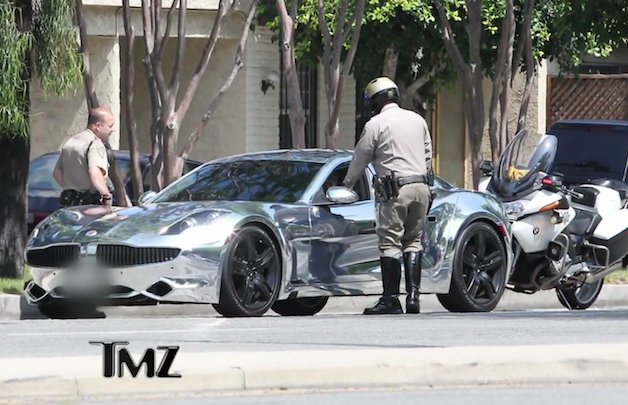
Justin Bieber's Fisker Karma in chrome. You know, a "stealth color" right? Photo: TMZ.com

Justin Bieber’s Fisker Karma in chrome. You know, a “stealth color” right? Photo: TMZ.com

With the arrival of Fisker Santa Monica in 2011, the stage was set for “volume” sales of the highly-anticipated Fisker Karma, an extended-range electric vehicle. Suddenly the Fisker Karma was all over the wealthier areas of Metro LA. Justin Bieber bought (or was given) one painted in bright chrome and was notoriously chased by the paparazzi. Leonardo DiCaprio had one. Wealthy Santa Monica entertainment executives with the need for a green veneer but a disdain for a common Toyota, were customers.

In 2012, the curvaceous  cramped, four-door, six figure, five thousand three hundred pound Karma became a common sight in LA. It was like the iPhone 5 of the wealthy eco-conscious car buyers. Flash with a bit less guilt.

But as with everything in the tech industry, things can change instantly and customers are fickle. The batteries caught fire. Consumer Reports bought a Karma and it bricked. Battery packs were recalled. Fisker stopped production of the Karma and lost thousands of cars in Super Storm Sandy. On October 16, 2012, A123 Systems, Inc., the supplier of the battery pack for the Karma, did the corporate version of bricking.

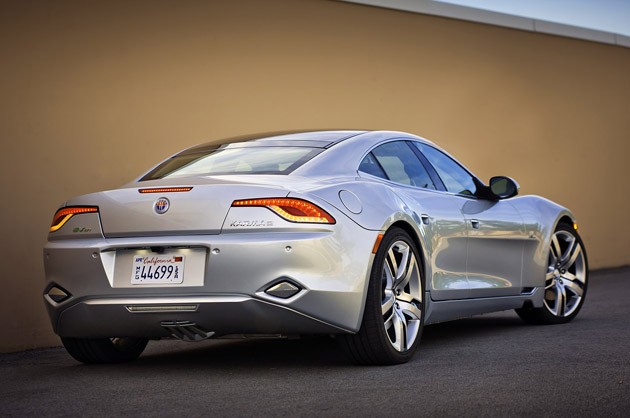
The Fisker Karma had a very fetching hind quarters belying its porky 5,300 curb weight.

The Fisker Karma had a very fetching hind quarters belying its porky 5,300 curb weight.

Even if 2012 had been clear sailing for Fisker, its fate was sealed when the pure electric $100,000 Tesla Model S debuted last July. With the 85 kWh flat-floor battery pack, an EPA certified range of 265 miles, a much larger interior and gobs of cargo capacity, that stunning 17 inch infotainment/control display and sports car handling, suddenly the $100,000 Karma’s 32 mile EV range and “extended range” of up to 300 miles didn’t seem so impressive.

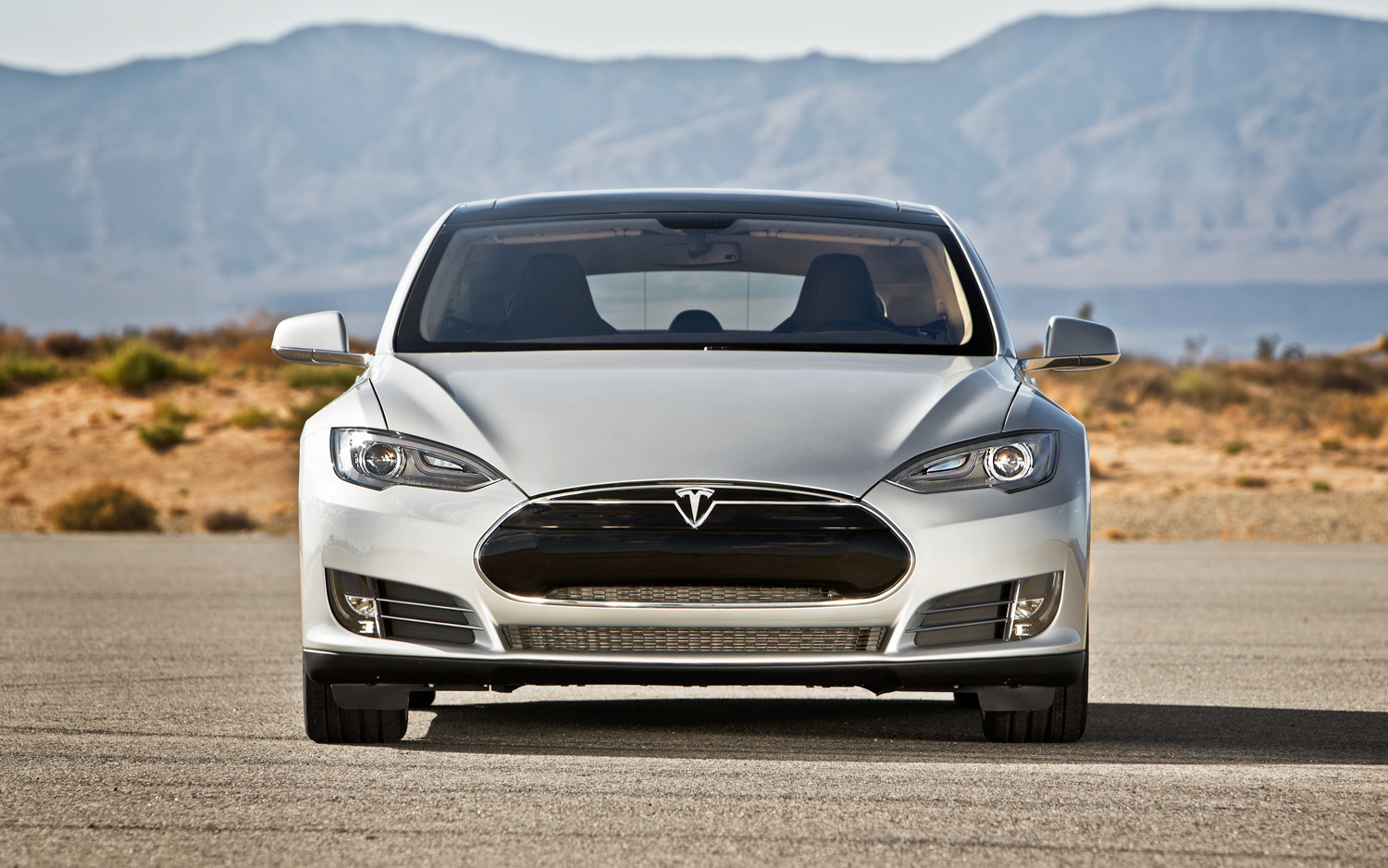
The 2013 Tesla Model S won Car of the Year awards from both Motor Trend and Automobile Magazine.

The 2013 Tesla Model S won Car of the Year awards from both Motor Trend and Automobile Magazine.

Then, near the end of 2012, the Model S snagged two very important COTY awards from Motor Trend and Automobile Magazine. The LA-based orders started to pile up for the Model S.

Almost all controls inside the Tesla Model S are accessed on the brilliant 17 inch full-color, fully-internet enabled center touch screen.

Almost all controls inside the Tesla Model S are accessed on the brilliant 17 inch full-color, fully-internet enabled center touch screen.

You might see the tail end of the Tesla Model S more often than the front because this car is seriously fast and can easily blow past the most powerful German sedans.

You might see the tail end of the Tesla Model S more often than the front because this car is seriously fast and can easily blow past the most powerful German sedans.

A black hole has been sucking the Karma off the streets of LA and like the Big Bang, the Model S has exploded on the city, everywhere I go. A shady, apartment lined street in West Hollywood.  Abbot Kinney in Venice. BOA Steak House. The Palm Springs Art Museum. Ralph’s parking lot. Sunset Plaza. USC. The 405. The 10.

A new 2013 Tesla Model S enjoys Doris Day parking at BOA Steakhouse in West Hollywood.

A new 2013 Tesla Model S enjoys Doris Day parking at BOA Steakhouse in West Hollywood.

Another new Tesla Model S is able to find a coveted street parking space on Abbot Kinney in Venice.

Another new Tesla Model S is able to find a coveted street parking space on Abbot Kinney in Venice.

Range anxiety? Not with that big battery pack and the $1,200 optional Tesla Twin Charger that can double the charging speed at home or the office. And if you’re on the road, locate one of Tesla’s Supercharger Stations that can recharge the 85 kWh battery – more than 250 miles of range – in one hour. Pretty awesome.

We are witnessing very rare automotive history here in Los Angeles with the life and death of Fisker and the Karma and the rise of the Tesla Model S.  I’ve never seen a car become so hot so fast and then nearly disappear to be replaced by another even hotter car — not even when the Hummer disappeared with the fuel spikes in 2008 to be replaced by the Prius.

I kind of feel bad for the Karma.  She got dumped for a virgin electric with a bigger battery, a dazzling infotainment interface (17 inches!) and sports sedan handling good enough for the exclusive six-figure German mash pit. However, I don’t see too many Karmas being sold into indentured servitude on the resale market. Only a few thousand were ever produced and sold, and none really saw hard time, so while you won’t see many on the road, most will find their way into private collections and museums.

As the bankruptcy vultures prepare to dismantle Fisker, we can be sure that Hernik Fisker, while a talented designer, is not destined to be the Henry Ford of ER/EVs, despite sharing his initials. Fisker Automotive will take its place in the sprawling automotive graveyard among such former luminaries as Packard, Duesenberg, Tucker, Studebaker, Pontiac and Plymouth. The automotive business is complex and cut-throat and few start-ups survive.  R.I.P. Fisker Automotive.

April 25, 2013, Editor’s note: On April 1, 2013, Tesla announced that it had delivered “more than 4,730 Model S Cars” for the first quarter of 2013. For the same period, the competition sold:

  • Audi A8 – 1,462
  • Audi A7 – 2,083
  • BMW 7-Series – 2,338
  • BMW 6-Series (including the Gran Coupe) – 2,071
  • Lexus LS – 2,860
  • Mercedes-Benz S-Class – 3,077
  • Mercedes- Benz CLS – 1,695

So when you look at the $100,000+ luxury class, the Tesla Model S seems to be ahead of the class. These statistics support my observations that the Model S has transcended the EV range anxiety and it’s overall excellence is attracting its share of the luxury market.  This is an amazing accomplishment for the first mass-produced car from a start-up manufacturer.