The Chevrolet Motor Car Company was founded on November 3, 1911 by automotive engineer and racing driver Louis Chevrolet and William C. Durant, the legendary founder of General Motors.
Louis Chevrolet in 1911
Born in 1878 in Switzerland to French parents, Louis Chevrolet had little formal schooling. From an early age, he worked as a mechanic for the nascent automotive industry in France. When he was 22, Chevrolet emigrated to Montreal, (French) Canada and the next year, in 1901, he moved to New York City. In 1905, he was hired by Fiat to be a race driver and his racing career took off. Shortly thereafter, he began driving for Buick, then owned by General Motors and Mr. Durant. While at Buick, he began to design his own engine for a new car.
The banks ousted Mr. Durant from GM in 1910, so it was natural that he turned to his colleague and friend, Louis Chevrolet, to form a new car company (no doubt, to compete with Buick and General Motors). Chevrolet’s name was a natural fit for the new company due to his racing fame and the fact that he had a new engine and car design already under development. The Bow Tie logo was, by most accounts, a stylized Swiss cross, a nod to Chevrolet’s heritage.
Chevy Bow Tie logo history
Mr. Chevrolet’s disagreements with Mr. Durant over design drove him to sell his shares in the company to Durant in 1915. By 1916, Chevrolet had become large and profitable enough to allow Mr. Durant to regain controlling interest in General Motors and in 1917, Chevrolet was merged into GM.
William C. Durant, founder of General Motors
The rest is a long and storied history of the American automotive industry. As long as I can remember, GM’s Chevrolet division has been slugging it out with Ford’s Ford division to be the sales leader in the United States. In Detroit, it’s still a closely watched race at the end of each calendar year.
Chevrolet is deeply interwoven into the fabric of American society. Baseball, Hot Dogs, Apple Pie and Chevrolet, right? In fact, the history of Chevrolet is the history of the 20th Century. Throughout two World Wars, The Great Depression, Vietnam, the Cold War, the Atomic and Space Ages, the Summer of Love, and the digital revolution, Chevrolet has endured and reflected the collective mood, style and aspirations of an idealistic, young nation.
In the first decade of the 21st Century, Chevrolet and its corporate parent, General Motors, saw their darkest years in generations, culminating with GM’s historic 2009 bankruptcy. Newly invigorated with a clean balance sheet, new management and refreshed products (that people are buying), the new General Motors, with it’s top-selling Chevrolet Division, is now leading the automotive industry out of the Great Recession that still poisons our nation.
Chevrolet has lost no marketing opportunity to mark its centennial. The feel-good, nostalgia ads have been running on all media platforms for several months and every auto magazine has devoted both editorial and pictorial content to the event.
While it may have been running on TV for a couple weeks, I only caught this new commercial, Now & Then, on Monday. It played both in full 60 second long form and in an edited 30 second version. Below is the long form, complete with the emotional and heart-felt Ray Charles rendition of America the Beautiful.
To understand writer and director Chris Paine’s new documentary, Revenge of the Electric Car, you really need some background from his 2006 film Who Killed The Electric Car? The ensuing five years is only one product cycle in the auto biz; but these last few years were unlike anything the industry has seen in more than half a century.
Who Killed opens with a mock funeral for GM’s EV1 electric car at the Hollywood Forever Cemetery, complete with Hollywood celebrities and environmentalists. It’s a fitting introduction to Mr. Paine’s investigation into the untimely death of the EV1.
The 2002 GM EV1
The film follows the fight between a group EV1 drivers and an evil corporate monster by the name of General Motors that refused to extend the leases or sell the cars to the lessees at the their stated residual values. You just know this isn’t going to end well.
The saddest and most dramatic moment from Who Killed takes place on March 14, 2005 when GM trucked all the remaining EV1s from a nondescript storage parking lot in Burbank to a desert graveyard where they were all crushed. [GM did donate a disabled EV1 to the Petersen Automotive Museum.]
From 2005, a stack of crushed EV1s in a desert graveyard.
There was a lot of blame to go around as far as who really killed the electric car. GM didn’t want to send a mixed message of “clean” versus “dirty” vehicles to its customers and its dealers didn’t see much service revenue from an electric car.
Then there was the false hope, pushed by oil companies, of a hydrogen fuel cell car when mass market hydrogen technology and infrastructure was still decades away. And it goes without saying that Big Oil isn’t thrilled with a transportation future that doesn’t involve sales of their products.
And then there was the surprise villain, the California Air Resources Board (CARB), that caved into pressure from automakers, oil interests and federal and state politicians to get rid of California’s zero emissions vehicle mandate. Once the mandate was gone, GM no longer needed the EV1 in its portfolio.
At the end of Who Killed The Electric Car? there was a ray of renewable sunlight that pure electric and plug-in hybrid vehicles were already mounting a come back. The Tesla Roadster was promising and aftermarket tinkerers were modifying the standard Prius to be a plug-in vehicle.
2011 Tesla Roadster 2.5
Fast forward to 2011 and oh how things have changed. The world economy tanked in 2008 and we are still in a recession or a jobless recovery, depending on how you look at it. GM and Chrysler were put though government-sponsored bankruptcies in 2009 and both have emerged stronger than ever with new products people are actually buying. And Americans are buying smaller cars with smaller engines.
In 2010, the previously-unstoppable Toyota juggernaut hit an iceberg with numerous sudden acceleration, safety and quality problems. Ford survived the Great Recession without a government bailout and it’s now on a roll with great new products people want.
But most significantly, GM is back in the EV game with the Chevrolet Volt, a plug-in electric-hybrid vehicle and the battery-electric Nissan Leaf is on sale now. Of course, Los Angeles is ground zero for both of these advanced alternative fuel vehicles.
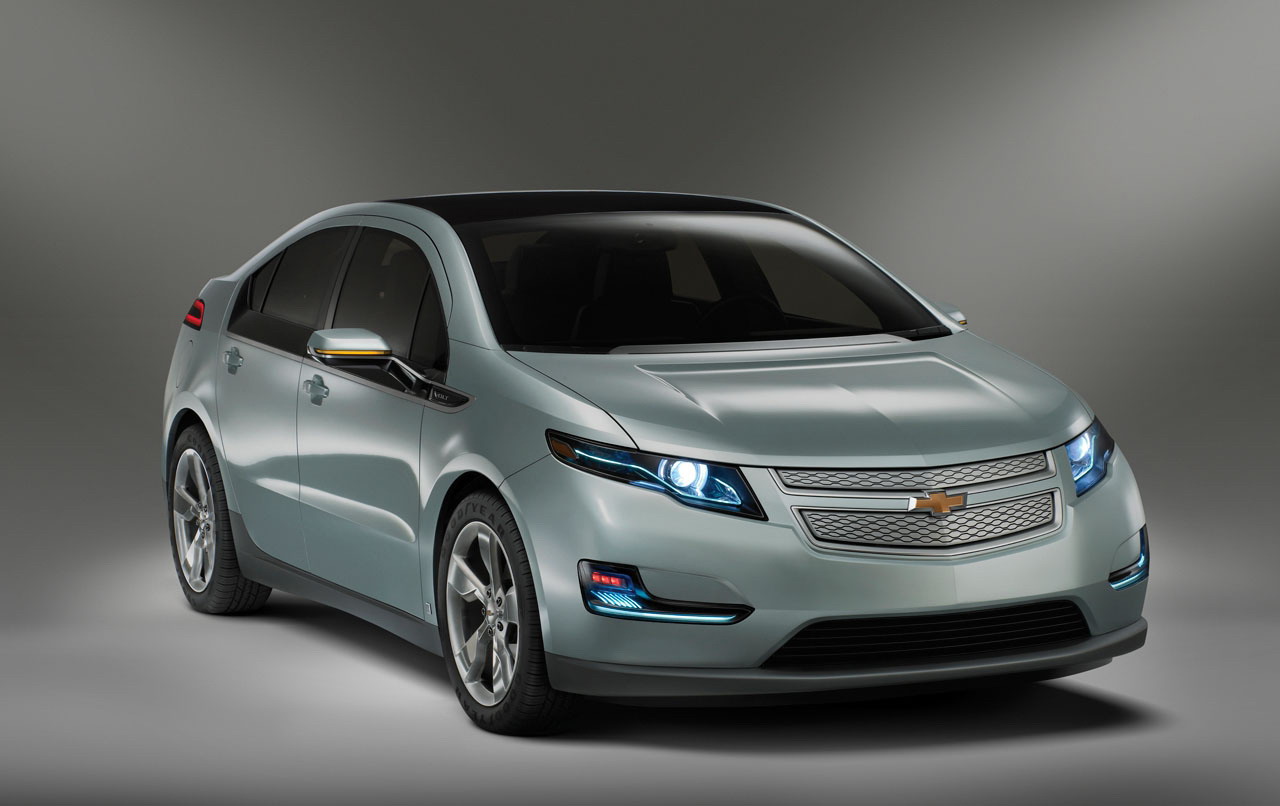
A 2012 Chevrolet Volt
The 2011 Nissan Leaf
Mr. Paine’s new documentary, Revenge of the Electric Car, opens with classic aerial views of the Los Angeles freeways. Dan Neil, arguably the smartest and most influential automotive journalist in the country, the man that critiques anything from a Ferrari F458 sports car to a Mazda5 minivan, explains his transformation from a gasoholic to a true EV believer.
Where as Who Killed is a “who done it,” Revenge is about “who’s doing it” and the race to be first to market with consumer-friendly electric cars. To tell the story, Pain weaves together the tale of four very different but equally dedicated EV protagonists.
Tesla Motors CEO Elon Musk
"Maximum" Bob Lutz, former GM Vice Chairman
First up is the mercurial, PayPal-rich entrepreneur Elon Musk, a co-founder and CEO of Tesla Motors. Tesla’s precarious finances nearly bankrupt both the company and Mr. Musk. In one dramatic scene, Mr. Musk is accused by angry Tesla customers of perpetrating a bait-and-switch by selling them a Roadster at one price then raising the price on delivery. Astonishingly, Mr. Musk pretty much admits to doing just that.
Cigar-chomping, fighter jet piloting, egotistical, Mr. Horsepower, EV and global warming skeptic and (at the time) GM Vice Chairman “Maximum” Bob Lutz is the unlikely champion of the Chevy Volt. Mr. Lutz had the foresight to drag GM out of its self-made corporate sink hole and pushed for the development of the unique extended-range electric Volt.
Although GM’s 2009 bankruptcy slowed it down, the Volt became a production reality in December 2010. The fact that it exists is no small miracle given GM’s legendary insular, glacially-paced culture and most of the credit goes to Lutz.
Nissan and Renault CEO, Carlos Ghosn
Reverend Gadget: Greg Abbott and his wife Charlotte
Then there is the impenetrable and laser-focused Brazilian-Lebanese-French Carlos Ghosn, the Chairman and CEO of Nissan and Renault. He is confident in his leadership and he’s bet the future of Nissan on the electrification of the automobile. If he’s right, Nissan will become a global leader in electric cars.
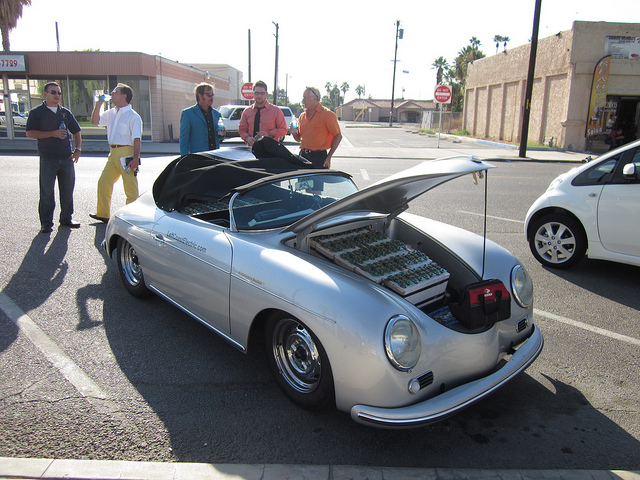
The role of the backyard converter is played by the real-life Greg “ Rev. Gadget” Abbott, a scrappy guy who can electrify any car. Based in LA, Greg and his company, Left Coast Electric, struggle to stay in business. You really root for Rev. Gadget and, in the end, Greg and his wife successfully drive an electrified vintage Porsche 356 Speedster replica the more than 120 miles from LA to Palm Springs on one charge. It’s a beautiful love story – both personal and professional.
Rev. Gadget's electrified Porsche 356 Speedster
Revenge of the Electric Car is well knitted together and fast paced. The filmmakers had unprecedented access to the inside workings of Tesla, GM and Nissan and the results are both revealing and fascinating.
Tim Robbins narrates and smart editing interjects all different perspectives from politicians like Gavin Newsom, celebrities like Danny Devito and Stephen Colbert, and journalists like Thomas Friedman of the New York Times and Ray Wert of the automotive website Jalopnik.com.
The story of the electric car is still being written; but if you want to know how we got to where we are, Revenge of the Electric Car is a rare and intriguing look behind the scenes of the highly-secretive automotive industry.




 Todd Bianco's ACarIsNotARefrigerator.com Blog