Since the BMW 2012 (internal code F30) BMW 328i arrived on our shores earlier this year, it’s been tested and written about endlessly by every car magazine, enthusiast website, TV show and blogger on the planet. Whenever a new generation BMW 3er arrives, there is much hand wringing as to whether it’s still the benchmark by which all other sports sedans are measured.
The near unanimous consensus is: Yes, the BMW 3er is still The One.
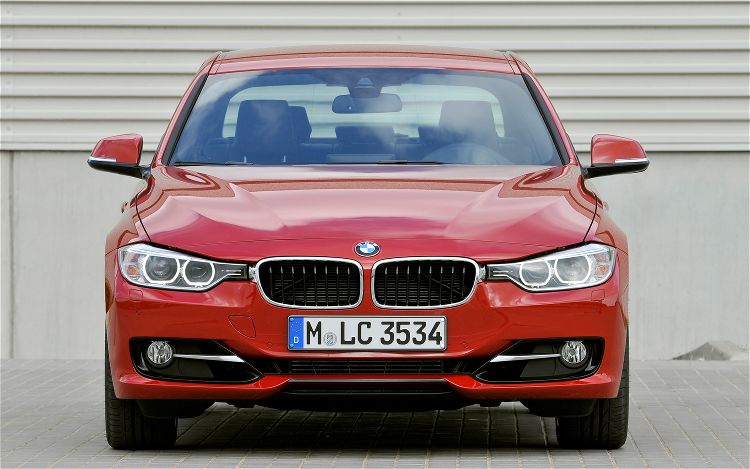
The 2012 BMW 328i Sport Line in Melbourne Red Metallic.
There are many competitors, including the Mercedes C-Class, Audi A4, Cadillac ATS, Volvo S60 and Infiniti G. Each has admirable qualities and often one or the other beats the BMW in one or more statistics or test categories. Yet none quite add up to the BMW 3er. At least not yet.
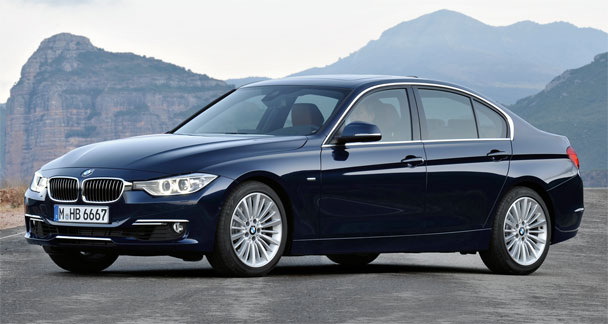
The 2012 BMW 328i in Luxury Line in Imperial Blue Metallic, a new color.
Here’s what you will like:
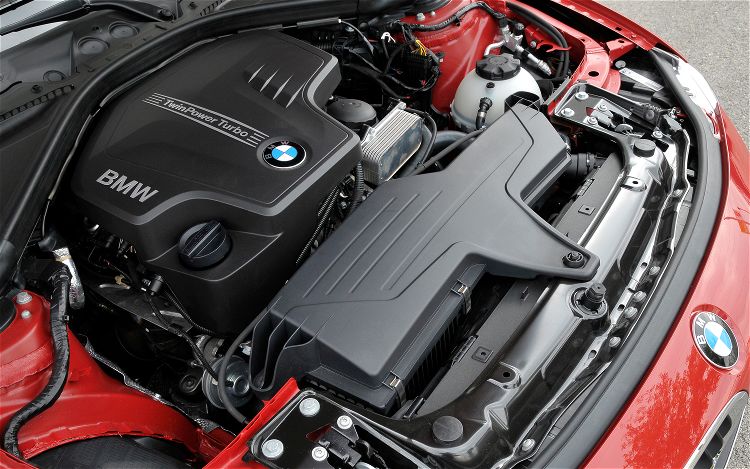
- Fantastic new 2.0L inline TwinPower Turbo 4-cylinder direct injected engine making 240 hp and 255 lb-ft of torque – easily more than the old six. And you won’t find any turbo-lag with BMW’s excellent twin-scroll turbocharger. Why pay thousands extra for the thirsty 335i when you have this delightful, powerful and fun unit as the base engine?
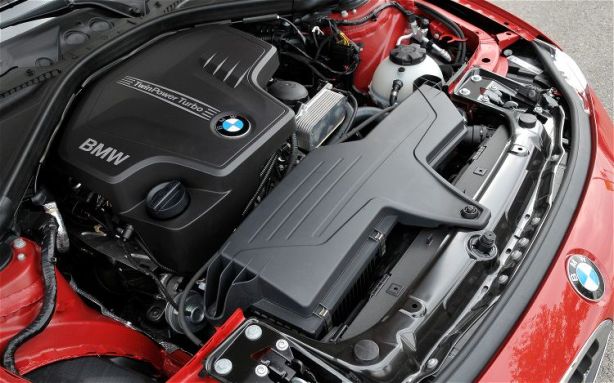
The engine bay of the 2012 BMW 328i. Note the TwinPower logo next to the BMW badge.
- Empathic ZF 8-speed automatic transmission that always finds the sweet spot for the engine with overdrive gears that help the new drivetrain achieve impressive EPA numbers of 23 city, 33 highway 26 combined.
- High-performance, lightweight, 4-wheel ventilated disc brakes with anti-lock braking system (ABS), Dynamic Brake Control (DBC) and Cornering Brake Control (CBC)
- Dynamic chassis with a sophisticated 5-link rear suspension and double-pivot type front suspension with spring struts and anti-roll bar
- It’s bigger than the last 3er, but still only weighs 3,485 pounds – a weight gain of 133 pounds. You’ll never notice it with all the extra power.
- Zero to 60 mph at 5.6 seconds according to Car & Driver.
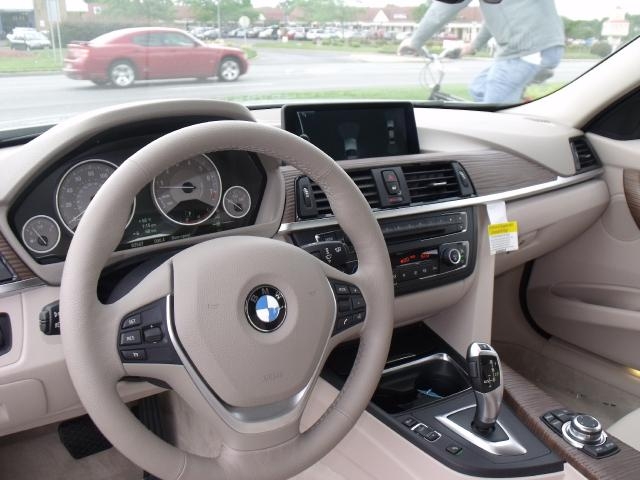
- Sporty, small-diameter, meaty, three-spoke multifunction steering wheel.
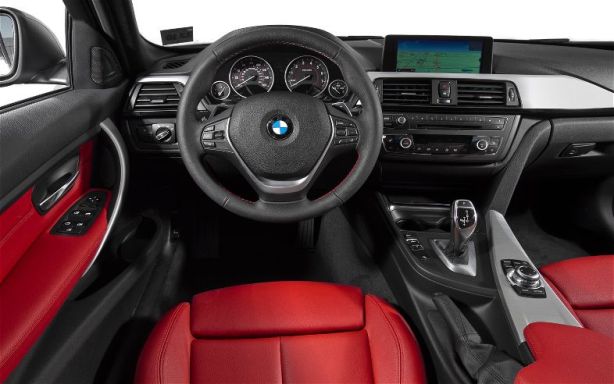
The cockpit of the 2012 328i Sport Line is a great place to spend time. I love the new steering wheel and the Coral Red Dakota leather is outstanding.
- Higher quality interior materials, even as it retains its aura of Germanic austerity.

The interior is nicely appointed. Materials are mostly soft-touch plastics or leather. I like the new horizontal dash layout too. Fit and finish is excellent.
- Terrific 10-way power memory sports seats. The standard 8-way power memory seats are good too.
- Latest iDrive with navigation has terrific graphics, all on display in a lovely 8.8 inch full-color TFT screen. In addition to the 2-D view, it now has night view, height mode and 3-D perspective. A switch from DVD-based to a hard-drive make it all faster.

I love the gigantic 8.8 inch iDrive navigation screen. Analog controls for HVAC and seat heating as well as some radio controls are nice to have.
- Increased 1.9 inch longer wheelbase means a slightly better ride. Quieter too.
- More interior colors and choices. I have a particular fondness for the available Fine-wood “Fineline Pure” textured, matte-finished wood trim available as part of the $2,100 Modern Line package. Many will find it too odd-looking, but it is unique in this class.
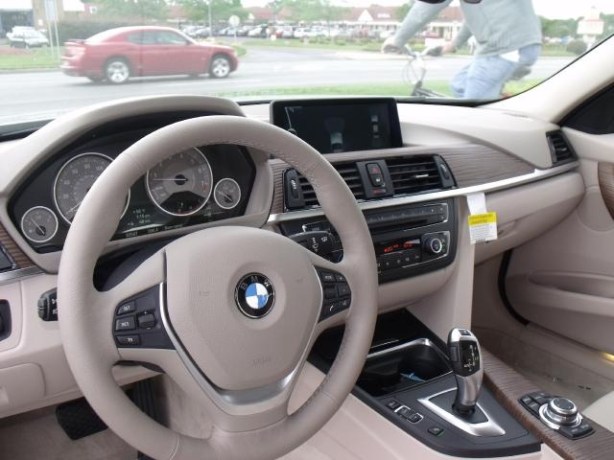
A 2012 BMW 328i Modern Line with the Fine-wood trim ‘Fineline Pure’ textured. The interior is Oyster Dakota Leather.
- Great new colors including my favorite, Mineral White Metallic (a $550 option).
- New options not previously available on a 3er. Heated steering wheel, lane departure warning, adaptive cruise control, forward collision warning, rear-, side- and top-view cameras, adaptive light control, park assistant (parallel parks for you) and automatic high beams. Just don’t ask the price.
- Automatic headlights, dual-zone automatic climate control and rain-sensing wipers are still standard equipment.
- Tons of standard passive and active safety features, including air bags, electronic nannies and wizards, which all work behind the scenes, mostly completely unnoticed.
- Handsome new, if evolutionary sheet metal. I find it hard to distinguish it from the last 3er and it looks eerily like a shrunken 5-series – which most consider a good thing.
- Still the best warranty around. BMW’s Ultimate Care package includes no-cost maintenance for 4 years or 50,000 miles. You only pay for gas and tires.
- Same prestigious blue and white badge – which is a representation of the flag of Bavaria, not the urban legend that it represents an aircraft propeller.


What you won’t like:
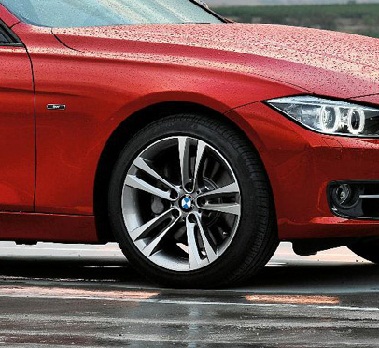
- The low-rolling-resistance run-flat rubber all around. I hate the run-flats as the ride quality suffers significantly and road noise increases. But all new BMWs get them, so unless you want to spend the money to swap out the original equipment tires, it’s something you live with.

The wheels look great and the low-profile tires are sporty. However, the cement-like firmness of the run-flat tires add to a harsh ride and more road noise.
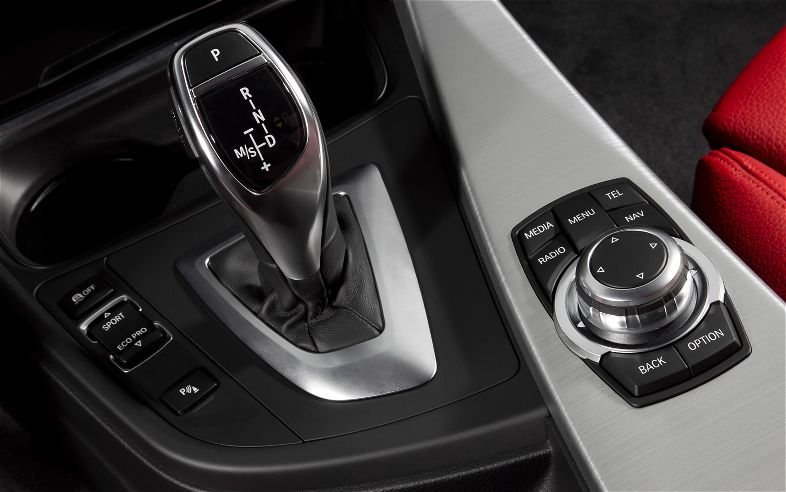
- All new automatic 3ers gets BMW’s electronic shifter. It’s sensitive and fiddly and it makes fast shifts between reverse and drive – something you try to do in tight parking spots while blocking angry traffic – difficult and frustrating.

BMW’s electronic shifter looks good and functions well when going from Park to Drive. But rocking back and forth between Reverse and Drive is tricky and can be frustrating.
Note the new iDrive controller with a bunch of dedicated short cut buttons. Much better. - The new electric power steering doesn’t have the precise on-center feel or quite as snappy feedback as the old hydraulic unit. But EPS isn’t going away as hydraulic units sap fuel economy. Even the new Porsche 911 has EPS. I think BMW will refine its system as time marches on, so this isn’t a fatal flaw. The sad fact is that most BMW drivers don’t know the difference and won’t notice. They only drive the car for its badge.
- No cooled seats option.
- The 2001 Space Odyssey-like obelisk iDrive screen (the standard 6.5 inch screen or the 8.8 inch unit included with navigation) is fixed in the center of the dash. It looks like it should retract when not in use.
- Some of the switchgear looks cheap.
- Terrible cup holders that are too small – still.
- No diesel engine option – at least not yet; Bi-Xenon headlights should be standard.
- Price. The base MSRP, including freight, is $37,395 and you don’t get much for your money. The alarming German trend, pioneered by greedy executives at Porsche, to make just about everything optional, has accelerated. Even just a few option packages push the price well beyond $50,000. The base 528i sedan starts at $48,395 (of course, that is stripped too).
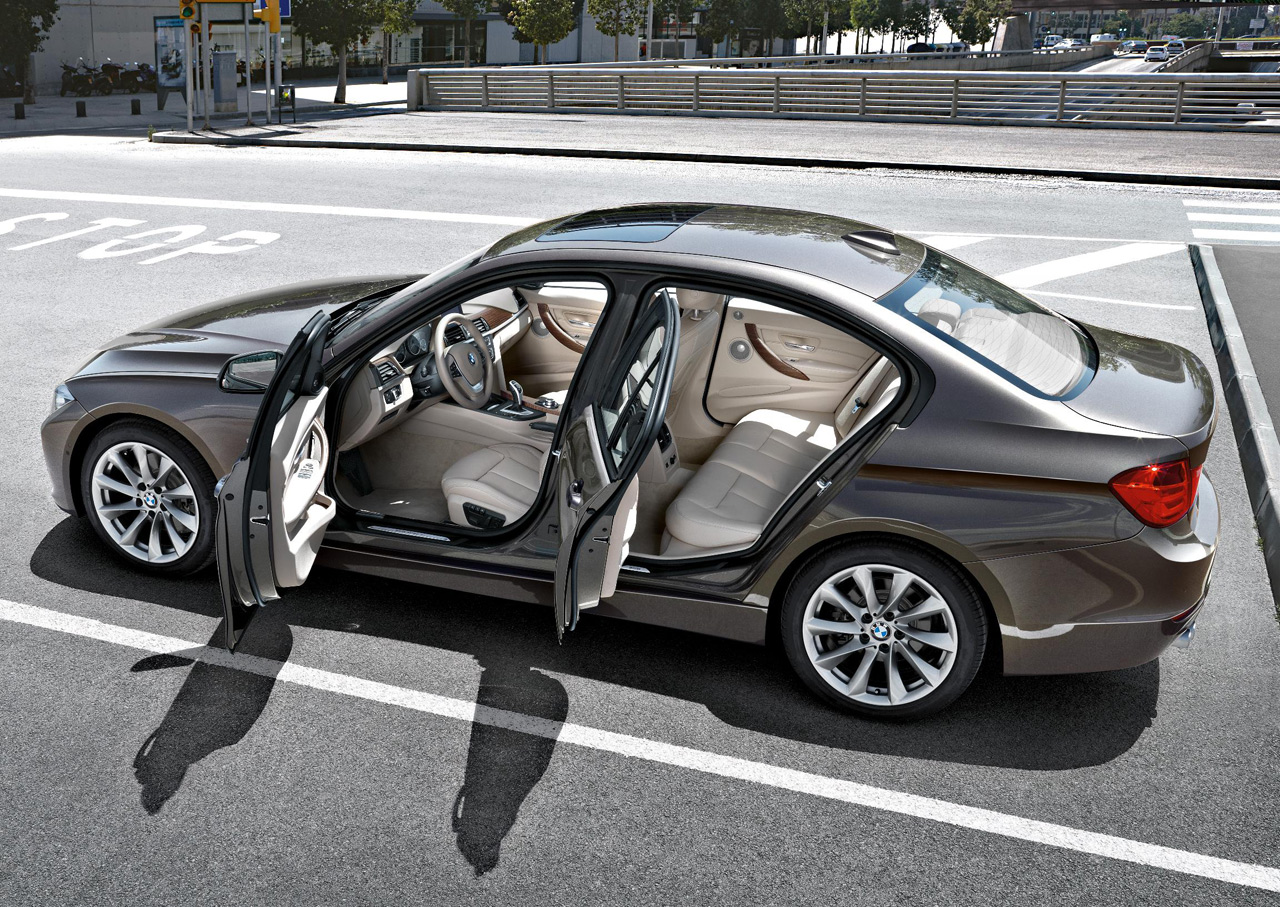
The 2012 BMW 328i in new color (and very handsome) Sparkling Bronze Metallic.
Now for the really important question that everyone is asking: When my 3-year lease is up, should I get a new BMW 3er or look elsewhere? My advice is to check out the competition, but I think you’ll feel as connected with this new F30 328i as with any in the past.
I’ve owned two 3ers over the years. First there was a 2003 (E46) 325i Touring then a 2007 (E90) 335i Coupe. Both were great cars that I remember fondly (except for those run-flats on the 335i). I’d buy or lease a new 328i in a heartbeat if – and that’s an important “if” – BMW discounts its interest rates or sub-vents its leases enough to soften the blow of the inflated sticker. The redesigned 2012 3er is the still Ultimate Driving Machine and the most pure expression of BMW’s heart and soul. And I’m still in love.






 Todd Bianco's ACarIsNotARefrigerator.com Blog